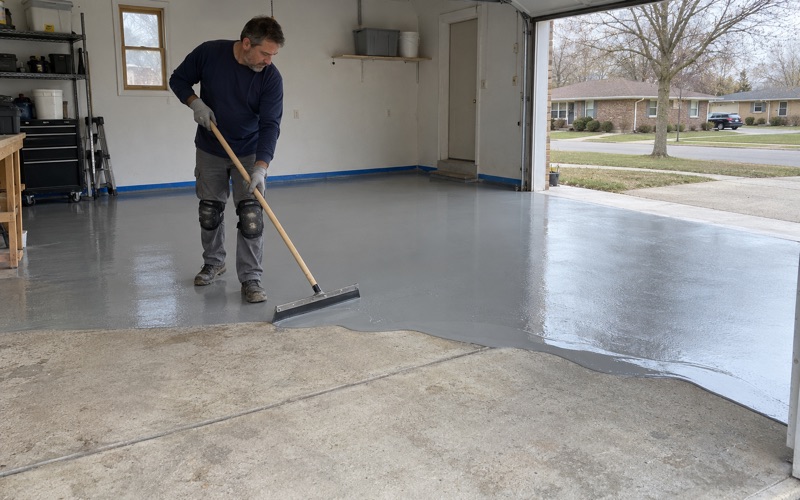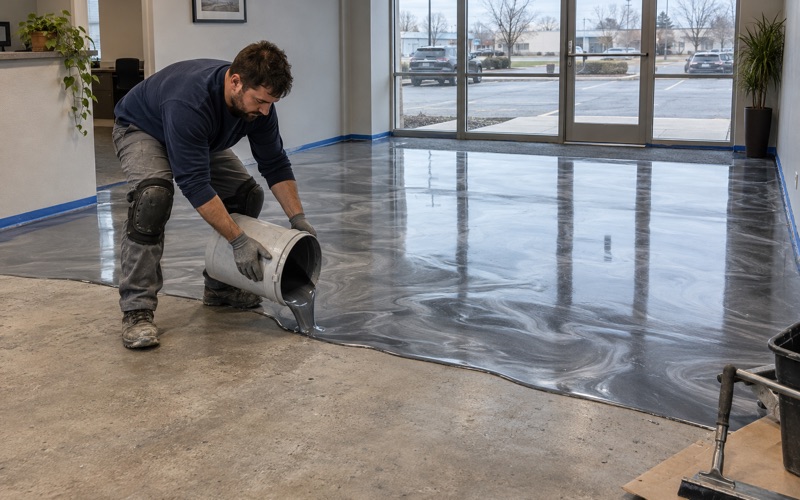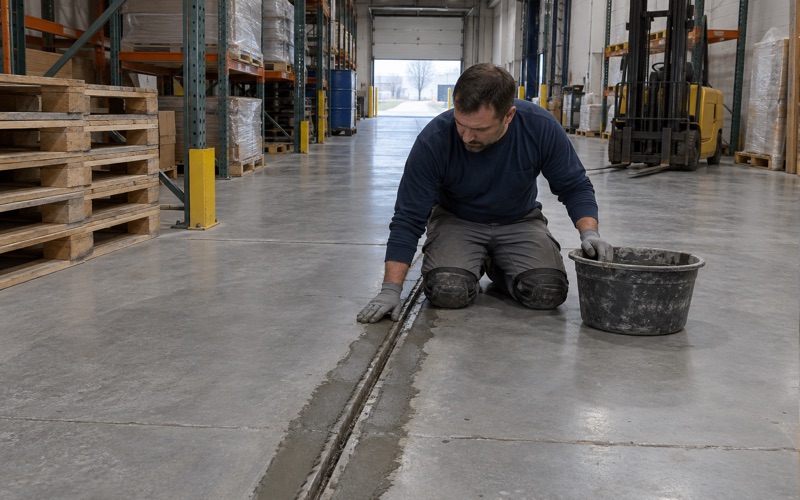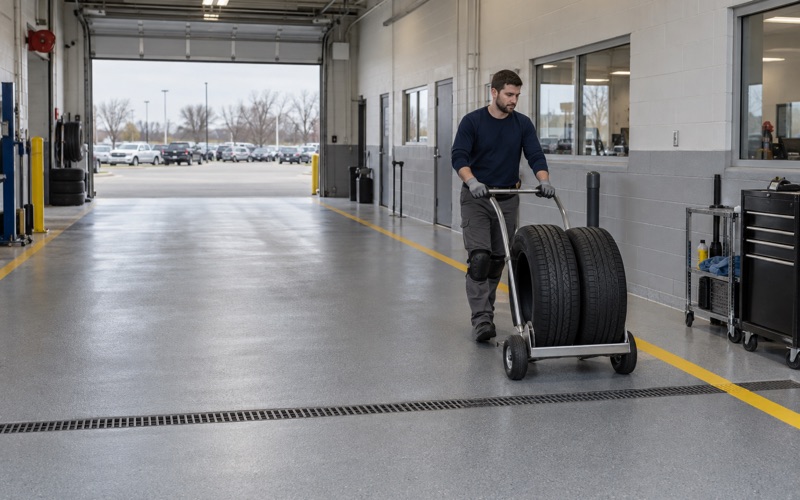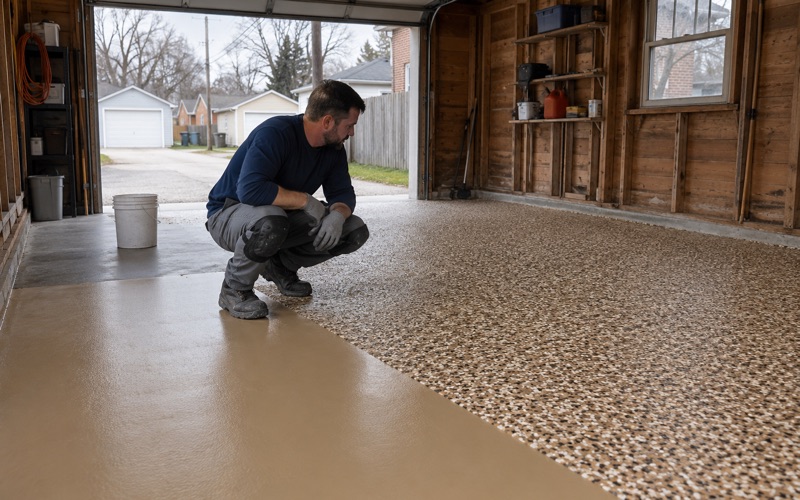
Racine Epoxy Flooring has spent more than 20 years on epoxy flooring, and in Winthrop Harbor the floors that teach us the most are the ones somebody inspects. A shop where skin is broken for a living needs a floor that stays intact, cleans down every day and gives an inspector nothing to write up. That standard shapes how we prepare, coat and finish every commercial slab we take on here.
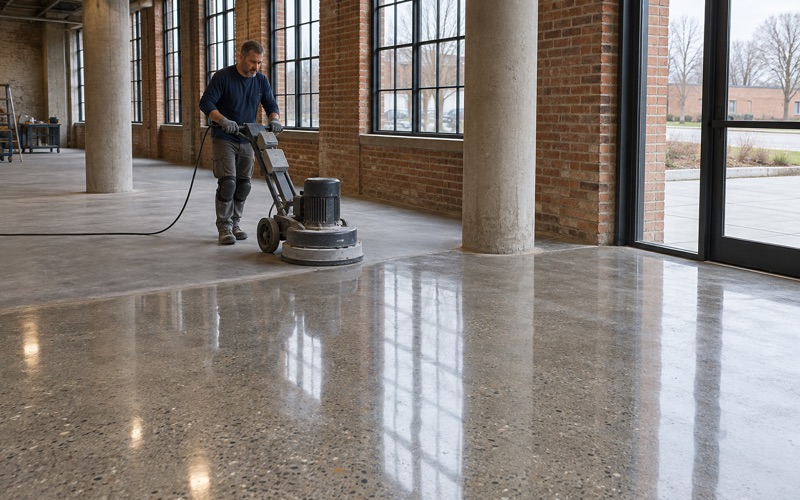
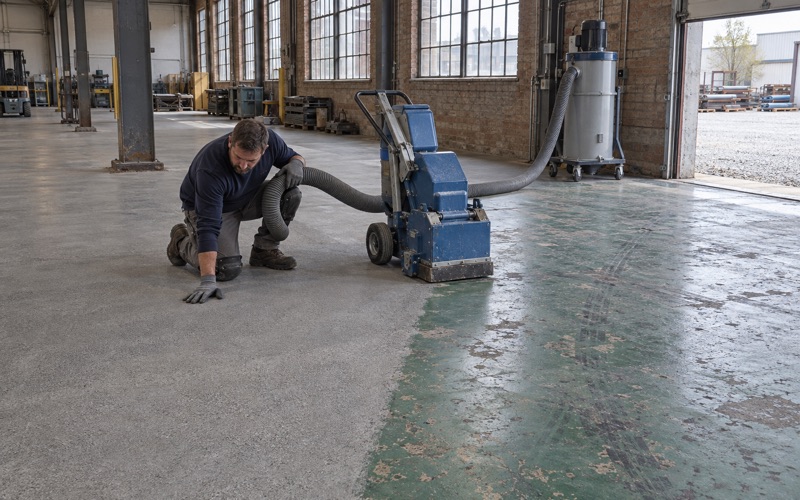
We start where a coating cannot fix anything: the concrete itself. Every slab is opened with a diamond grinder or a shot blaster to a measured profile, and we never acid etch. Before a number goes on paper we walk the cracks, the joints and any old coating, and when a slab needs repair or replacement first, we tell the owner so rather than coat over the problem.
The written proposal names the product, the system build and the finished thickness, so the floor that goes down can be checked against the floor that was quoted. Moisture testing sits in that scope as its own line item. The warranty exclusions are read aloud before anything is signed, with moisture named first, so nothing depends on a promise made at the door.
A Sheridan Road Studio Under the Body Art Code
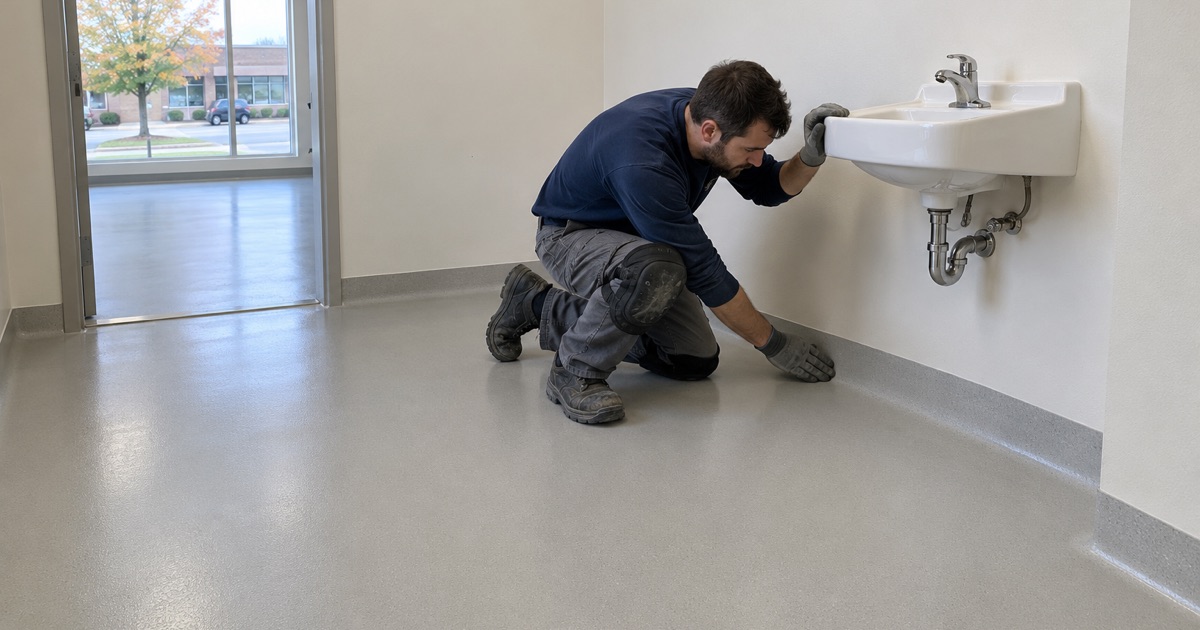
One tattoo and piercing shop, one shared address
Winthrop Harbor is a Lake County village of 6,705 people at the 2020 census, set along the northern border of Illinois in Benton Township, and Sheridan Road is its main commercial street. At 1217 Sheridan Rd, Ste. B, Ncognito Ink Tattoo & Piercing Parlor has operated since October 2019, a veteran-owned custom tattoo shop with a piercing studio and two piercers.
The same address also lists Deck Of Flavors, a dessert and drink shop, so the building houses more than one tenant. We use this Sheridan Road studio as an example of a floor type, not as a past job of ours. What matters to anyone planning similar work is the rulebook that applies to every studio of its kind in Illinois.
What 77 Ill. Adm. Code 797.1100 asks of a floor
The Illinois Body Art Code covers the premises as well as the procedures. Section 797.1100(a) says all walls, floors and procedure surfaces of a body art establishment shall be smooth, free of open holes and cracks, and washable, with walls, floors and ceilings kept in good repair and clean. Procedure surfaces are cleaned and disinfected after each client, and the establishment stays clean and sanitary at all times.
Subsection (b) requires the studio to be completely separated from other uses by solid partitions or floor-to-ceiling walls, and (j) wants cleaning supplies and equipment stored apart from the procedure area. Read together, those lines become a short floor specification: continuous, intact and easy to wash, inside a room that ends at a real wall.
What the code does not say
The rule describes a condition the floor must be in. It does not name a product, and no coating carries an approval from any health department, so we never promise that a floor guarantees a clean inspection. What we can do is build a surface that meets the words of the rule on the day we leave and is detailed to keep meeting them.
Looking for epoxy-flooring closer to St. Francis? See Epoxy-Flooring in St. Francis.
Cracks, Open Joints and Chips Are Defects Here
A crack is a finding, not a cosmetic flaw
In most shops a hairline crack is cosmetic. Under a rule that asks for floors free of open holes and cracks, a cracked slab, an open control joint or a chip in an old coating inside a procedure room is a defect in itself, however small it looks from the doorway. That puts repair at the top of the scope rather than at the bottom as an optional extra.
We read every crack before quoting. Static hairlines can be routed out and filled flush, while moving cracks and broken slab edges need a different repair. A slab that is heaving, crumbling or badly spalled may need sections replaced before any coating makes sense, and when that is the honest answer, we say it plainly and price the repair separately.
Joints filled, then carried into the system
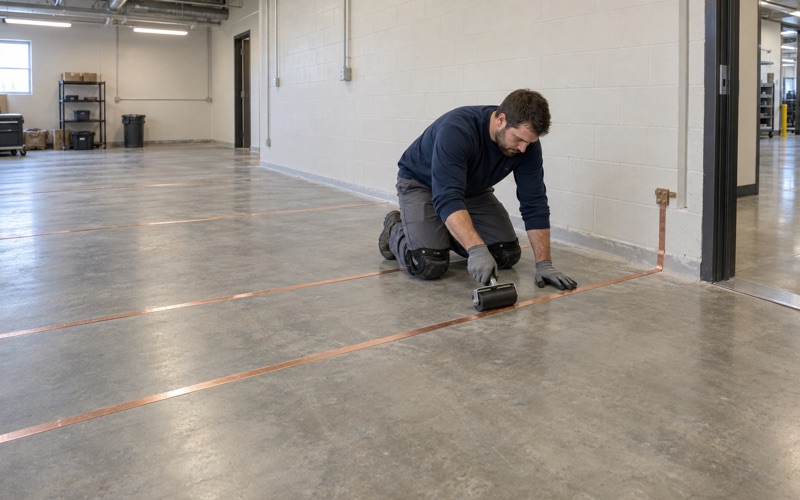
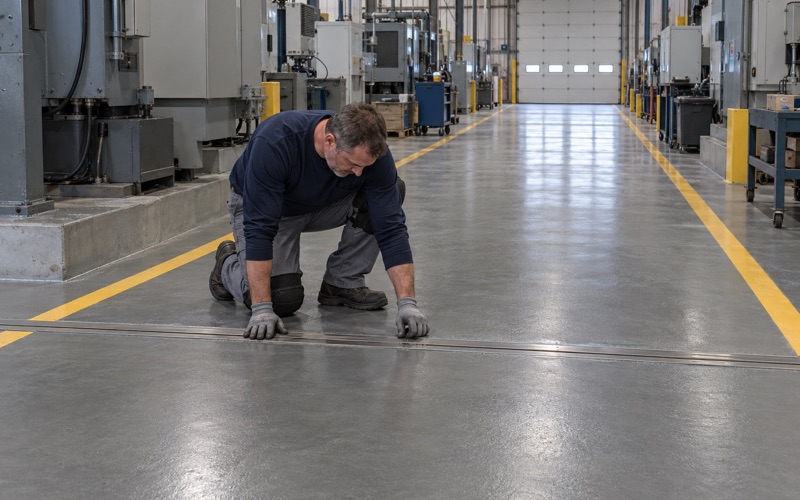
Control joints are the open seams an inspector tends to notice first. We clean them out and fill them with a semirigid joint filler, shaved flush once it cures, so the coating runs over a level, closed line instead of dipping into a gap. The same filler protects the joint edges from the wheels of rolling stools and supply carts.
A joint that is genuinely moving will crack a rigid fill again, and a coating laid over it will show that crack within months. Those joints get a flexible sealant at the surface instead, and we mark them for the owner before work starts. Either way, no joint in a procedure room is left open.
Old coatings and what they hide
A chipped coating is often the visible end of poor adhesion underneath. Painted or rolled-on floors in older storefronts tend to lift at the edges once they are disturbed, so we take the old film off with diamond grinding rather than coat over it. The fresh surface is profiled to the ICRI CSP range the chosen system calls for.
Grinding also exposes what the old film was hiding: patched holes, abandoned anchors and small spalls. Each one is filled with a repair mortar or epoxy paste before primer, so the finished floor is smooth as well as unbroken. Dust from all of this is captured by vacuum on site and never washed toward a drain.
Daily Disinfection: Seamless, Sealed and Tight at the Wall
A system that stays washable
Procedure surfaces get disinfected after each client, and the floor around them is mopped with the same products day after day. We build these floors from a 100% solids epoxy base with a polyaspartic topcoat chosen for resistance to the cleaners the shop actually uses. We ask to see those product labels before we specify, because chemical resistance varies by cleaner.
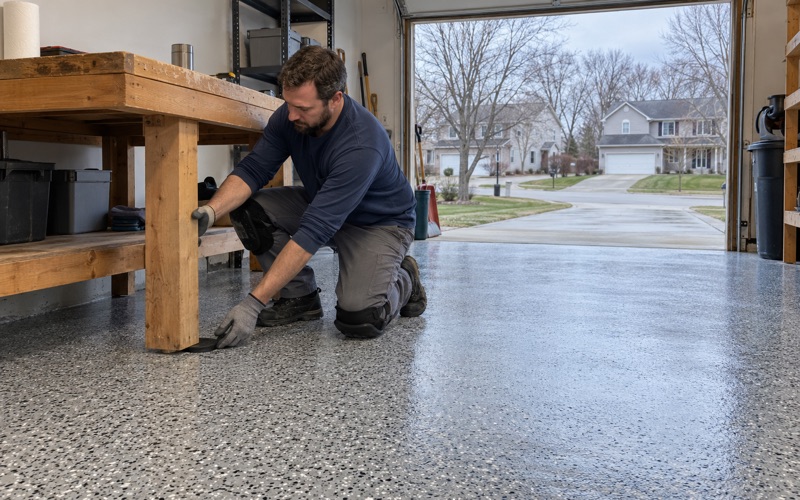
Texture is a judgment call in a studio. A light quartz or vinyl flake broadcast adds grip near sinks, but a heavy texture holds residue and fights a mop. In a procedure room we usually keep the profile fine and the color light, so spills and debris show up quickly and the floor cleans in a single pass.
The wall-floor junction
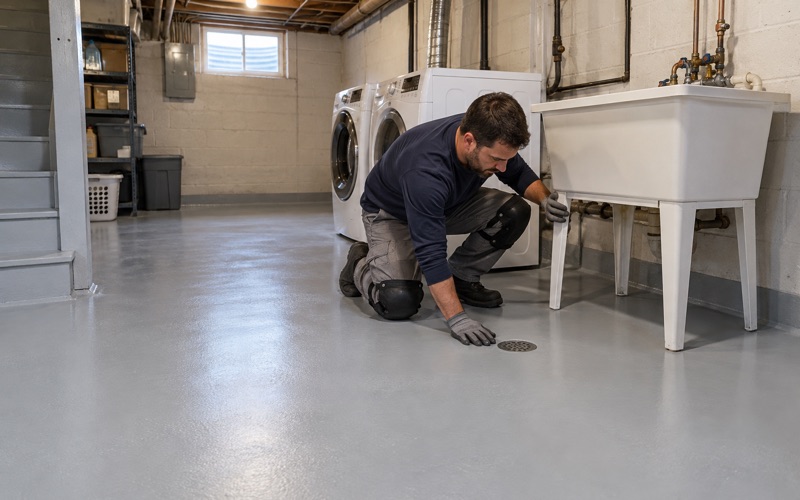
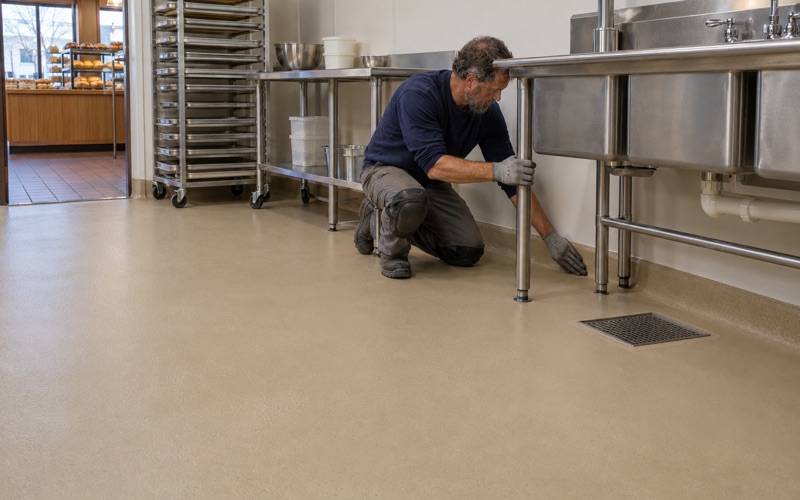
The place a washable floor most often fails is where it meets the wall. A gap behind a vinyl base or a ragged coating edge collects water and debris a mop never reaches. We prefer an integral cove, with the coating run several inches up the wall on a radius, or a tight, sealed termination where a cove is not practical.
The partitions the code requires matter here as well. Where a floor-to-ceiling wall separates the studio from the next tenant, the coating meets it the same way it meets every other wall, with nothing open underneath. A storage area for cleaning supplies, kept apart from the procedure area, gets the same finish and the same edge detail.
Testing before anything is coated
A floor that looks dry can still push moisture up from below, and a blistered coating is as much an open defect as a crack. We test with ASTM F2170 in-situ relative humidity probes or ASTM F1869 calcium chloride kits, depending on the slab, and a moisture-mitigation primer goes down where the readings call for one.
Curing is planned against slab temperature and the dew point spread at the surface, not the date on the calendar. Amine blush, outgassing and pinholes all trace back to coating a slab that is too cold, too damp or changing temperature, and a pinhole is, by definition, a small open hole in the finish.
Scheduling a Six-Day Studio in a Shared Building
Working around noon to 8 p.m.
A studio open Monday through Saturday from noon to 8 p.m., with Sunday by appointment, leaves a narrow window for floor work. We plan grinding and crack repair for mornings and the closed day where we can, and sequence coats so the room returns to service as fast as the chosen system allows. The owner gets a dated schedule rather than a rough estimate in days.
Fast-cure topcoats help, but they carry trade-offs. A system that reopens sooner has a shorter working time and less tolerance for a damp slab, so the choice follows the moisture readings and the room size as much as the calendar. Sometimes a full closed weekend is the better plan than two rushed evenings.
Neighbors on the other side of the wall
In a multi-tenant building, dust and odor rarely stop at the lease line, and a neighbor serving food and drink will notice both. We run dust collection on every grinder and choose low-odor products where the system allows. Every coating we use also has to meet the Illinois architectural coating VOC limits in 35 Ill. Adm. Code Part 223 Subpart C.
We talk with the landlord before scheduling, because ventilation, shared corridors and after-hours access are decisions only the building can make. Where the neighboring business and the studio keep overlapping hours, the loudest and dustiest steps go first, before either one opens its doors for the day.
Permits and paperwork
We found no published Village of Winthrop Harbor rules on contractor registration, bonds or permits for floor coating, so we call village hall at 830 Sheridan Road before a job is scheduled rather than assume either answer. Illinois issues no state license for general, flooring or coating contractors, so the paperwork that protects an owner is the contract itself.
Ours names the system, the finished thickness and the warranty, with its exclusions written out and moisture listed first. It is also the record a studio owner can keep on file to show exactly what was installed under the procedure room, should anyone ask what the floor is made of.
- 20+ Years on Concrete
- Moisture Tested First
- Written Contracts