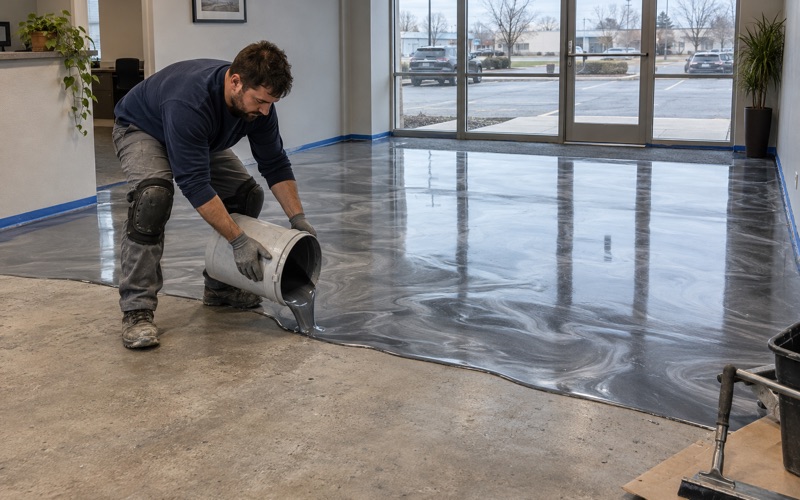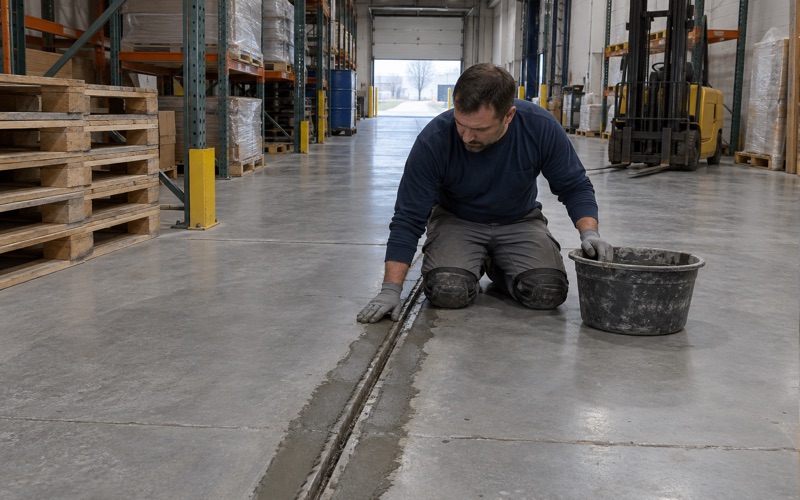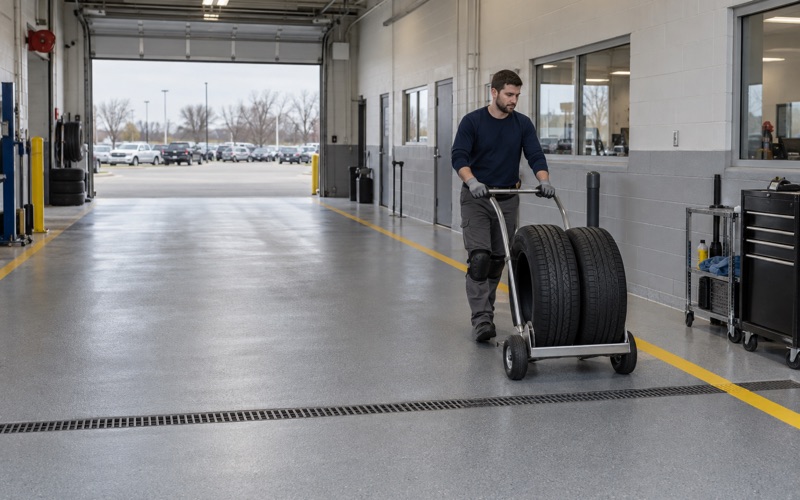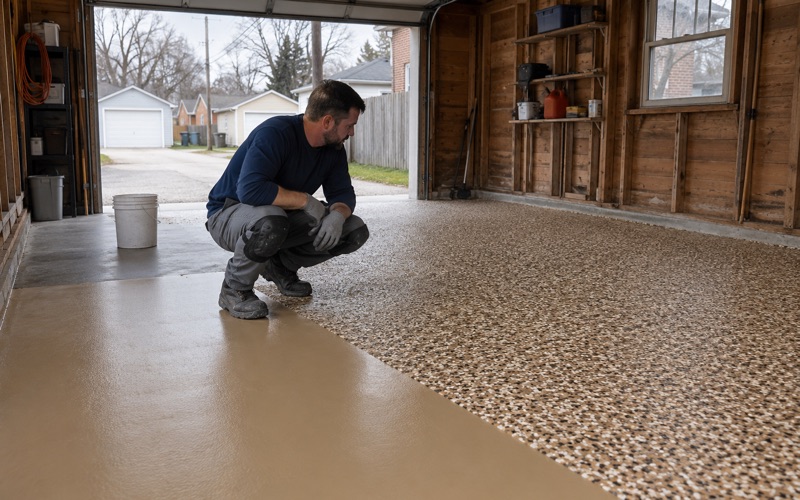
Racine Epoxy Flooring brings more than 20 years of epoxy-flooring work to Union Grove, and the floors this page is about are the ones that have to come completely clean after a deer is broken down on them. That covers processing rooms, butcher shops and the home garage where a hunter quarters a carcass in November. On those floors, a scrap of trim left in a crack is the whole problem.
Our approach starts with the slab rather than the coating. Every floor is opened with a diamond grinder or shot blaster, never acid etched, and the cracks, joints and old coating are read before a price is written down. When a slab needs repair or replacement before anything can go over it, we say so in the quote instead of finding out halfway through the job.
What follows covers how deer processing changes the cleanup, why bleach alone is not the answer, and what a seamless floor has to do in a room that takes blood, fat and strong bleach every season. It closes with the garage at home, where the village’s own rules shape what can be built and what needs asking first.
A Meat Market on 15th Avenue and a Disease That Changes Cleanup
Two Creek Farms Takes Deer by Reservation
Two Creek Farms at 1360 15th Avenue is a locally owned meat market and custom processing facility inside the village. Alongside beef, pork, lamb and goat for farmers and producers, it takes deer in the fall, with drop-off behind the building limited to a set number of carcasses each day. Hunters call ahead, reserve a day with a $100 non-refundable deposit, and bring only a legally registered deer.
We mention it because it shows what deer processing involves in Union Grove, not because we have worked there. A shop like that bills on finished weight and moves carcasses through cutting, trimming and vacuum-sealed packaging in a short season. Every one of those steps puts tissue and blood on a floor that then has to be cleaned before the next animal comes through.
Chronic Wasting Disease and Trim on Hold
Chronic wasting disease, or CWD, is caused by prions, and it is the reason deer-room cleanup is unlike any other kitchen or plant washdown. Two Creek Farms’ posted rules reflect it: when a carcass needs CWD testing and no negative result is in hand, the finished cuts and bulk trim go back to the hunter, and trim comes back for sausage only after a negative result.
That rule says something about the room itself. A carcass whose status is unknown is cut on the same tables and over the same floor as every other deer that week. Michigan State University guidance for processors notes that prions are inactivated by heat only at very high temperatures, around 1,800 degrees F, so ordinary processing and hot water do nothing to them.
What That Asks of the Floor
The floor consequence comes in two parts. First, the surface has to release every scrap of trim and every film of blood to scraping and rinsing, which means no open joints, pits or cracks for material to lodge in. Second, it has to stand up to strong bleach cleanup over and over without softening, staining or losing its bond.
Bare concrete fails the first test before the second one is even asked. It is porous, it pits as it wears, and its saw-cut joints and shrinkage cracks hold exactly the kind of material a processor is trying to remove. No floor makes prions safe, and we will never sell one that way; what a floor can do is stop giving tissue a place to hide.
Looking for epoxy-flooring closer to South Milwaukee? See Epoxy-Flooring Services in South Milwaukee.
Bleach Works on Clean Surfaces, Not on Tissue
The DNR’s 50/50 Soak
The Wisconsin DNR has long advised hunters, deer processors and taxidermists to soak equipment in a 50/50 solution of bleach and water for an hour. Its processing tips also call for wiping down counters and other work areas with the same mix and letting them air-dry, with stainless steel tools needing at least five minutes and other items the full hour.
That is a heavy chemical load for a room to carry every day of a season. A 50/50 bleach mix splashed around a cutting table, mopped across the floor at closing and left to sit is a different exposure from a spill in a home kitchen. Any coating in that room has to be chosen with that cleanup in mind, not with the showroom sample in mind.
What Federal Researchers Found
In October 2019, reporting on a National Institute of Allergy and Infectious Diseases study published in PLOS ONE described one useful result and one sobering one. A five-minute soak in 40 percent bleach inactivated prions on stainless steel. Tiny pieces of tissue, however, were not effectively inactivated by bleach under the conditions the researchers tested.
That finding is the whole case for a seamless floor in a deer room. Bleach does its work on a clean surface, and it struggles once a fleck of meat or a smear of fat sits between the solution and whatever it is meant to reach. A floor that holds trim in a crack is a floor where the bleach is working on the trim rather than the surface beneath it.
Solids Off First, Then the Wet Clean
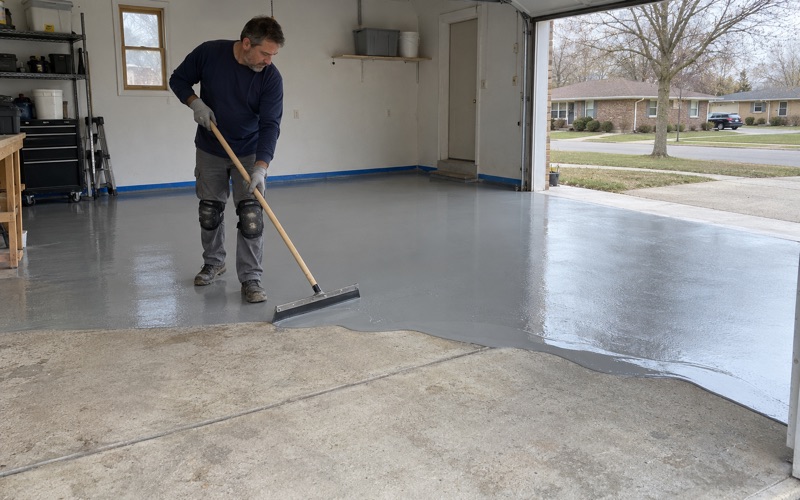
Michigan State University’s processor guidance puts the order plainly: remove solids before wet cleaning, so infectious material is not flushed down drains. On the floor, that means scraping and squeegeeing trim, fat and bone dust into a container before any water or bleach goes down. The surface has to let a squeegee pass cleanly from the wall to the drain.
That is where texture becomes a trade-off we talk through with every processor. A floor needs enough grip that a wet worker holding a knife stays upright, but an aggressive broadcast can grab trim and fight a squeegee. We set the quartz aggregate or vinyl flake broadcast and the topcoat build so the surface is safe underfoot and still releases what lands on it.
No Joints, Pits or Cracks Where Trim Can Hide
Reading the Slab Before We Price It
Before we quote a processing room, we walk the slab for cracks, spalls, saw-cut joints, old coating and the line where floor meets wall. Each of those is a place trim can lodge, and each needs a decision before coating, not after. If the concrete is too broken to carry a seamless system, the proposal says so and prices the repair or replacement.
Moisture testing is written into the scope as its own line item. We use ASTM F1869 calcium chloride testing or ASTM F2170 in-situ relative humidity probes, depending on the slab, because a coating that blisters from vapor drive opens new pits on a floor whose whole job is to have none. Warranty exclusions are read to the owner before the job is sold, with moisture named first.
Grinding Open, Filling Joints, Closing the Edges
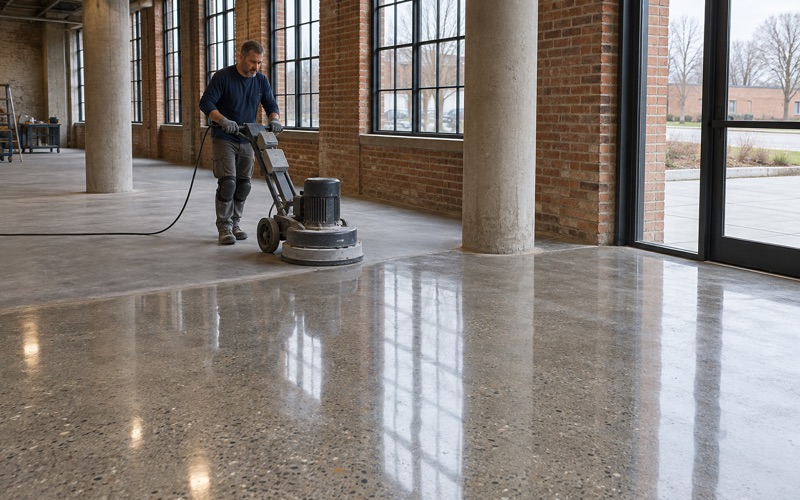
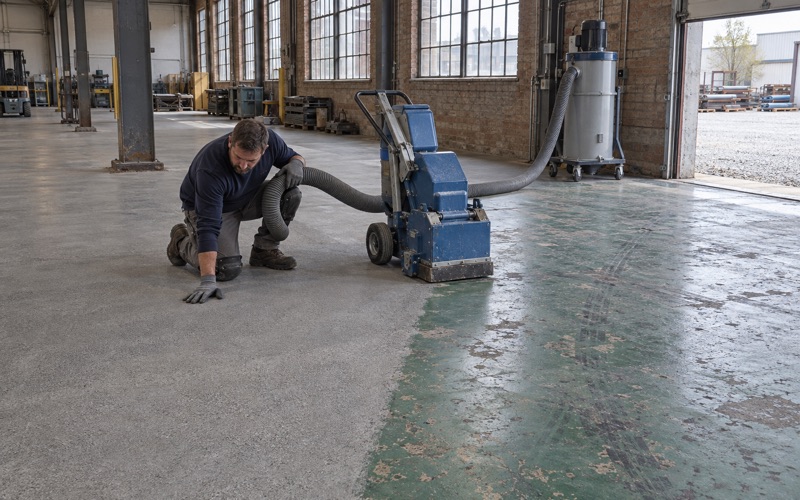
Every slab is opened by diamond grinding or shot blasting to the ICRI CSP profile the system calls for, and we do not acid etch. Cracks are routed and filled, pits are patched flush, and grinding dust and slurry are collected on site rather than washed toward a storm drain. The goal is a substrate with no hollow left anywhere in it.
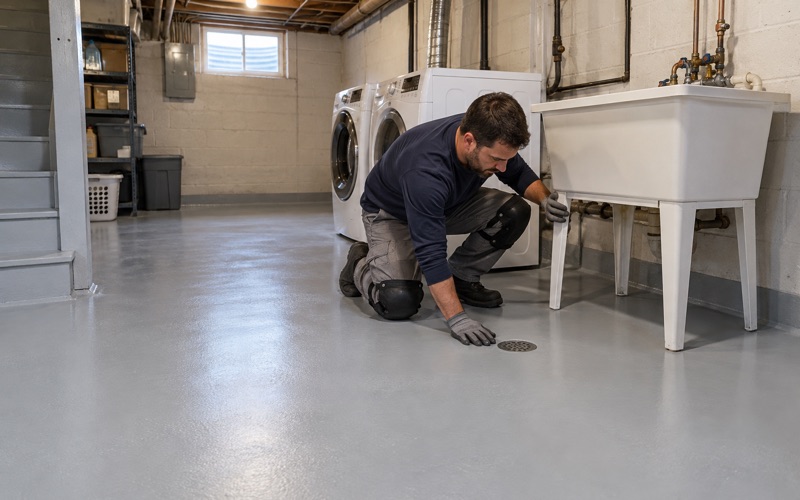
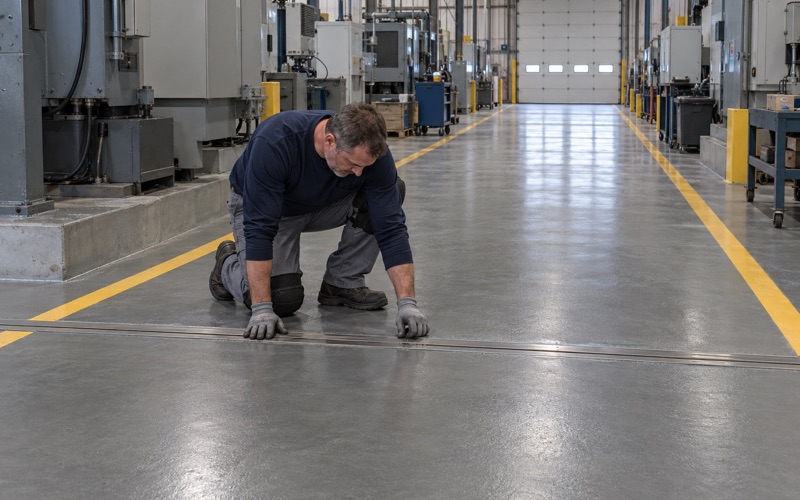
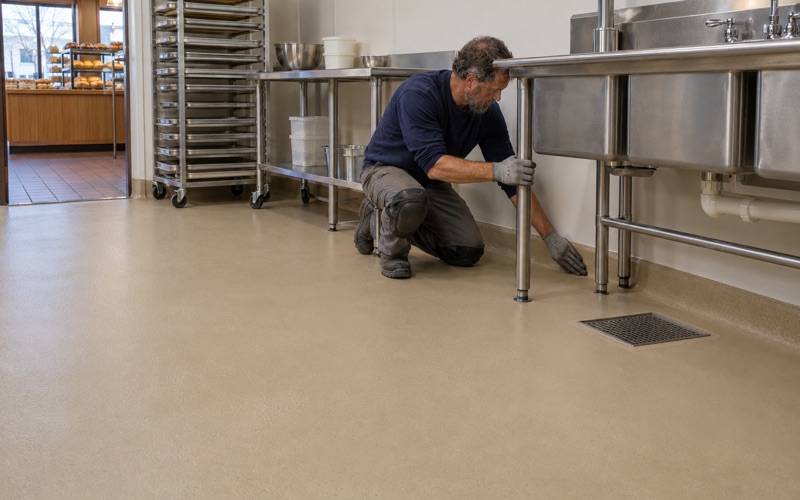
Control joints that must keep moving get a semirigid joint filler, so cart wheels do not chip the edges and open a fresh crack. Where floor meets wall, a coved base removes the corner where blood and trim collect against a baseboard, the same coved juncture FDA Food Code 6-201.13 describes for food rooms. The result is one continuous surface from drain to wall.
A System Chosen for Repeated Bleach Cleanup
Bleach tolerance is not one number shared by every epoxy, and we do not pretend it is. We read the chemical-resistance section of each product’s data sheet against a 50/50 bleach mix used daily for weeks, then choose a 100% solids epoxy base and a topcoat whose sheet supports that exposure. The written proposal names that product, the system build and the finished thickness, so a processor can check what went down against what was quoted.
Scheduling matters as much as chemistry in a room that only has a few quiet weeks. We plan the grind, the coats and the cure around the hours the building has to keep running, including overnight and weekend windows, and finish well before carcasses arrive. Full cure is set by slab temperature and dew point, not the calendar, because bleach on an undercured coating is how a new floor softens.
Garage Butchering at Home in Union Grove
The Village Garage and What It Allows
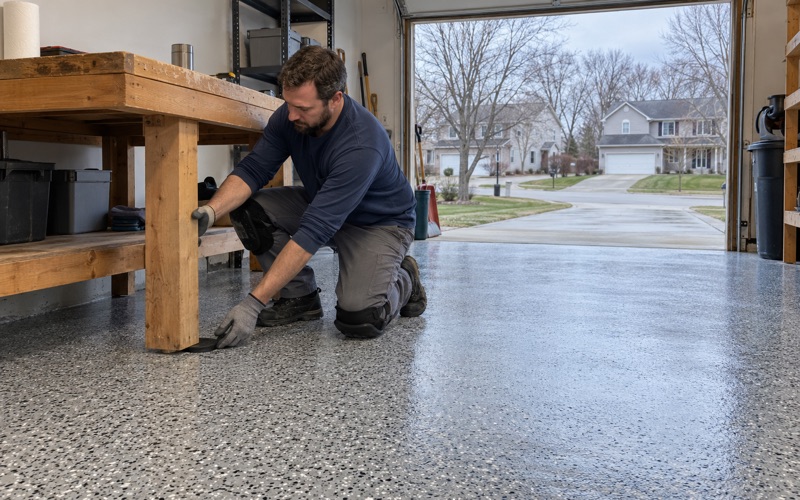
Plenty of hunters in the village break down their own deer at home, and most do it in a detached garage. Union Grove’s detached garage brochure caps a private garage at 960 square feet and no more than 30 percent of the rear yard, and it says no business is carried on there. A home cutting floor for the family’s own deer is a different thing from a processing shop.
Census figures help explain why the detached garage is the room in question. Renters occupy about half of the village’s occupied units, but nearly all owner households, 993 of 1,042, live in detached houses. For a hunter who owns the home, the garage is where a carcass hangs, gets skinned and gets trimmed, and its floor takes the same blood and the same bleach a shop’s does.
Moisture, Cold and Curing
Wisconsin’s dwelling code calls for a 6-mil vapor retarder under new dwelling slabs but not under an unconditioned attached garage slab, and an older garage floor gives no outward sign of what lies beneath it. So we test before we coat rather than trust a floor that looks dry. A slab pushing vapor will lift a coating, and the pinholes and blisters it leaves are new places for trim to sit.
Timing is the other limit. Curing is scheduled against slab temperature and the dew point spread at the surface, and an unheated garage in late fall can be too cold for a coating to cure properly. When that is the case, we say plainly that the floor waits for spring, so it is finished and fully cured long before the next deer season opens.
Permits, Contracts and Asking First
The village brochure quotes its ordinance: no building or dwelling shall be built, enlarged, altered or repaired unless a building permit is first obtained. Whether coating a garage floor counts is a question for the village building inspector, James DeLuca, at (262) 210-1741, and we ask before the job is scheduled. Fees double if work starts first, so the call comes before the grinder does.
Every home job also gets a written contract before any deposit is taken, as Wisconsin’s ATCP 110 home improvement rule requires when payment is due before completion. The contract names the products, the system build and any warranty, and it carries the lien-rights notice state law calls for. That way a hunter coating a garage floor knows exactly what will be under the next carcass.
- 20+ Years on Concrete
- Moisture Tested First
- Written Contracts