Racine Epoxy Flooring has spent more than 20 years putting down epoxy flooring in Salem Lakes and across southeastern Wisconsin, and the floors we get asked about most here are the ones that have to be washed hard and dried fast. Livestock barns, show arenas, wash bays and multi-use halls that host animals one week and a dinner the next all succeed or fail on what happens to water on the slab.
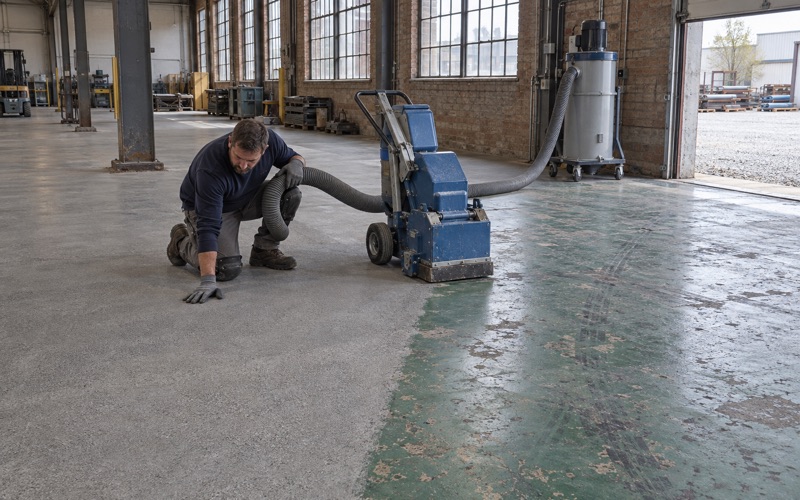
Bare concrete in a building like that does not stay sound for long. It pits under hooves and scrapers, cracks at the joints, and soaks up whatever was hosed across it, so each cleaning starts a little further behind. We open every slab with a diamond grinder or shot blaster rather than acid, so a new coating bonds to clean, profiled concrete instead of to the residue of last season.
Before we quote, we walk the floor and read its cracks, joints and any old coating, and we tell you plainly when a section needs repair or replacement before it is worth coating. The proposal then names the product, the system build and the finished thickness, so a fair board or building owner can check what was promised against what actually went down.
Livestock Barns Inside the Village: The Kenosha County Fairgrounds
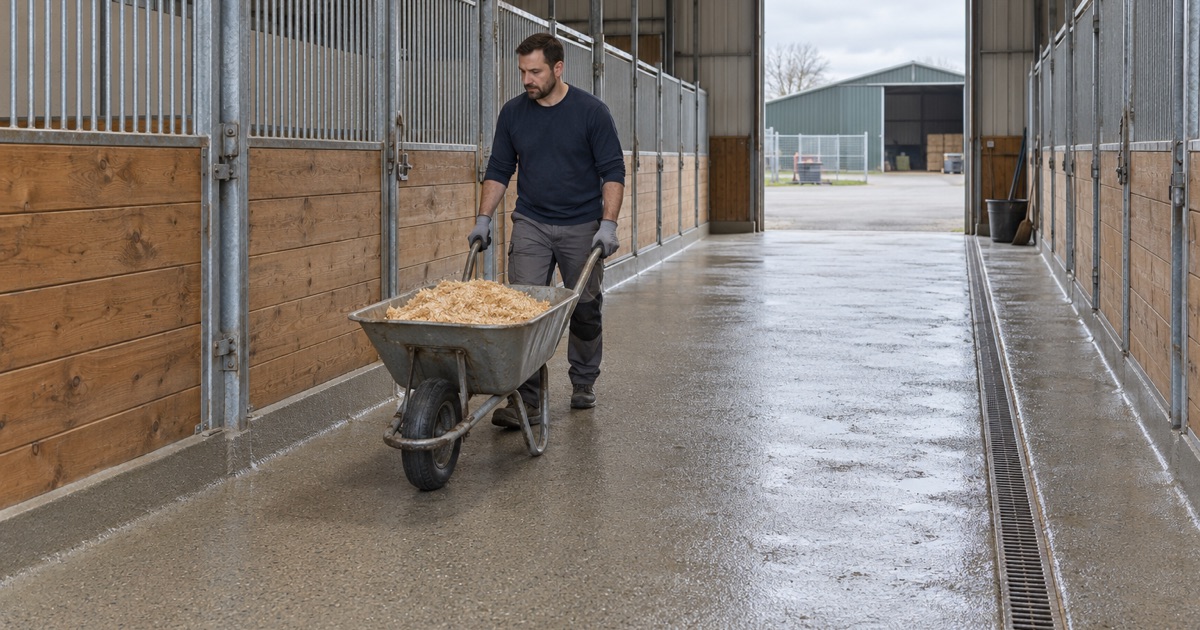
Barns, Arena and Fair Week
The Kenosha County Fairgrounds on 111th Street sit inside the Village of Salem Lakes, and the fair map shows how much animal housing that means. It labels two swine barns, two beef barns, and barns for dairy, sheep, goats, rabbits, poultry and horses. Alongside them are a Show & Sale Arena, a Discovery Barnyard and petting zoo, and a food court.
The 2026 fair ran August 19-23, and the 2027 dates are August 18-22. That is a short, intense stretch in which several species move through the same grounds, and the floors under them take wash water, bedding, manure and foot traffic all at once. Whatever a slab is going to do badly, fair week is when it shows.
Most of those buildings see heavy use for a few days and lighter use the rest of the year, which gives a floor project room to happen. The open weeks after the fair are usually when a barn can be emptied, ground and coated without moving a single show.
What the Swine-Show Guidance Asks
The national guidance on swine exhibitions, published in 2016 by NASAHO and NASPHV, is advisory, and the fair’s own rules and the state veterinarian govern what actually happens on the grounds. It still describes the work a swine barn floor has to survive. It suggests keeping exhibition swine on the grounds no longer than 72 hours and, where terminal and breeding shows both run, scheduling a break between them to clean and disinfect the facility.
It also asks organizers to clean and disinfect gates, chutes, sort panels and weighing equipment, ideally between each group of pigs, and to clean and disinfect the swine exhibition areas after the fair. Throughout, the stated aim is to keep the environment as dry as possible to avoid animal injury. The guidance says nothing about floor coatings, and we never present one as something it requires.
Turnaround Is a Floor Problem
Read as a schedule, that guidance is a run of short windows in which swine barns get washed down and must be ready again. A cleaning crew can only move as fast as the floor allows, and a slab that holds water in its low spots and pores turns a quick turnaround into a long wait.
A fast turnaround also depends on the edges around equipment. Chutes, sort panels and scales sit on the slab, and where concrete has crumbled around their footings, the gap becomes one more pocket a crew has to dig out by hand. We grind and patch those edges first, so the coating runs tight to whatever stands on the floor.
Looking for epoxy-flooring closer to Antioch? See Antioch Epoxy-Flooring.
Disinfectant Needs a Clean Surface: Why Porous Barn Concrete Falls Short
The order of operations matters more than the product in the sprayer. Disinfectants are made to work on a surface that has already been cleaned, and organic matter left behind shields whatever sits beneath it. A floor that cannot be fully cleaned cannot be fully disinfected, whatever goes on it afterward.
That is why we treat cleanability as the first thing a barn floor is built for. Color, gloss and finish come after the surface can be scrubbed down to the coating and left with nothing trapped in it.
Pores, Pits and Cracks
Old barn concrete is rarely smooth by the time anyone calls us about it. Years of scraping wear away the surface paste, aggregate pops out in small pits, and shrinkage cracks widen under loaded trailers and skid steers. Each of those defects holds manure and wash water just below the reach of a brush or pressure washer.
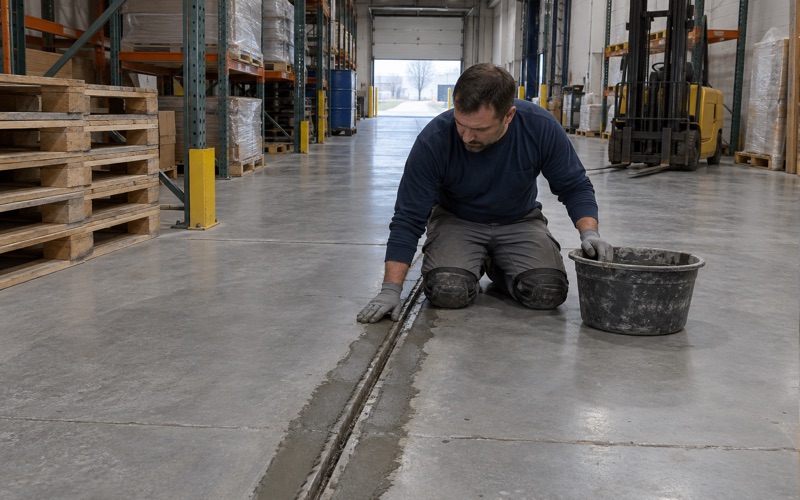
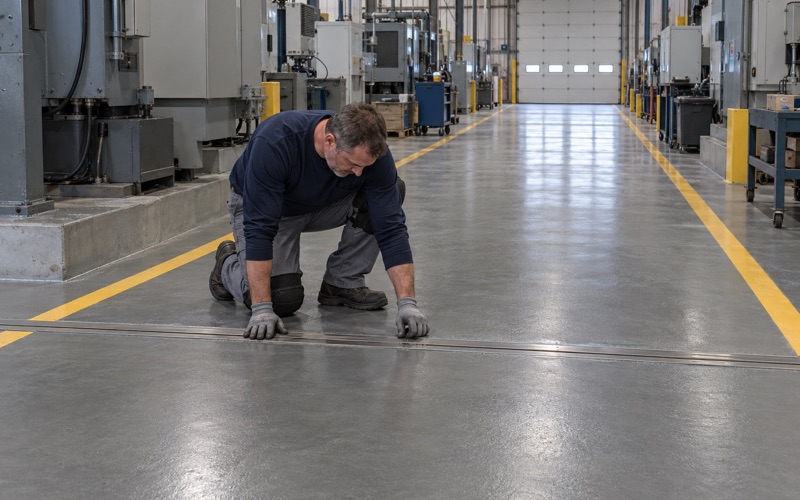
Joints are the worst offenders, because they run the full length of an aisle and collect everything that drains toward them. We fill control joints with a semirigid filler before any coating goes over them. That keeps the edges supported, so scraper blades and cart wheels ride across the joint instead of breaking it down.
Sealing the Slab Instead of Feeding It
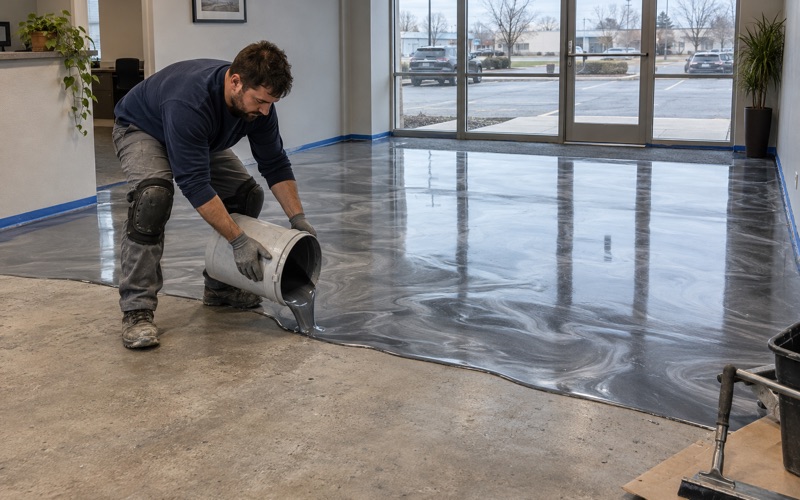
A coating system changes the slab from something that absorbs into something that sheds. For barns we usually build on 100% solids epoxy over a ground surface, with a broadcast and topcoat chosen for the wear in that room. We do not claim it kills anything or stops disease; its job is to give the cleaning crew a surface it can actually reach.
Moisture comes first in that build. A barn slab sits on grade and often stays damp, so moisture testing is its own line in the scope, using ASTM F1869 calcium chloride tests or ASTM F2170 in-situ relative humidity probes. Moisture is also the first warranty exclusion we read out, before the job is sold rather than after a floor blisters.
Slope, Texture and Drying Time on a Wash-Down Floor
Getting Water to the Drain
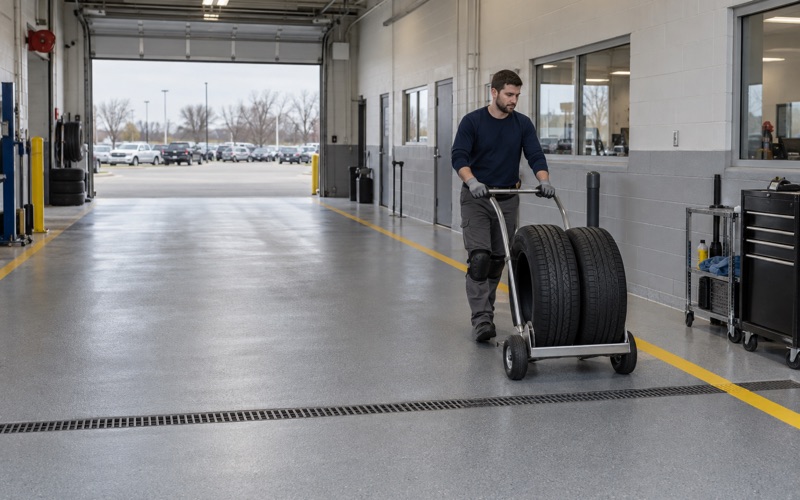
Grinding opens the surface to an ICRI CSP profile the primer can grip. Where a barn aisle has flattened or dished, we can rebuild slope toward the drains with urethane cement or an epoxy mortar before the coating goes on. Wash water then runs out instead of standing in puddles under the pens.
Slope is something we measure, not assume. If a floor has settled so far that rebuilding it would cost more than a new pour, we say so, because a coating cannot rescue a slab that drains the wrong way.
Texture for Hooves
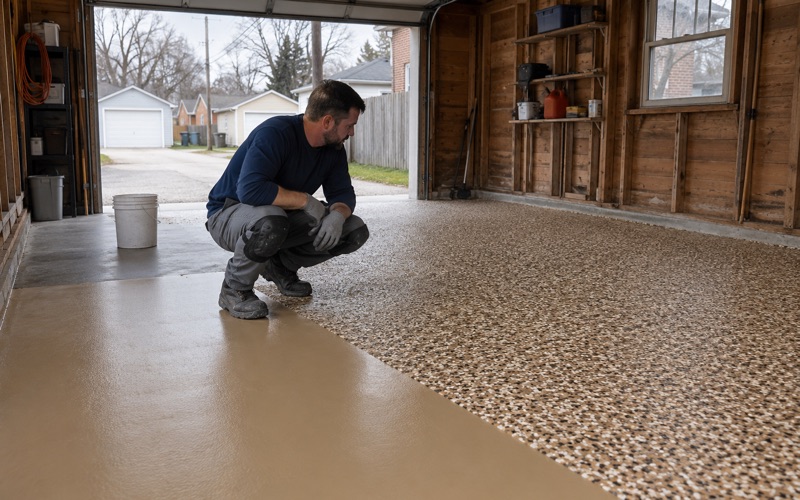
Smooth and cleanable pulls against sure footing, and a show barn needs both. Quartz aggregate broadcast into the epoxy and locked under a topcoat gives hooves and boots something to grip when the floor is wet. Heavier texture takes a little more scrubbing, so we size the grit to the room: coarser in wash aisles and around chutes, finer where people mostly walk.
In the Show & Sale Arena the footing question is sharper, because animals are walked, turned and held in front of a crowd. A texture that grips when the floor has just been washed gives handlers more control. A topcoat that resists scuffing keeps the ring from wearing a bare path where every animal enters and exits.
Drying Time Between Groups
A sealed floor drains and dries faster because water has nowhere to soak in, and that is what keeps a barn on schedule between groups. We cure the coating against slab temperature and dew point rather than the calendar, since epoxy laid on a cold, damp slab can blush and lose adhesion. An unheated barn sometimes has to wait for a warmer window before we start.
We also plan around the building’s own calendar. Fairground barns and arenas are booked around shows and rentals, so we fit grinding, coating and cure into the open weeks. When the only gap a building has is overnight or over a weekend, our crews work it.
From Show Barn to Banquet: Floors That Change Use
The fairgrounds rent indoor and outdoor spaces year-round for weddings, meetings, banquets and fundraisers, including an 80 x 150 foot indoor/outdoor pavilion next to Wilmot Raceway. A building that holds animals in August and dinner tables the rest of the year asks a lot of a single floor. It has to clean down after the fair and still look like an event space a few weeks later.
What a Rental Crowd Notices
Guests at a banquet never see the wash-down schedule; they see stains, worn patches and a floor that looks tired. A sealed surface lets the post-fair cleanup actually finish, so less of the barn carries into the reception. A color chosen for the room and an even broadcast finish help a former show space read as a hall.
The swine guidance suggests holding non-animal activities such as dances somewhere other than the animal barns, and which buildings change use is the fair’s call. Where one does, the floor has to handle both jobs. That is a cleaning, footing and appearance question we can answer before any work is scheduled.
Chairs, Carts and Show Rings
Folding chairs, catering carts and dress shoes are a different load from hooves, but they find the same weak edges. A polyaspartic or polyurea topcoat over the epoxy body resists the scuffing and staining a rental season brings. Filled joints keep cart wheels from chipping the slab between events.
Rental seasons also bring spills a barn never sees, from coffee and soda to cake frosting and candle wax. A sealed topcoat lets a caterer wipe them up the same evening instead of leaving a mark in the concrete. Ahead of the next fair, that same surface goes back to taking wash water, which is the point of building one floor for both.
Permits, Dust and the Lakes
Coating an existing barn floor and replacing its slab are different questions, so we ask the Salem Lakes building inspector whether a job needs a permit before it goes on the schedule. The village directs permit applications through the Kenosha County online permitting portal, and we follow its answer rather than guessing.
Grinding dust and slurry are collected on site and never washed toward a drain, a ditch or any of the lakes inside the village. On a fairground, where wash water already has somewhere to go, that keeps our work out of it.
- 20+ Years on Concrete
- Moisture Tested First
- Written Contracts