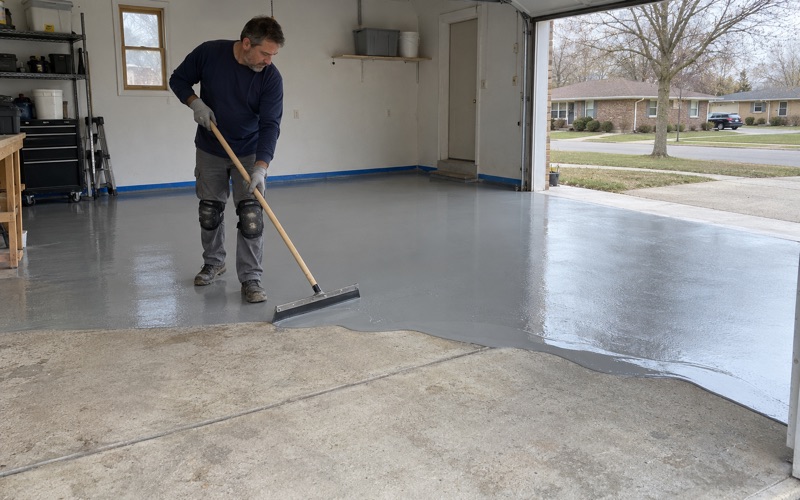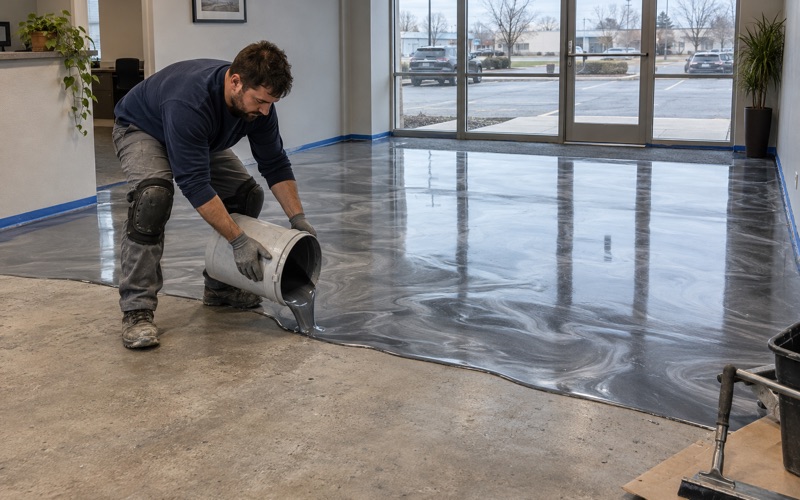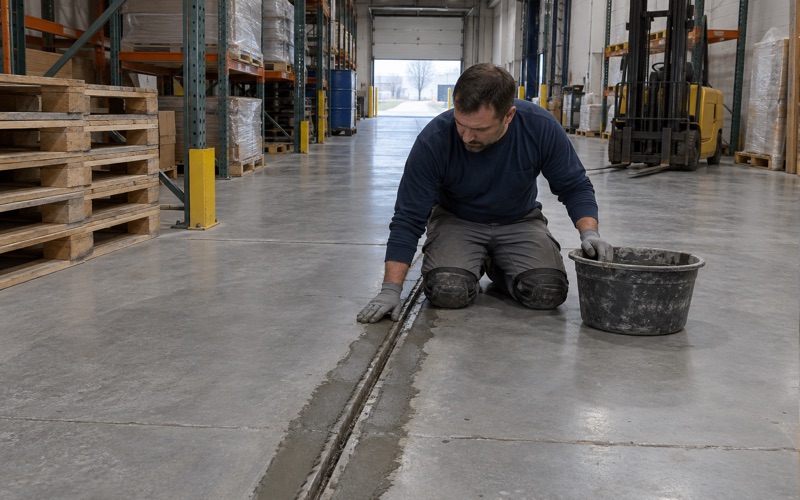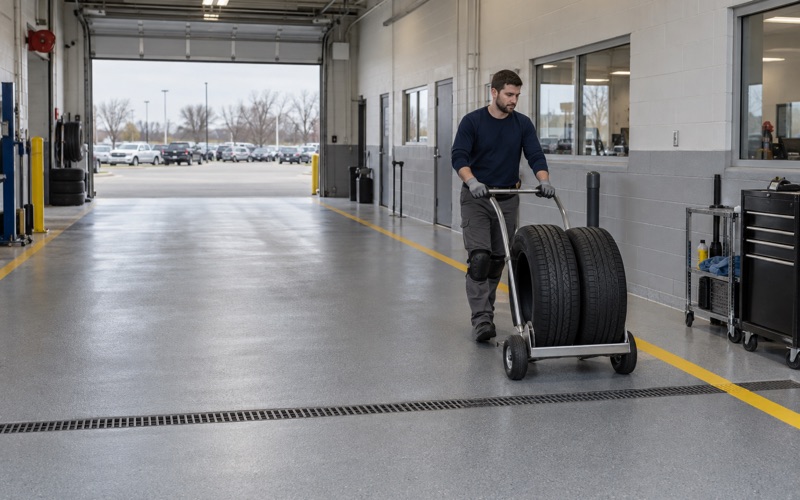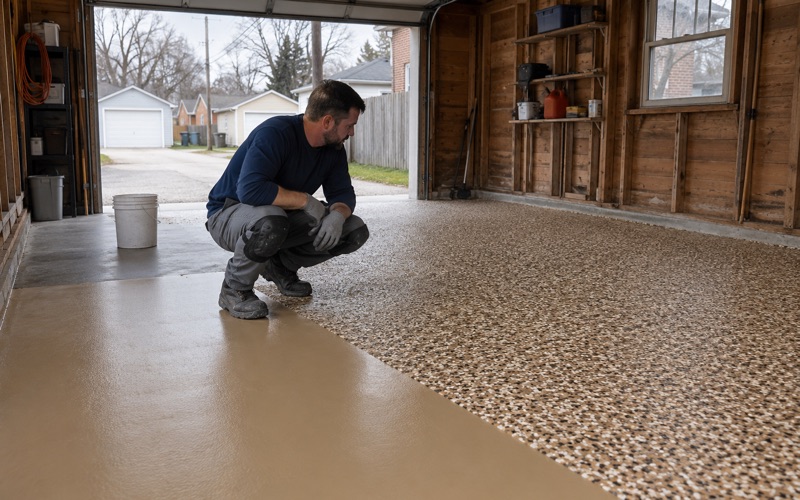
Racine Epoxy Flooring has spent more than 20 years installing epoxy flooring in Muskego and the surrounding area, and the floors that test us hardest here are the ones under machine tools. A slab beside a lathe or a gear hobber collects coolant, tramp oil and chips every shift, and a coating that goes down without accounting for that will lift long before anyone expects. We plan those floors around what the concrete has already absorbed, not around how it looks on the day we arrive.
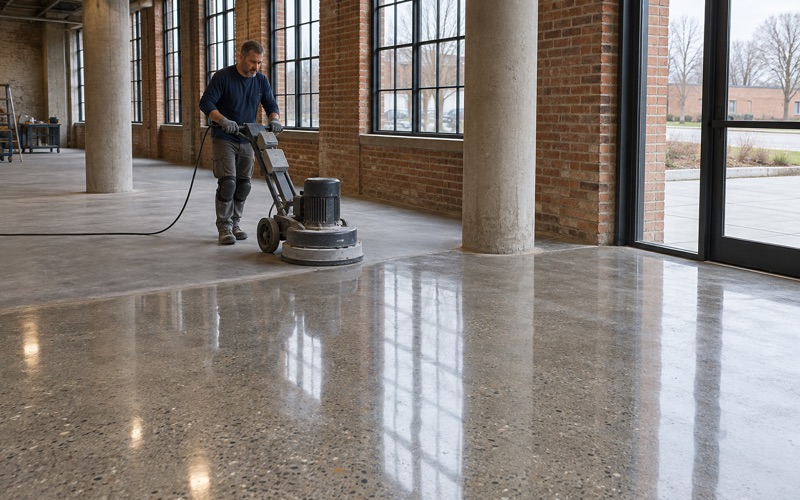
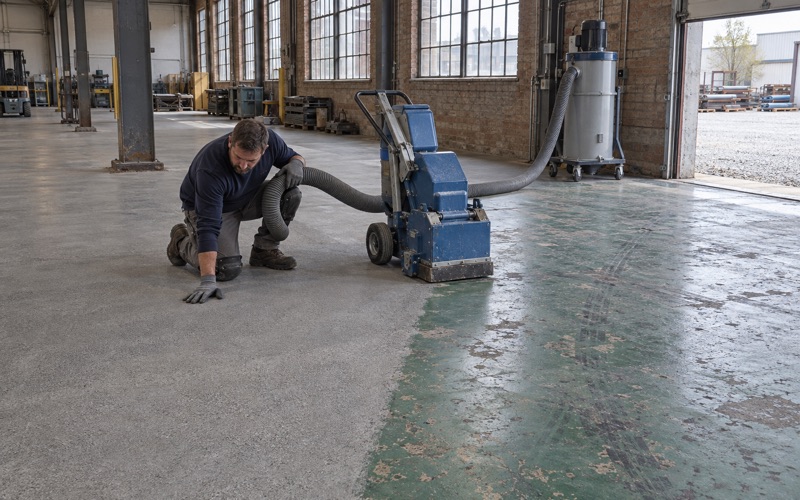
Our approach starts with opening the slab mechanically, by diamond grinding or shot blasting, because acid etching does nothing useful on concrete carrying oil below its surface. Before quoting we read the cracks, joints and any old coating, and we say so plainly when a section needs repair or replacement first. The written proposal names the product, the system build and the finished thickness, so a plant manager can hold what went down against what was quoted.
Shops rarely get to shut down for a week, so we schedule plant floors around production, including overnight and weekend windows. Home garages and basements get moisture testing as a line item and a written contract before any deposit changes hands. The sections below cover what changes when the floor in question sits beside a coolant tank.
Machine Shops in Muskego’s Industrial Parks
Gear and screw-machine work on Commerce and Mercury
Muskego is a Waukesha County city of about 25,000 people in the Milwaukee metropolitan area, and its industrial parks hold working machine shops rather than only storage buildings. Northern Gear & Machining on Commerce Drive has been at it for more than 60 years, turning out gears, shafts, assemblies, hydraulic parts and fuel-system components. Its own materials describe finishing capabilities for virtually any ferrous material.
TNS Machining on Mercury Drive describes its work as prototype to production, with screw machine products and high-volume runs. We name these shops as part of the local landscape, not as customers, and we have not seen their floors or their fluids. What they show is the kind of floor this city has: concrete under CNC, gear and screw-machine work that runs on fluid all day.
InPro and the Apollo Drive campus
InPro Corp. sits on Apollo Drive, making door and wall protection, architectural joint systems, cubicle tracks, privacy curtains and way-finding signs. The company said in 2004 that all of its products were made at the Muskego plant, and it completed a 102,000 square foot headquarters expansion there in late 2005. That manufacturing base is a large part of why light-industrial floors come up so often in conversations we have about work in Muskego.
A campus like that tends to hold several floor types under one owner, from production bays to offices and shipping areas. We scope each area on its own terms rather than pricing one system across buildings that do very different jobs.
Looking for epoxy-flooring closer to Beach Park? See Epoxy-Flooring Services in Beach Park.
What OSHA’s Coolant Manual Says About the Floor
Slip-resistant soles and immediate cleanup
OSHA’s Metalworking Fluids Safety and Health Best Practices Manual gives real attention to the floor. It says that when floors of the work area are oily, safety shoes with slip-resistant soles should be provided, and that on a day-to-day basis spills should be cleaned up immediately. It also describes splash guards as a way to keep metalworking fluids from spilling on the ground in the first place.
The manual is advisory guidance, not a standard, and it names footwear rather than any coating. We bring it up because it describes the conditions a shop floor finish has to live with: fluid on the surface, frequent wiping and mopping, and people walking through it in work boots all shift.
Splash guards and what still reaches the floor
Splash guards cut down on how much fluid leaves a machine, but they do not stop all of it. Chips carried out on boots, drips from parts moved to a bench, and mist at enclosure doors all land on the concrete, usually in the same few square feet in front of each machine.
Those are the zones we map first, because they take the most fluid and the most foot traffic. They often get heavier texture and an extra build, while quieter areas of the shop can carry a lighter system and a lower price.
Wash water, sumps and coolant return trenches
One line in the manual bears directly on how we plan a floor. It says wastes, including floor wash water, should not be dumped or swept into fluid sumps or coolant return trenches. A coated floor tends to be cleaned more often and more thoroughly than bare concrete, so the way the finish meets those trenches decides where the wash water actually goes.
We lay out the coating edge, and any pitch toward cleaning points, with the shop’s maintenance lead before grinding starts. The goal is a floor that can be scrubbed without pushing dirty water into the coolant system the machines draw from.
Concrete That Has Soaked Up Cutting Oil
Four fluid classes, different histories in the slab
The OSHA manual sorts metalworking fluids into four classes: straight oil, soluble or emulsifiable oil, semisynthetic, and synthetic. Semisynthetic concentrates carry 5 to 30 percent refined base oil, while synthetics carry no petroleum oil at all. Those differences matter at the slab, because concrete that has taken years of straight or soluble oil holds far more of it below the surface than concrete that has mostly seen synthetic coolant.
We ask what has run on the floor, and for how long, before we price degreasing. A shop that has changed fluids over the years may have zones with very different histories under one roof, and the scope should reflect that rather than treat the whole slab as a single surface.
Degreasing before the grinder
Grinding an oil-soaked slab without cleaning it first smears contamination across fresh concrete and loads the diamonds. We degrease the affected areas, let the concrete give up what it will, and then open the surface with a diamond grinder or shot blaster to an ICRI CSP profile suited to the system. Where oil keeps wicking back after profiling, that section gets more cleaning or is cut out and patched.
We do not acid etch, and on oily concrete there is a specific reason. Acid reacts with the cement paste rather than the oil, so it leaves the contamination in place while making the surface look ready. Grinding dust and slurry are collected on site and never washed toward a drain.
Bond checks before the full system
Before committing a whole bay, we put down test patches on the worst areas and check adhesion after cure. A patch that peels cleanly tells us the slab still needs work, and it costs far less to learn that on a square foot than across an entire machine cell. Where a patch fails again after a second cleaning, we price saw-cutting and patching that section in writing rather than coating over it and hoping.
Moisture testing stays in the scope too, using ASTM F1869 calcium chloride kits or ASTM F2170 in-situ relative humidity probes depending on the slab. Oil and moisture are separate problems, and warranty exclusions are read out before the job is sold, with moisture named first.
Texture for Oily Footing and a Clean Edge at the Trench
Broadcast texture for wet, oily traffic
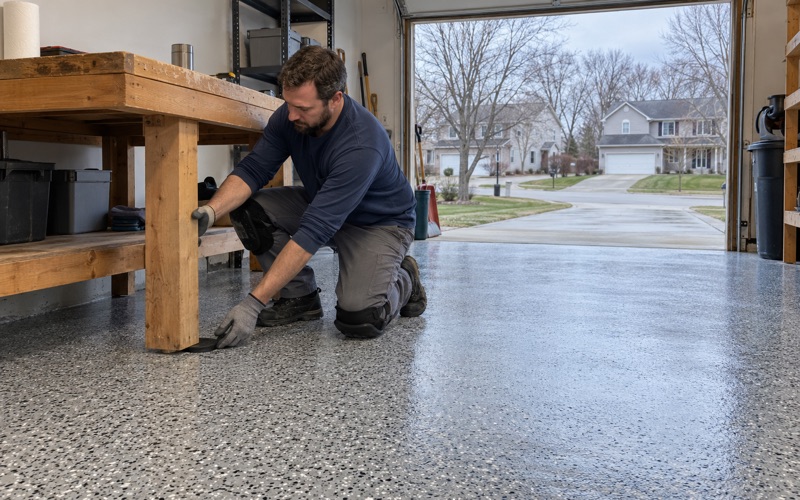
No coating stays grippy under a film of cutting oil, so we build texture into the system and pair it with the housekeeping the shop already does. A 100% solids epoxy body coat with a quartz aggregate broadcast gives boots something to catch on, and the grit can run heavier at machine fronts and lighter in aisles where carts roll. Slip-resistant footwear, as the OSHA manual describes, still matters on top of whatever the floor carries.
Texture has a cleaning cost, and we talk through that trade-off before choosing the profile. A finish that is too aggressive holds chips and sludge in its valleys, which slows down the immediate spill cleanup the manual calls for.
Stopping cleanly at the coolant trench
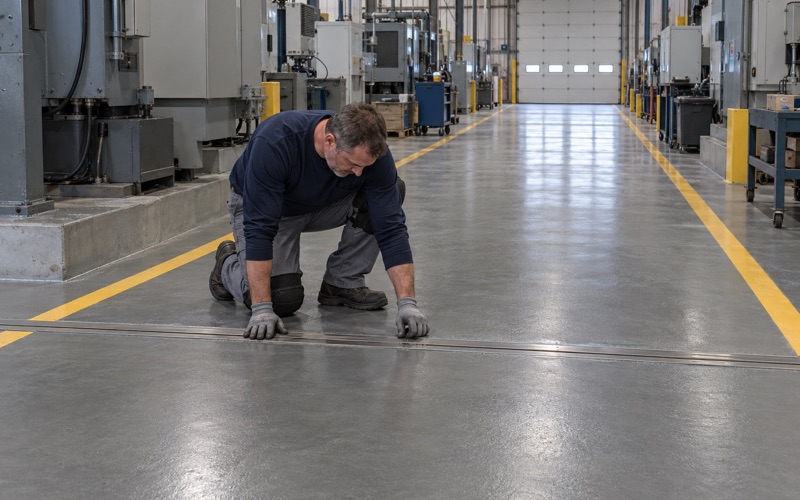
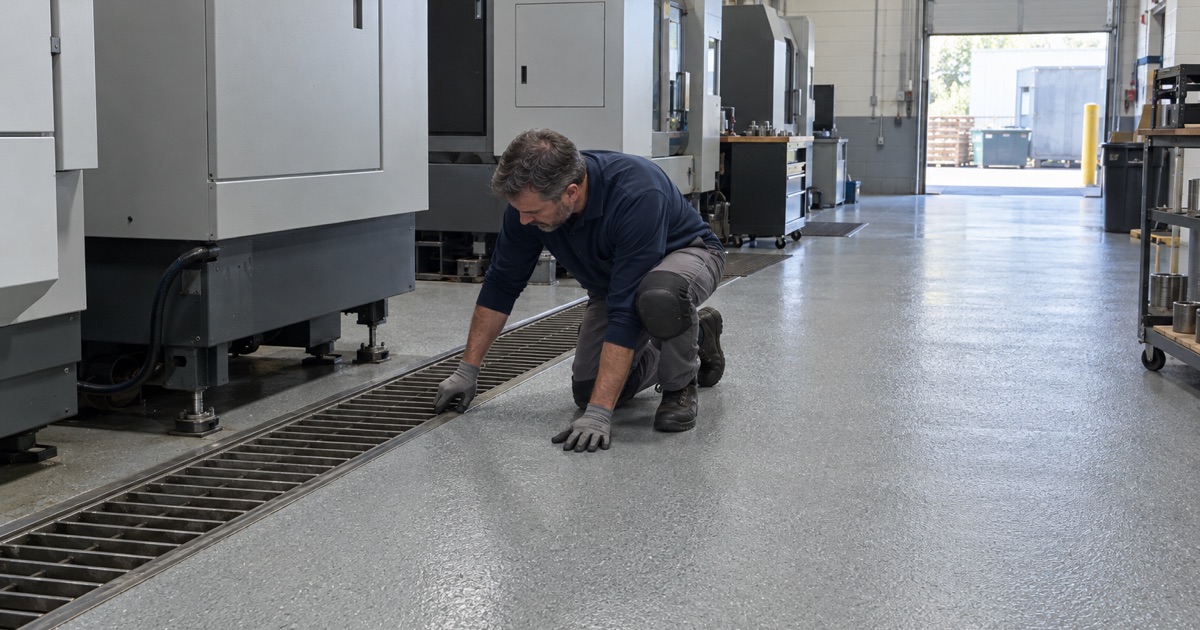
The coating should end at a coolant return trench with a deliberate edge, not feather off into the grating. We saw-cut a termination line, key the coating into it, and keep resin out of the trench itself so nothing flakes into the fluid stream later.
Joints and cracks near machine bases are filled with a semirigid joint filler before any coating goes over them, so cart and forklift wheels do not break the edges. Polyaspartic or polyurea topcoats can make sense where a quicker return to service matters, though on a slab with a long oil history the primer and body coat carry most of the load.
Shop schedules, and floors beyond the shop
Machine shops often cannot stop production for long, so we stage work cell by cell and use overnight or weekend windows when the building has to keep running. Curing is scheduled against slab temperature and dew point rather than the calendar, which matters in a building whose overhead doors open to winter air.
Coating an existing shop floor and replacing a slab are different questions for the City of Muskego’s building inspection staff at City Hall, and commercial plan review runs under the Wisconsin Commercial Building Code. When a job crosses into slab replacement or new trench work, we ask the city whether a permit applies before the work goes on the schedule.
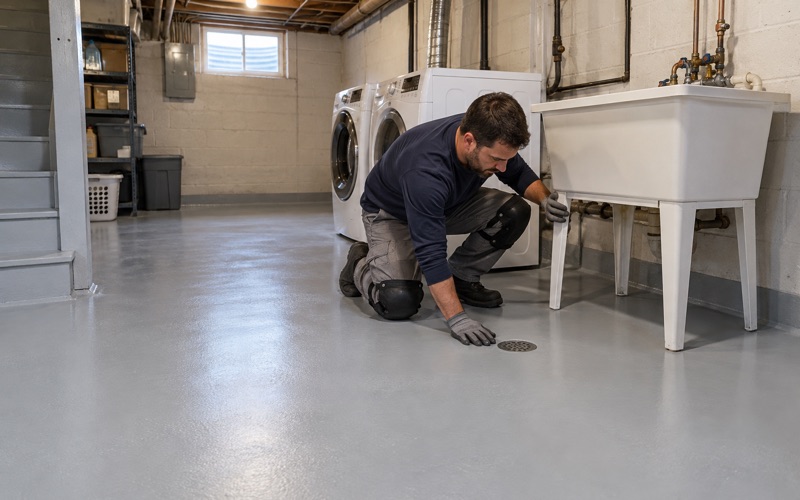
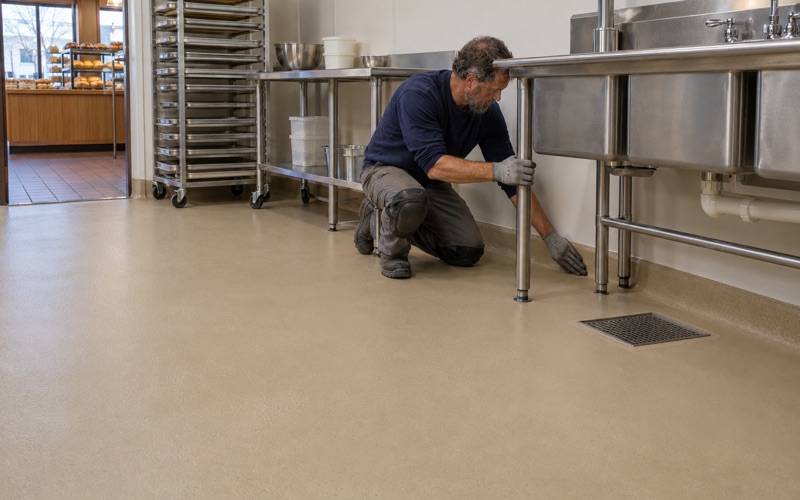
Not every floor in the city sits beside a lathe. Owner-occupied homes make up about 84.8 percent of occupied units in Muskego, and those garages and basements get the same moisture testing, a written contract before any deposit, and a plain answer when a slab needs repair first. Food businesses planning a kitchen remodel file a Plan Review Application with Waukesha County Environmental Health 30 days before work starts, and we build our finish schedule into that timeline.
- 20+ Years on Concrete
- Moisture Tested First
- Written Contracts