Racine Epoxy Flooring brings more than 20 years of epoxy flooring work to Lindenhurst, and the kennel rooms, grooming areas and dog runs here are where that experience is tested hardest. A floor that is hosed, scrubbed and sanitized every day fails differently from a garage floor, so we plan the system around that wear from the first site visit.
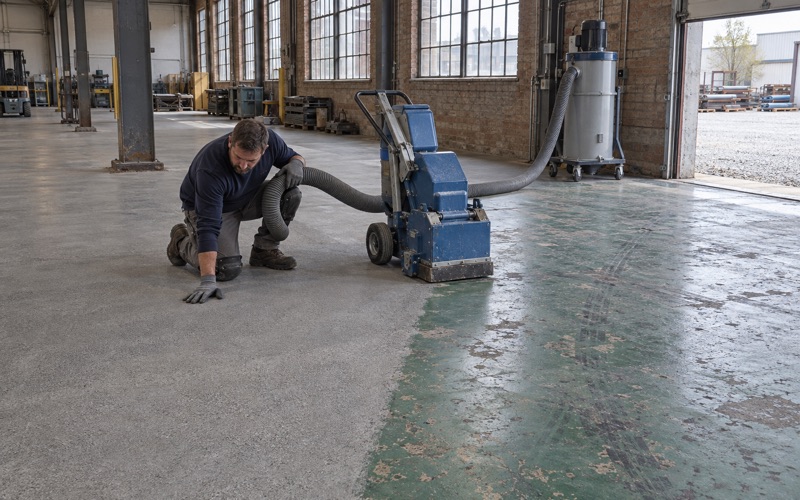
Our approach starts underneath the coating. We open every slab mechanically with a diamond grinder or shot blaster rather than acid etching it, and moisture testing is written into the scope as its own line item. Then we read the cracks, joints and any old coating, and we tell an owner plainly when a run slab needs repair before anything goes over it.
What follows covers the Illinois rule that shapes floors in animal facilities, why a remodel changes what a run has to be, how wash water should leave the floor, and what daily sanitizing demands of a topcoat. We install and stand behind the floor; the facility’s license and its inspections stay with the licensee and the state.
A Dog Daycare on Sand Lake Road and the Rule Behind Its Floors
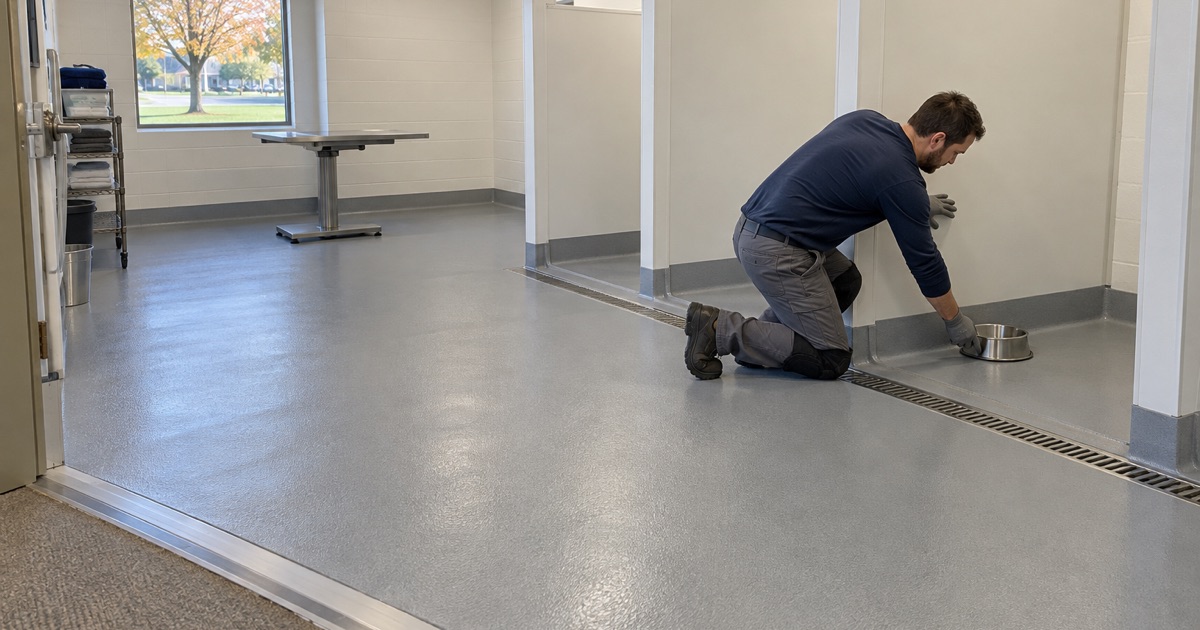
A working kennel inside the village
Camp Bow Wow Lindenhurst operates at 2975 Sand Lake Road, inside the village limits in Lake Villa Township. The business site lists dog daycare, puppy daycare, overnight boarding in individual cabins, grooming, and spacious indoor and outdoor play yards. We mention it as a place in town, not as a client, and we have not seen its license or its floors.
Lindenhurst Animal Hospital on East Grand Avenue also offers cat and dog boarding. Together they show the kind of room this page is about: floors that hold animals for hours or overnight, then get cleaned down to bare surface. That use pattern, more than foot traffic or vehicle loads, decides which epoxy flooring system belongs in the room.
What 8 Ill. Adm. Code 25.20 says about floors
Boarding and daycare are Animal Welfare Act activities in Illinois, and the Department of Agriculture’s facility rule for licensees sits at 8 Ill. Adm. Code 25.20. Its section on buildings says floors housing or displaying animals shall be of permanent construction, with equine shelters excepted. It also states plainly that dirt and unfinished wood floors are unacceptable.
The same section requires cleaning daily or more often to prevent debris, dirt or waste from building up. Read as a floor specification, that is a demand for a surface that tolerates water and cleaning chemistry every single day for years. A coating is not a license or an inspection result, though, and we never present one as either.
Lake country ground under the slab
Lindenhurst lies on the Valparaiso moraine, a village described as rich in lakes and swamp land, with 0.34 of its 4.86 square miles in water. Groundwater depth under any particular building has not been measured, and we do not guess at it. That is exactly why moisture testing is part of our scope here rather than an optional add-on.
A kennel slab is wetted from the top daily, so a vapor problem from below can hide for months under a floor that always looks damp anyway. Testing before we grind and coat separates the two sources. If readings are high, the system changes; if the slab is cracked through and wet, we say it needs work first.
Looking for epoxy-flooring closer to Shorewood? See Epoxy-Flooring Services in Shorewood.
Remodeling Is When Runs Have to Be Impervious
Concrete or other impervious material
Subsection (e)(2) of the rule is the one that matters most to an owner planning work. For new construction or remodeling, the licensee shall provide runs surfaced with concrete or other impervious material. A kennel remodel is therefore the moment the run surface, its slope and its cleanability all get decided together, rather than one at a time over several years.
Bare concrete is porous, so it holds urine and wash water in its surface. A properly built resin system seals that surface, and subsection (e)(3) asks for run surfaces designed to permit cleaning and kept free of excessive waste. Whether a given surface satisfies the inspector is the licensee’s question to settle with the state; our job is a floor built for that use.
Preparing a slab that has housed animals
Old kennel concrete is often contaminated well below the surface, and coatings fail on contamination. We grind or shot blast to an ICRI CSP profile suited to the system, then look at what the fresh surface shows. Cracks, spalled joints and failing earlier coatings get named in writing, and a slab that needs patching or replacement is called out before we quote the coating.
Moisture comes next. We run ASTM F2170 in-situ relative humidity probes or ASTM F1869 calcium chloride tests on the slab, because a floor that is washed daily on top can still carry vapor pressure from below. Where readings call for it, a moisture-mitigation primer goes into the build instead of being discovered after blisters appear.
A proposal that can be checked
Our proposal names the product, the system build and the finished thickness. For a run that might be 100% solids epoxy with a quartz aggregate broadcast for footing and a polyaspartic or polyurea topcoat, or a urethane cement system where hot water and heavy wash-down point that way. The owner can measure what went down against what was quoted.
The scope also states where the coating stops: at the gutter lip, up the wall to a set cove height, and around cabin partitions and gate posts. Those edges are where wash water attacks a floor, so we would rather settle them on paper than discover a missing detail after the first week of daily cleaning.
Gutters, Slope and Wash Water to the Sewer
Drainage the rule spells out
Subsection (e)(4) calls for adequate drainage, including gutters and the discharge of any fluid or content into a sewer, septic tank or filter field, in compliance with local zoning. In practice that means wash water from each run has to reach a gutter, and travel from the gutter to the sewer, without sitting in low spots along the way.
A coating follows the concrete beneath it. If a run was poured flat or has settled toward the wrong wall, resin will not correct that, and water will pond where it always did. We check the fall across each run before quoting, and where the slab needs regrading with a sloped topping or patch, that is scoped as its own step.
Where a building drains to a septic tank or filter field instead, the rule allows that too, subject to local zoning. Which applies to a particular building is a question for the owner and the village. We work from the drains that are there, and we flag any floor drain that sits high enough to trap water around it.
Gutters, edges and coved transitions
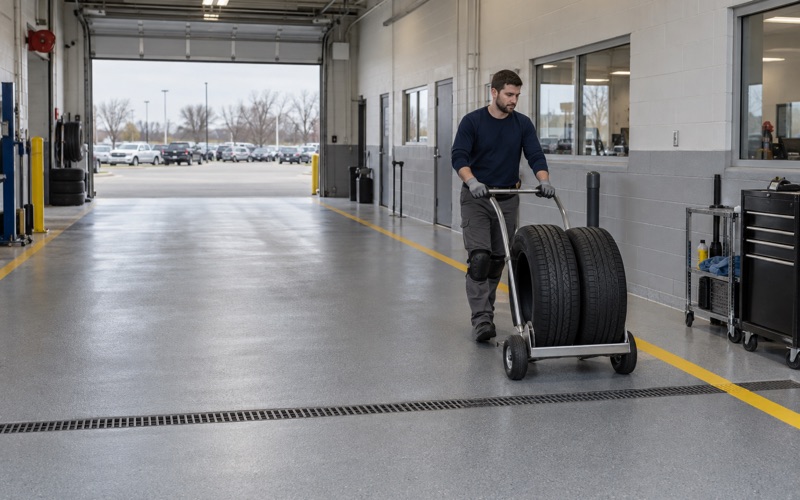
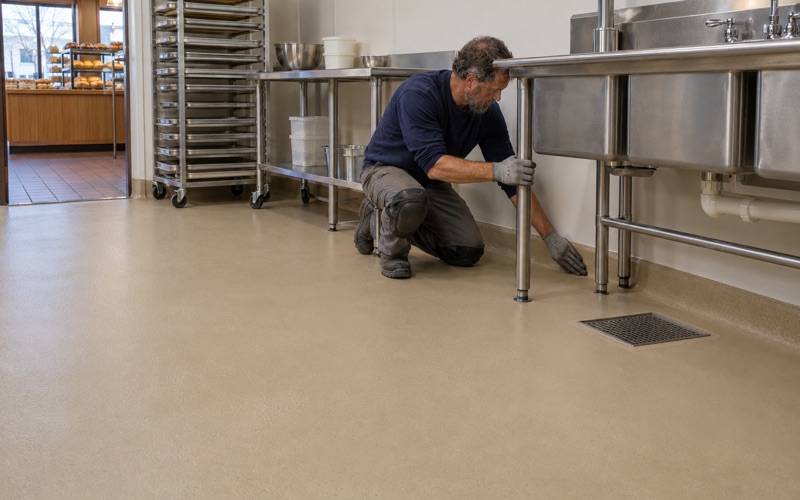
Gutters and trench drains are where kennel floors usually fail first. The coating has to terminate cleanly into the drain body and run up the walls in a cove, so wash water cannot get behind the edge and lift it. We key the termination into a ground saw cut instead of feathering it thin, because a feathered edge peels under daily spraying.
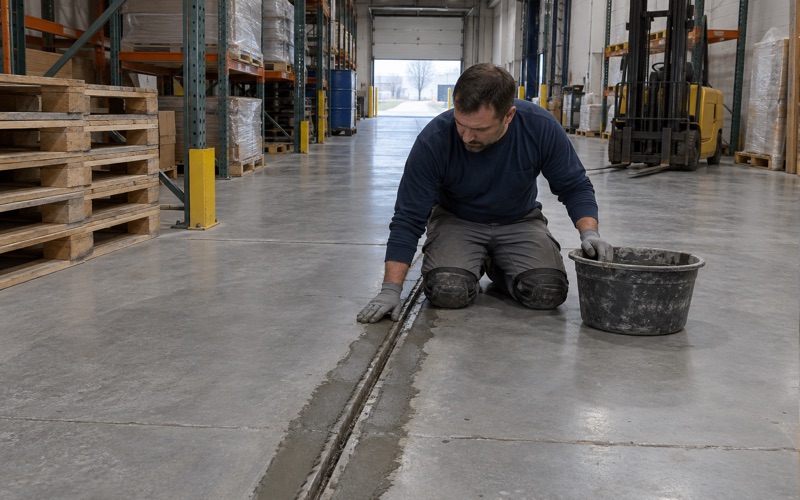
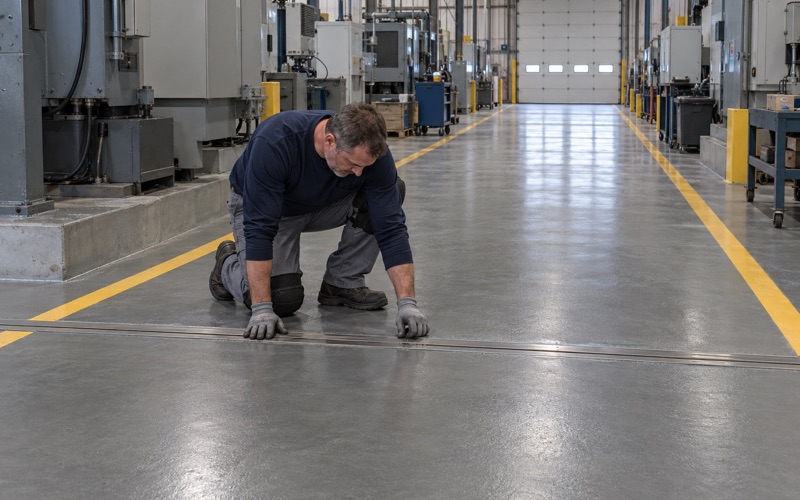
Control joints in a run slab move with temperature, and a rigid coating bridged across them will crack along the line. We fill those joints with a semirigid filler before the coating goes on, which keeps the edges supported and gives water no path into the joint. It is the same detail we use on plant floors under cart wheels.
Our slurry never goes down that drain
A kennel’s floor drain is plumbed to the sewer for wash water, not for construction waste. Grinding dust and slurry are collected on site with vacuums and bagged, and none of it is rinsed into the gutters, the sanitary line or a storm drain outside. The same discipline applies to leftover resin and cleaning solvents from the job.
Keeping a remodel this tidy also matters for the reopening. A run that has been ground and coated but still has dust in its gutters will push residue into the sewer line on the first wash-down. We vacuum the drains and gutter channels at the end of preparation and again before the topcoat, so the first cleaning finds a finished floor.
Daily Sanitizing at Pressure: What the Surface Has to Survive
Pressure, chemistry and the topcoat
Subsection (a)(4) requires water at sufficient pressure to sanitize the facility, and the floor section requires cleaning at least daily. A run floor therefore sees pressure washing, disinfectant dwell time and scrubbing every day, plus claws and dragged water bowls. We choose the topcoat for that combination and tell owners which cleaners the manufacturer lists as compatible.
Texture is a trade-off here. Too smooth and a wet floor is slick under running dogs; too coarse and it traps waste and resists the cleaning the rule requires. We set the quartz broadcast and topcoat build to give footing that still squeegees clean. We make no claim that any coating kills germs or prevents illness, because that is not what a floor does.
Cure against conditions, not the calendar
Resin cure depends on slab temperature and the dew point spread at the surface. A kennel room in a Lake County winter can sit cool near the floor even with the heat on, and coating a surface near dew point invites amine blush and poor adhesion. We read those conditions on the day and schedule the coats around them rather than around a date.
Before animals return, the floor needs its full cure for water and chemical exposure, which runs longer than the walk-on time printed on a data sheet. We give the owner that figure in writing for the product used. Illinois also caps VOC content for architectural coatings under 35 Ill. Adm. Code Part 223, and we select products within those limits.
Warranty terms read out first
Before a job is sold, we read the warranty exclusions aloud, starting with moisture. Vapor drive from below, standing water left on an uncured floor, and cleaning chemistry outside the manufacturer’s list are the usual causes of trouble in animal facilities. An owner who hears those up front can plan cleaning protocols and remodel timing around them.
We also explain the maintenance that keeps a run floor serviceable: rinsing off cleaner residue, renewing the topcoat before wear reaches the base layers, and repairing a chipped edge the week it appears. A floor kept up this way can usually be refreshed with a new topcoat rather than stripped back to bare concrete.
- 20+ Years on Concrete
- Moisture Tested First
- Written Contracts