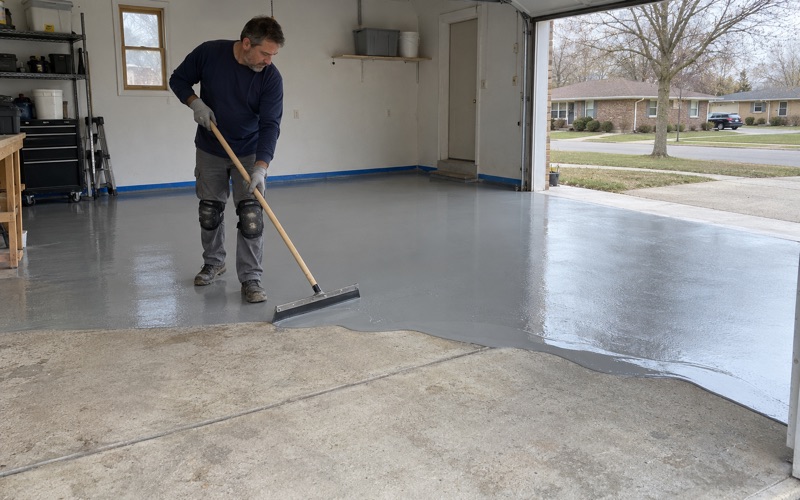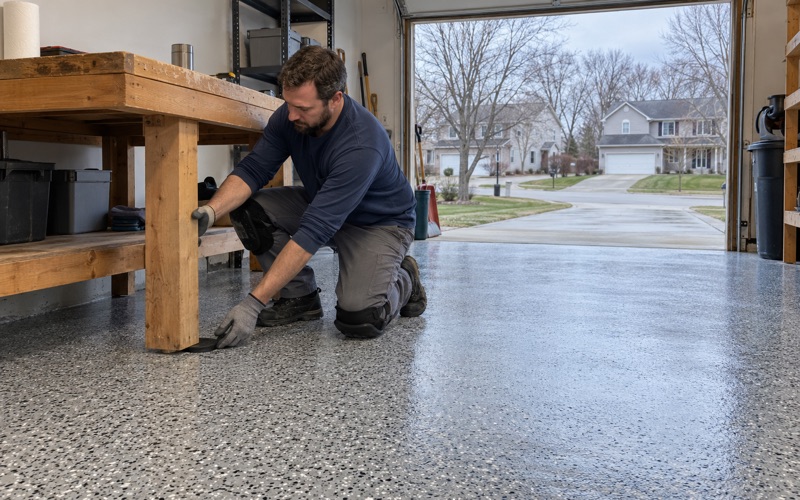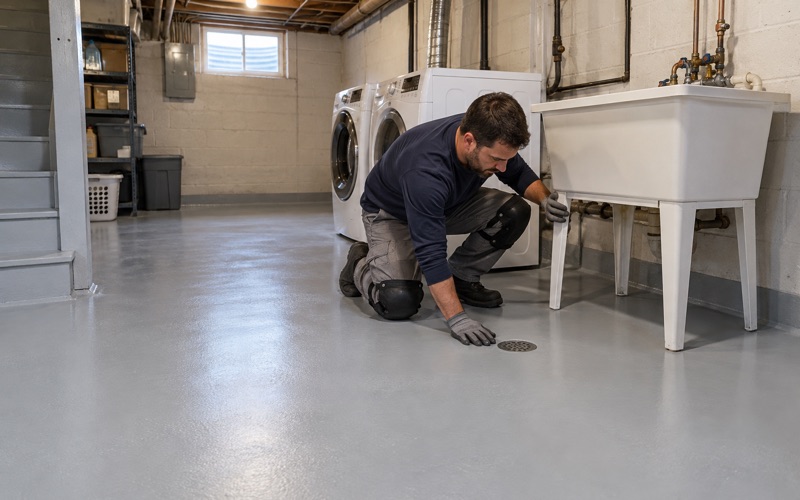
Racine Epoxy Flooring has spent more than 20 years on epoxy flooring in Kenosha and across southeast Wisconsin, and the floors that make us slow down and ask the most questions are the ones in dry food rooms. Most coating advice assumes a floor gets hosed. This page is about rooms where water is the thing being kept out, and what that changes about the system we specify and how we install it.
In a dry production room the floor is swept, scraped and vacuumed, so the coating has to stand up to abrasion rather than daily flooding. It also has to be continuous, because a hairline crack or an open joint is a place where water from an occasional wash can sit and stay. We read the slab with that in mind before a number goes on paper.
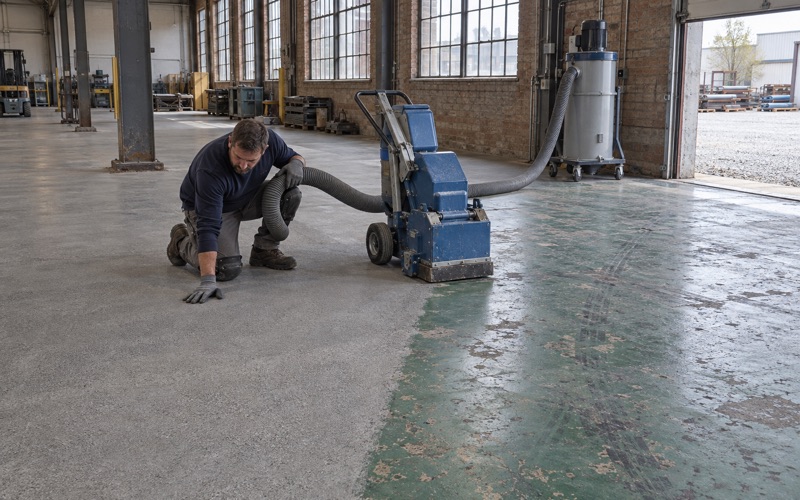
The job itself has to respect the same rule. We open the concrete with a diamond grinder or shot blaster, never an acid etch, collect the dust as we go, and plan every step so no water or wet prep reaches a room the plant keeps dry. Our proposal names the product, the system build and the finished thickness, so the plant can check what went down against what was quoted.
A Chocolate Plant on 70th Avenue
Puratos and its state license
Kenosha makes chocolate. Puratos, the Belgium-based bakery, patisserie and chocolate ingredients company, runs its U.S. chocolate production from a facility at 5000 70th Avenue, an address that geocodes inside the City of Kenosha. A 2017 awards profile put the site at 79 employees, which makes it a working plant rather than a sales office.
The Wisconsin Department of Agriculture, Trade and Consumer Protection lists Puratos Corporation at that address in its food processing plant license roster, in a report dated October 7, 2026, under license 265635 in the Large Non-Potentially Hazardous category. We have not been inside, and we have not read its sanitation program or seen its floors. We use it here because it shows what kind of food this city produces.
Why a low-moisture food changes the floor question
Chocolate is a low-moisture, ready-to-eat food, and that matters for sanitation. The Grocery Manufacturers Association guidance Control of Salmonella in Low-Moisture Foods, issued February 4, 2009, lists chocolate among products tied to salmonellosis outbreaks. Its central point is that in a dry product, water in the plant is what lets Salmonella establish and spread, so moisture becomes the thing to manage.
Element 3 of that document calls for sanitary design so moisture can be excluded from the processing environment, including through dry cleaning procedures. Element 4 says dry conditions must be maintained at all times in the Primary Salmonella Control Area, except when controlled wet cleaning is deemed essential, and that water from leaks or heavy rain should be removed immediately. It is industry guidance rather than a regulation, but plants build their programs on it.
None of this makes a floor a food safety device. Hygiene is the plant’s program, run by the plant’s own people. What a floor can do is avoid working against that program: no spots that hold water, no surface that sheds grit into the room, and no installation that leaves the slab damp the week a dry room reopens.
Looking for epoxy-flooring closer to Oak Creek? See Oak Creek Epoxy-Flooring.
Dry Cleaning and What It Asks of a Coating
Scraping and vacuuming instead of a hose
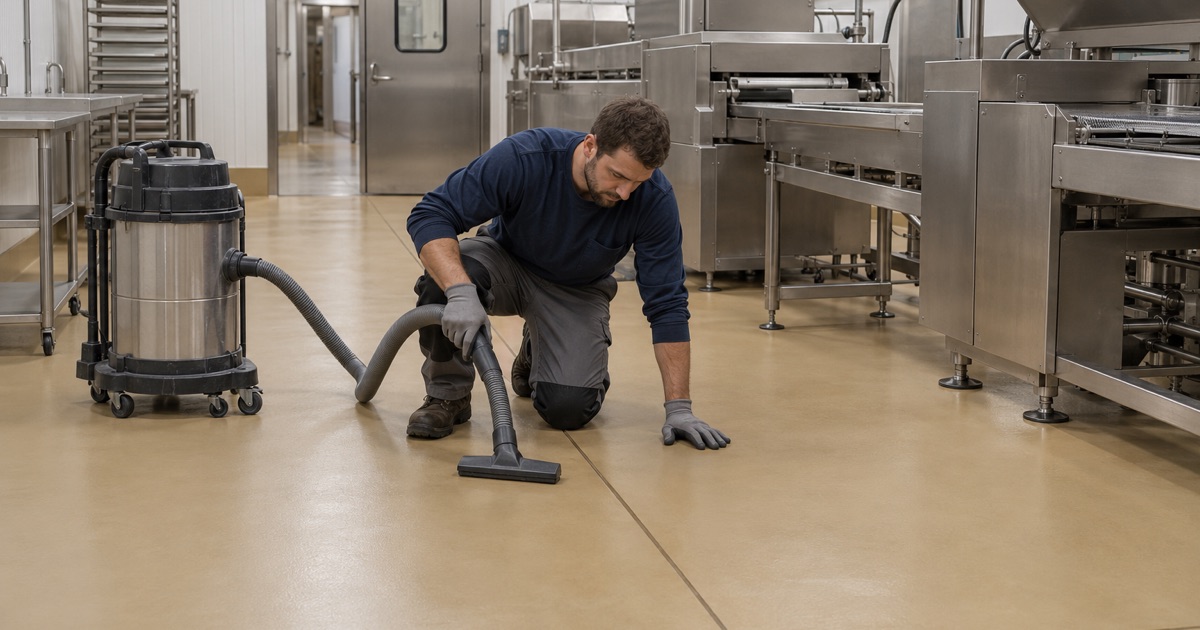
In a room run on dry cleaning, the floor is scraped, swept and vacuumed. Spilled product, sugar, cocoa powder or ingredient dust comes up with a scraper and a vacuum rather than a hose and a squeegee. That sounds gentler than a washdown, but a steel scraper blade dragged across a coating day after day is its own kind of wear.
Scraping finds the weak spots in a floor quickly. A thin film coat wears through in the traffic lanes, and a coarse broadcast texture traps fine powder that a vacuum then has to pull out of every valley. The right surface is hard and tight enough to take a blade, and smooth enough that the vacuum leaves nothing behind.
Choosing a system for dry abrasion
For dry rooms we usually look at a 100% solids epoxy body coat built to a measurable thickness, with a fine quartz aggregate broadcast where a plant wants some traction, then a topcoat that seals the texture down to a low profile. Polyaspartic and polyurea topcoats come into the conversation where abrasion resistance at the surface is the priority.
Urethane cement is the system most people associate with food plants, and it earns its place in hot, wet rooms. In a room kept dry it is still an option, but it is not automatically the answer, and we explain the trade-offs in plain terms. The decision turns on room temperature, the cleaning chemicals actually used, and how much texture the cleaning crew can live with.
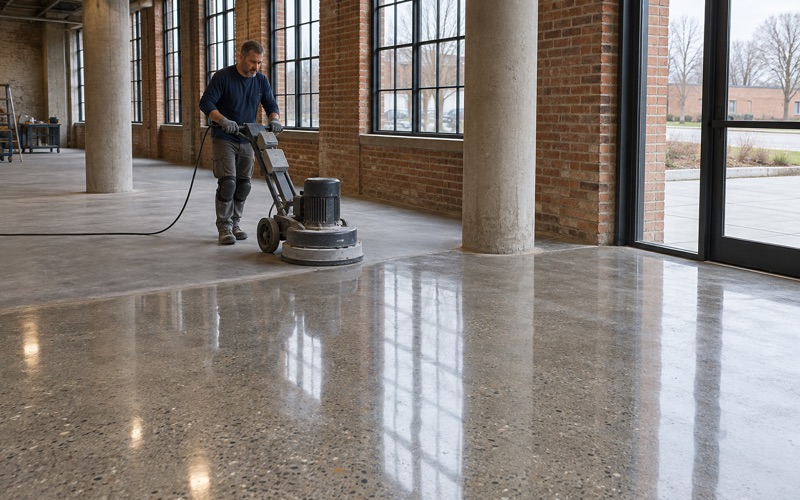
Not every dry area needs a coating at all. A dry ingredient warehouse with sound concrete can sometimes be ground, treated with a lithium silicate densifier and polished, which leaves a hard surface with no film to wear through. When a room allows it, we put both options side by side with the trade-offs written down.
The occasional controlled wet clean
The GMA language allows wet cleaning when it is deemed essential, and that exception shapes the floor too. When a room does get washed, every drop has to come back off the floor promptly. A coating with dips, low spots or a rough base holds puddles for hours, which is the opposite of what a dry program needs.
So we pay attention to flatness as well as hardness. Where a slab has birdbaths or settled areas, we talk about leveling them before the coating rather than hiding them under it. A floor that gives its water back to the cleaning crew’s squeegee quickly makes the rare wet clean shorter and the drying time easier to control.
Cracks, Open Joints and Puddles in a Dry Room
Reading the slab before we quote
Before quoting a dry-room floor we walk the slab and read it: the cracks, the saw-cut and construction joints, the old coating and the patches somebody added years ago. Each one is a question about where water could hide. We say plainly when a section needs repair or replacement before it can be coated, rather than pricing a coating over a problem.
Old coatings matter as well. A peeling film sheds flakes into the very space the plant is trying to keep clean, and it hides whatever is underneath. We grind failed coating off rather than covering it, so the new system bonds to concrete we have actually seen and tested.
Moisture testing is part of that reading, written into the scope as a line item. We use ASTM F2170 in-situ relative humidity probes or ASTM F1869 calcium chloride testing depending on the slab, and both are dry tests. A slab carrying moisture from below can blister a coating from underneath, and in a dry room a blister is also a pocket.
Sealing joints so nothing sits in them
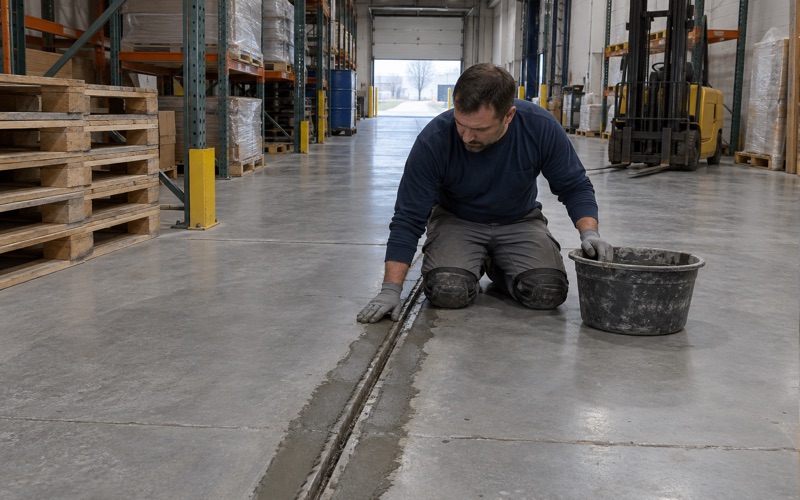
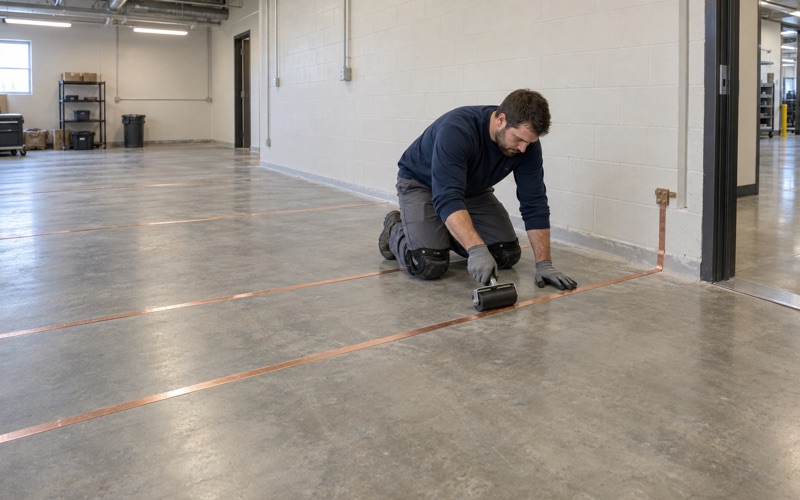
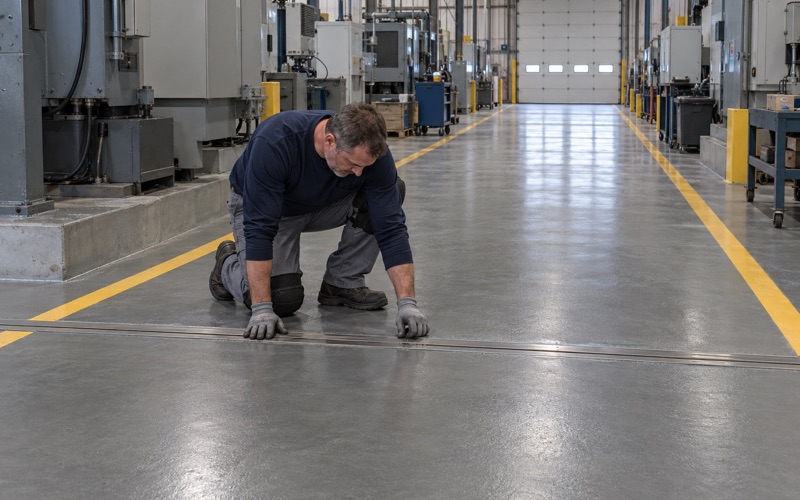
An open joint is a channel. Product dust settles into it, a wet clean fills it, and the water sits at the bottom where no vacuum reaches. Filling joints with a semirigid filler before any coating goes over them closes that channel and keeps the coating from cracking along the joint line as the slab moves.
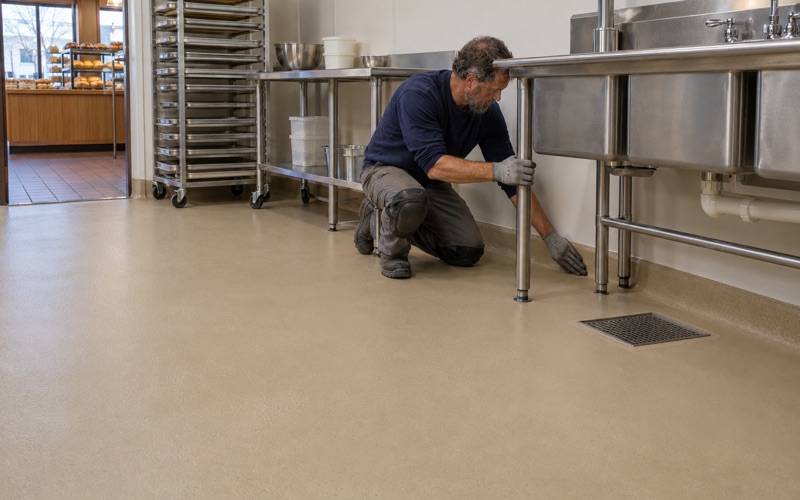
Cracks get similar treatment, routed and filled so the finished surface reads as one continuous plane. Where a floor meets a wall, an equipment base or a drain body, we look at how the edge is finished so no seam is left open for a wash to soak into. A floor is only as dry as its worst joint.
After a leak or a heavy rain
The GMA guidance asks for water from a roof leak or a heavy rain to be removed immediately. A coated floor makes that faster when it is continuous and flat, because a crew can pull the water to one point and dry the surface. A cracked floor with open joints holds the water where nobody can reach it.
Where water comes up through a slab rather than down through a roof, a coating is not the fix, and we will not sell one as if it were. Warranty exclusions are read out before the job is sold, with moisture named first. If the slab tests wet, we talk about a moisture-mitigation primer or the source of the water before any color goes down.
Doing the Floor Work Without Bringing Water In
Dry preparation from start to finish
Acid etching is a wet process: acid, water, scrubbing and rinse water that soaks into the slab. We do not acid etch on any job, and in a dry plant the reason is obvious. Every slab is opened mechanically with a diamond grinder or shot blaster to the ICRI surface profile the system calls for, and nothing about that step uses water.
Grinding throws fine concrete dust, so we run the equipment with dust collection and vacuum the floor as we go. Dust and any slurry are collected on site and never washed toward a drain. In a food plant we also work out containment with the plant, so dust stays inside the work zone and away from production rooms that are still running.
Curing and scheduling around production
Coatings cure on slab temperature and dew point, not on the calendar, and we schedule the cure accordingly. A coating that cures in a cold, humid room can leave amine blush on its surface, which then has to be cleaned off before the next coat. We plan the sequence so no wipe-down or rinse is needed to fix a curing problem in a dry space.
Plant floors are scheduled around the hours the building has to keep running, including overnight and weekend windows. On a phased job we sequence areas so production can move around the work. Before anything is booked, we ask City of Kenosha City Inspections at 625 52nd Street whether the job needs a permit, since coating a slab and replacing one are different questions.
When a room is finished, we return it to service the same way it will be cleaned: vacuumed and wiped dry, not mopped. The plant gets the product data, the system build and the measured thickness in writing, so its own records match what is on the floor rather than what a brochure promised.
Kenosha’s other licensed food plants
Puratos is not the only food processor on the state’s list for the city. The same October 2026 DATCP roster shows Paielli’s Bakery on 39th Avenue, S. T. Specialty Foods on 77th Avenue, Mavra’s Greek Oil on 14th Avenue and East View Coffee on 58th Street, each holding a food processing plant license.
Not every room in those plants runs dry, and we never assume one does. A bakery’s mixing room and its packaging room may follow different cleaning rules. We ask how each room is cleaned before we specify anything, because the cleaning program decides whether a floor should shed water quickly or never see it at all.
- 20+ Years on Concrete
- Moisture Tested First
- Written Contracts