Racine Epoxy Flooring brings more than 20 years in the trade to epoxy flooring in Greenfield, and the first question we ask about any floor here is what it will actually carry. A slab that holds a parked car sees four broad tire footprints. A slab that holds a row of motorcycles sees something very different, and the coating has to be chosen with that in mind.
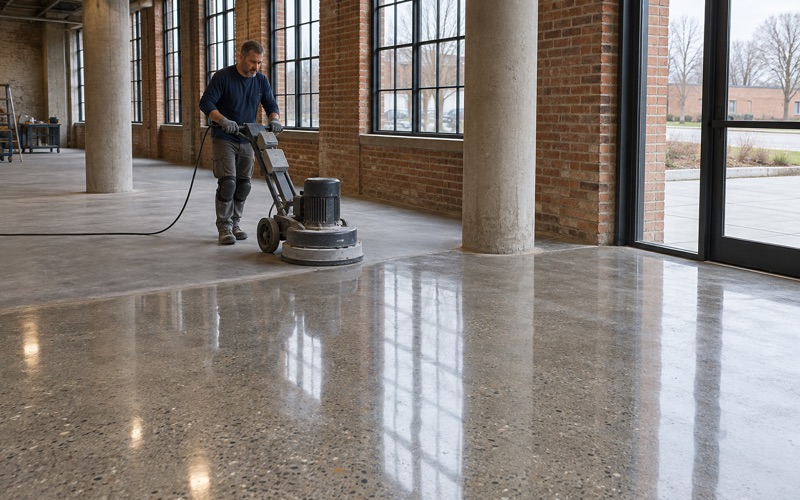
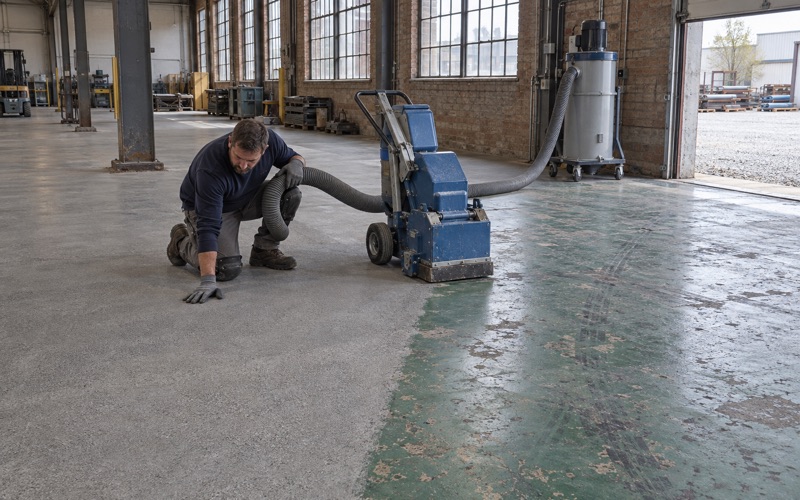
Whatever sits on it, the work starts the same way. We open the concrete mechanically with a diamond grinder or a shot blaster to a measured ICRI CSP profile, and we never acid etch. Moisture testing is written into the scope as its own line item, because a dry-looking slab is not proof of a dry one.
Our proposal names the product, the system build and the finished thickness in writing, which gives you a way to check what went down against what was quoted. Before we price anything, we read the cracks, the joints and any old coating. If the slab needs repair or replacement before it can hold a coating, we say so before anyone signs.
A Layton Avenue Dealer That Needed a Building for Parked Bikes
A Storage Building Just for Motorcycles
In December 2022, House of Harley-Davidson on Layton Avenue asked the city to rezone the lot next door so it could put up a 14,390-square-foot motorcycle storage building, a warehouse meant to hold bikes. The dealership wanted to combine its own zoning with the adjoining residential property, and Greenfield Plan Commission members recommended approval for combining the two zones.
Landscaping and engineering plans were to be resubmitted, and we have not confirmed whether the building went up or what its floor looks like. What the request does show is that parked motorcycles can add up to enough square footage to justify a building of their own. That is a different floor problem from a parking garage, and it is worth understanding before anyone picks a coating.
Side Stands: Small Feet, Concentrated Loads
A motorcycle parked on its side stand does not rest on rubber alone. Part of the bike’s weight comes down through a small steel foot, and that foot is a fraction of the size of a tire’s contact patch. Put the same weight on less area and the pressure at that one point climbs.
Anti-sink kickstand plates exist for exactly this reason. One patent for a kickstand attachment describes how a heavy motorcycle’s small base-plate surface lets the stand press into the ground, and as it sinks the bike leans until it topples. A wider footing is the remedy, and the same idea carries indoors onto concrete and the coating over it.
Choosing a System for Point Loads
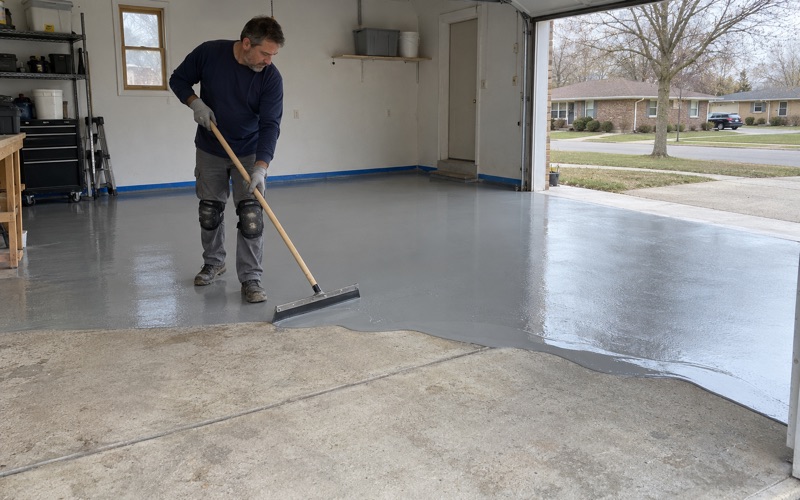
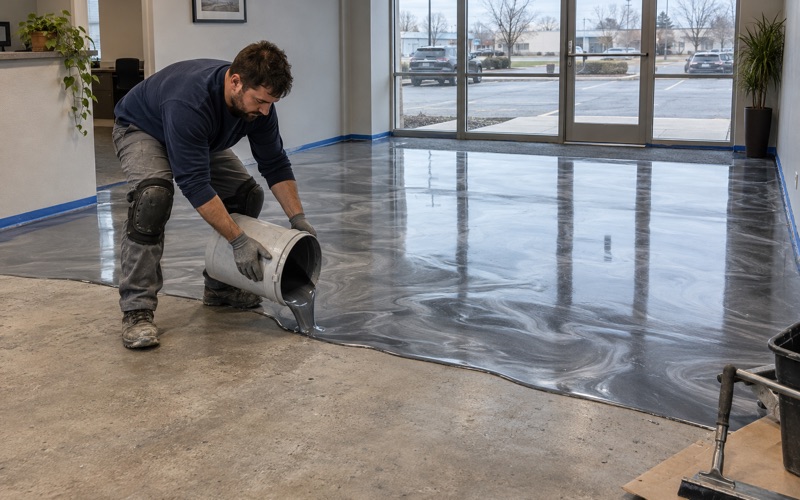
On a floor meant for rows of parked bikes, we choose the system for compressive strength and scuff resistance at the stand foot rather than for how it handles tires. A thin film over a weak slab can dent where a stand sits for months. A thicker build of 100% solids epoxy, bonded to a properly profiled slab, puts that load into the concrete below.
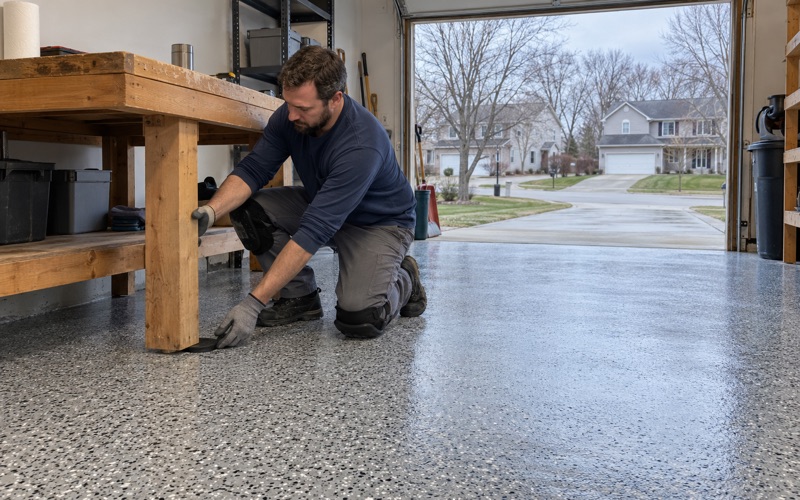
The topcoat matters as much as the base. A polyaspartic or polyurea topcoat over the epoxy takes repeated scraping better than a single thin coat, and a quartz aggregate broadcast adds body to the film where a stand foot lands. The exact build and thickness go into the proposal so the choice is on paper.
Looking for epoxy-flooring closer to Hales Corners? See Hales Corners Epoxy-Flooring.
Dents, Scuffs and Drips Where Bikes Are Stored
Why a Stand Foot Marks a Coating
Most side-stand damage on a coated floor is not a crack. It is a scuff where the foot slides as the bike is rocked off the stand, or a small dimple where one bike stood in the same spot all winter. Pad makers sell plates specifically to stop side-stand scuff marks on painted garage floors, which says a lot about how common the problem is.
Paint and thin roll-on kits are where we see it most. They sit on the surface without a mechanical bond, so a steel foot dragged sideways can lift an edge. A ground slab with a full-thickness system and a hard topcoat holds up far better, though no floor coating should be sold as immune to a steel foot.
Pucks and Plates for Long-Term Parking
For bikes that will sit for weeks or months, we recommend a kickstand puck or plate under the stand. It costs little, it spreads the load over a wider footing and it keeps the foot from grinding the same spot every time the bike is moved. On a showroom or storage floor, a stack of pucks by the door belongs to the floor system as much as the topcoat does.
Center stands and paddock stands bring their own small contact points. We talk through how the bikes will actually be parked, whether in angled rows, in wheel chocks or on lifts, before settling on a build. Where chocks will be bolted down, we plan the anchors before coating rather than drilling through a finished floor later.
Battery Tenders, Oil and Fuel Drips
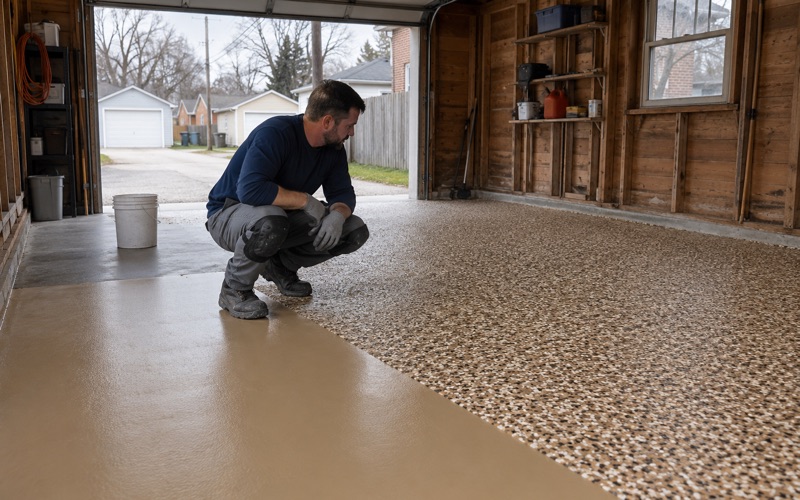
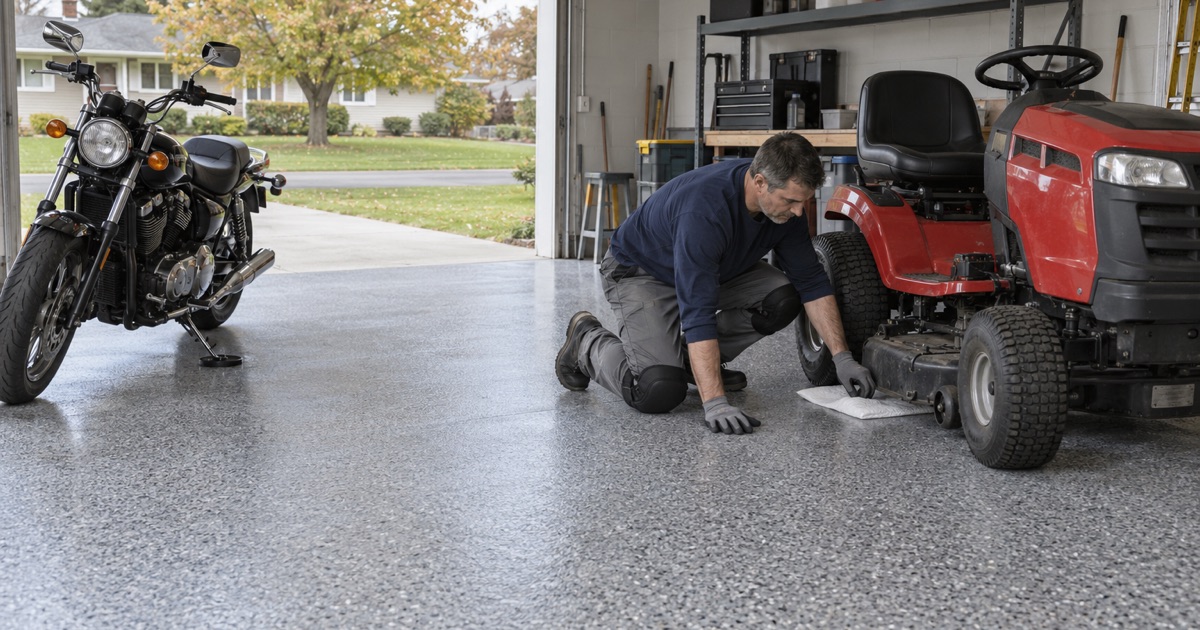
Rows of stored bikes usually come with battery tenders, extension cords and the occasional drip of oil, fuel or coolant. A broadcast floor with a chemical-resistant topcoat lets those drips be wiped up rather than soaked in. Vinyl flake broadcast also hides small marks between cleanings, which matters on a floor customers walk across.
Cords and tender leads tend to run along the same path for months. A smooth, sealed floor makes it easier to keep those runs tidy and to spot a leak before it spreads. If the room will also hold a parts washer or a battery charging station, we want to know so the topcoat matches the chemicals it will meet.
Service Bays on Greenfield’s Highway 100 Auto Row
Dealer Service Departments on S. 108th Street
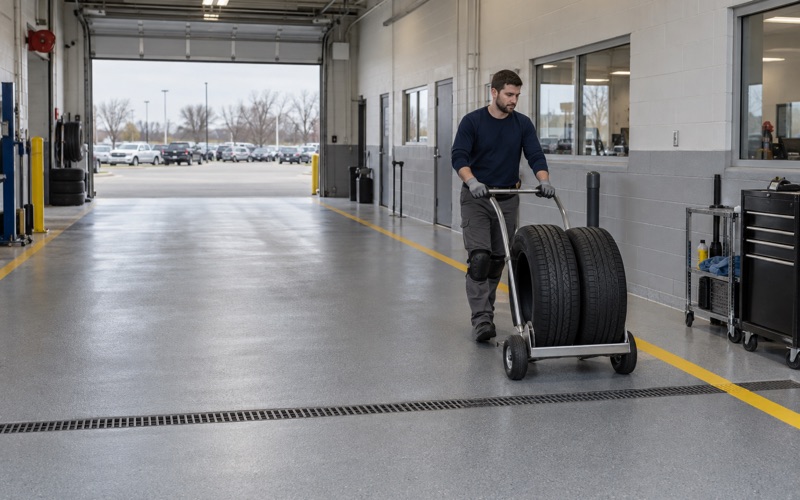
Greenfield’s stretch of Highway 100 has its own run of car dealers, including Gordie Boucher Nissan of Greenfield and Kunes Buick GMC of Greenfield on S. 108th Street, and both list service departments. A service bay faces a different mix from a bike storage floor: lift posts, floor jacks, jack stands, creepers and regular contact with fluids.
Jack stands behave a lot like side stands, putting weight on small steel feet. That is one more reason we build service floors for compressive strength and pick a topcoat that resists scraping. A urethane cement system is also on the table where hot fluids, heavy washdown or thermal shock are part of the daily work.
Joints, Lifts and Wheeled Equipment
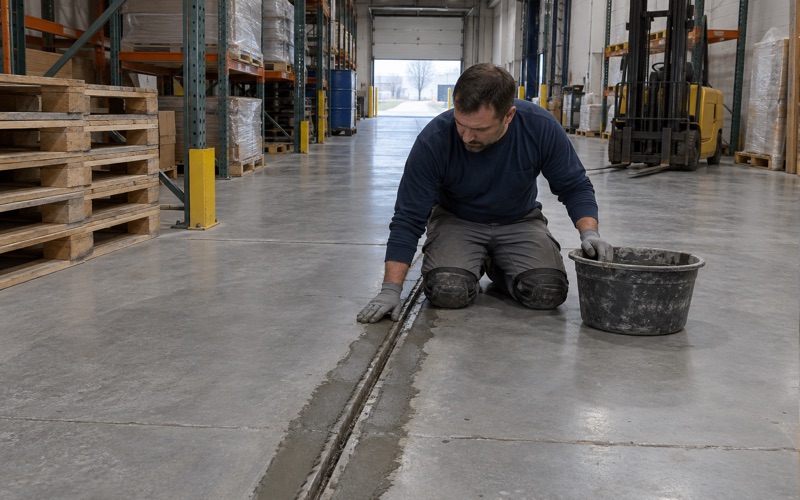
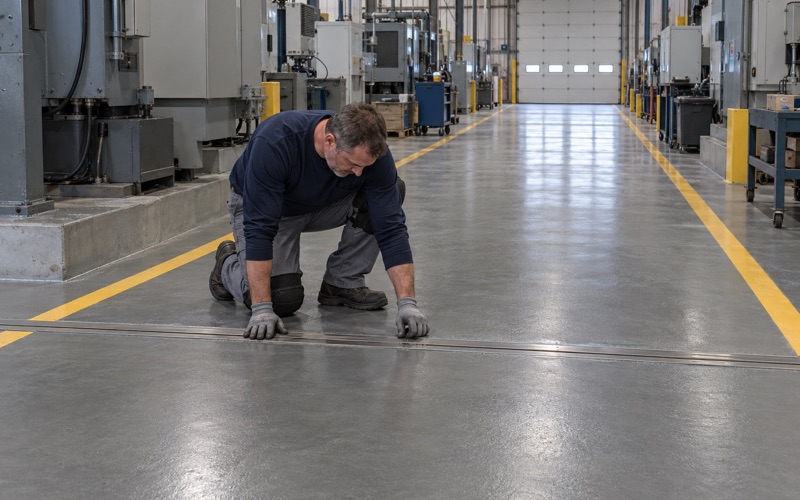
Before coating a shop or service floor, we fill the control joints with a semirigid filler so cart, jack and forklift wheels do not chip the edges. Lift baseplates and anchors are worked around carefully rather than buried. Cracks that are still moving get called out in the proposal instead of hidden under a fresh coat.
The dust and slurry from grinding are collected on site and never washed toward a street drain. That matters on a commercial lot, where whatever leaves the bay door ends up in the storm system. We leave the parking area the way we found it.
Scheduling Around Open Hours
A dealer service department cannot simply close for a week. We schedule shop and plant floors around the hours the building has to keep running, including overnight and weekend windows. Bays can be done in phases so part of the shop stays open while the rest cures.
Greenfield Garage and Shop Questions
Do You Test Moisture on a Home Garage?
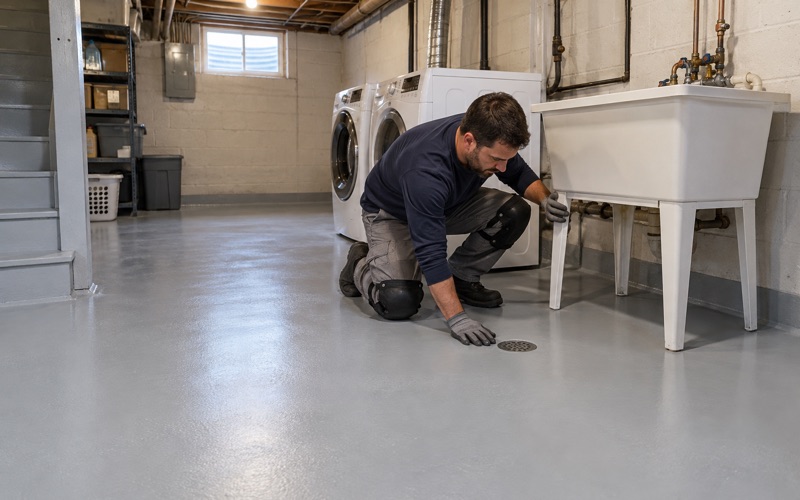
Yes. More of Greenfield’s housing units were built in the 1970s than in any other decade, and nothing on the surface of a slab that age tells you whether a vapor retarder sits under it. Wisconsin does not require one under an unconditioned attached garage slab, so we test with ASTM F1869 calcium chloride kits or ASTM F2170 in-situ probes before we coat.
Moisture is also the first exclusion we read out of any warranty, before the job is sold. If testing shows a problem, a moisture-mitigation primer may become part of the build, and we will say so in the proposal. We do not sell a floor coating as a fix for water coming up through a slab.
Can a Garage With Bikes Be Coated in Winter?
It depends on the slab, not the calendar. We schedule curing against slab temperature and the dew point spread at the slab surface, and an unheated garage in a Wisconsin winter often has to wait for spring. Coating too cold invites amine blush and a soft film, which is the last thing a garage full of motorcycles needs.
Garages that hold bikes alongside a car still take road salt and calcium chloride brine off the tires all winter. We build those floors for both jobs: chemical resistance for the brine and a hard topcoat for the stand foot. A puck under each bike’s stand finishes the job.
Who Handles Permits and Paperwork?
Coating a floor and replacing a slab are different questions, so we ask the City of Greenfield’s Community Development and Inspection Services office whether a job needs a permit before we schedule it. If part of the slab has to come out, that answer can change, and we would rather know before the crew arrives.
For any home job, you get a written contract before we take a deposit, as Wisconsin’s home improvement rule under ATCP 110 requires. The contract lists the products and any warranty, so nothing about your floor rests on a verbal promise.
- 20+ Years on Concrete
- Moisture Tested First
- Written Contracts