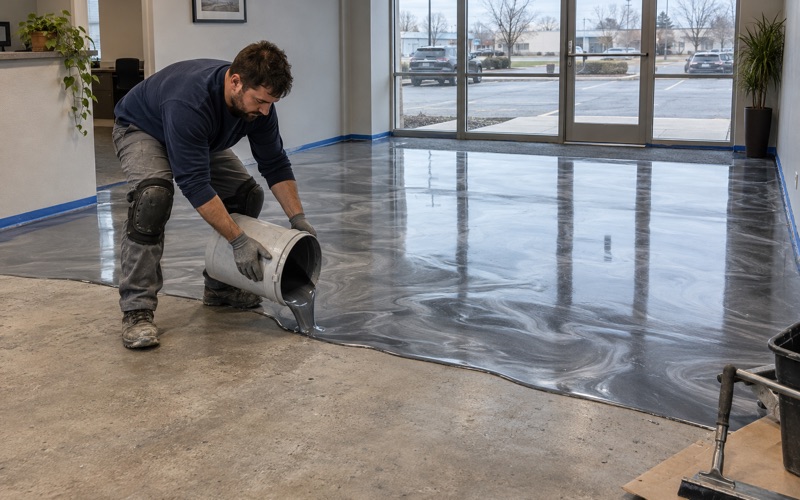
Racine Epoxy Flooring has handled epoxy flooring in Bristol garages and basements for more than 20 years, and most of the jobs we see in the village start with an old coating rather than bare concrete. Before we quote a recoat, we look at what is already on the slab, how well it is bonded and what it will take to get it off. That first decision shapes the cost, the schedule and what is left over when the crew drives away.
Our answer is almost always the same: we open the slab with a diamond grinder or a shot blaster, and we do not acid etch or reach for a chemical stripper. Mechanical prep gives the new system a profile it can grip, and it turns the old coating into dust and chips we collect on site instead of a sludge that needs special handling. It also means the job does not create a can of solvent waste that someone has to store.
The proposal we hand over names the product, the system build and the finished thickness, so you can check the floor against the paper. Moisture testing sits in that scope as its own line item, and warranty exclusions are read out before anything is signed, with moisture named first. The rest of this page covers why leftovers matter more here than in most places, and how we keep a recoat from producing them.
One Hazardous Waste Day a Year, Held in Bristol
Kenosha County runs a single countywide household hazardous waste day, and the collection is held at the Kenosha County Center at 19600 75th Street in Bristol. In 2026 it fell on Saturday, May 30, from 8 a.m. to 1 p.m., and the county described it as the only countywide collection date of the year. It ran as a drive-through at the County Center Public Works Garage.
The City of Kenosha and the Village of Pleasant Prairie operate their own year-round household collections for their residents. Bristol households do not have that option, so they rely on the one county date. A can of stripper opened in June has a long wait on a garage shelf before it has somewhere to go.
What the County Takes
The 2026 collection was free to any Kenosha County resident, whether they live in a city, a town or a village. It accepted cleaners, aerosols, pesticides, automotive fluids, oil-based paints and paint strippers, along with fluorescent bulbs, pool chemicals, and yard and garden products. Electronics and refrigerant appliances were taken as well.
For a garage floor, two lines on that list matter most. Oil-based paints and paint strippers are exactly the products a do-it-yourself coating removal tends to leave behind, half-used and capped on a shelf. Automotive fluids are what soaks into an old garage coating over the years, which is part of why dissolving one produces such an unpleasant mess.
What It Turns Away
The county does not accept latex paint, tires, propane tanks or medical waste. It also refuses business or commercial waste, and that last exclusion is the one that shapes how a coating job gets planned. A drop-off day built for households is not a disposal route for anything a business generates on a paid job.
That distinction is simple to state but easy to blur at the end of a long weekend. Material a homeowner bought and used on their own floor is household waste. Material a contractor brought onto the property and used on a job is that contractor’s commercial waste, regardless of whose garage it sat in.
Looking for epoxy-flooring closer to Winthrop Harbor? See Winthrop Harbor Epoxy-Flooring.
Getting the Old Coating Off: Grinder or Stripper
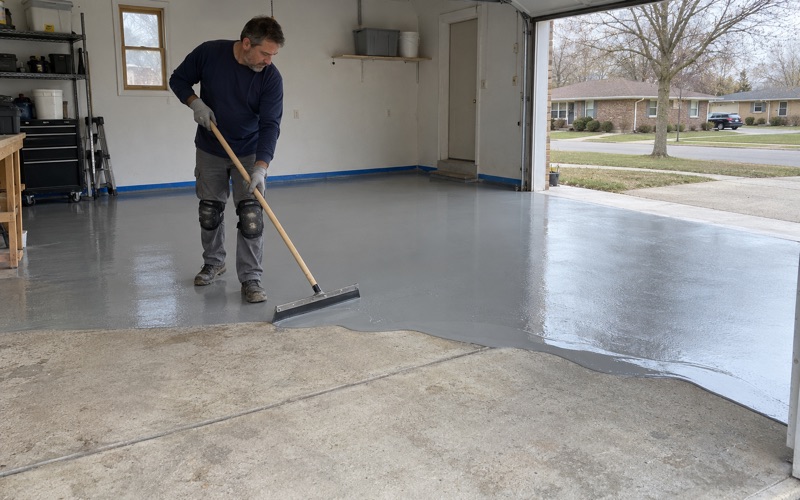
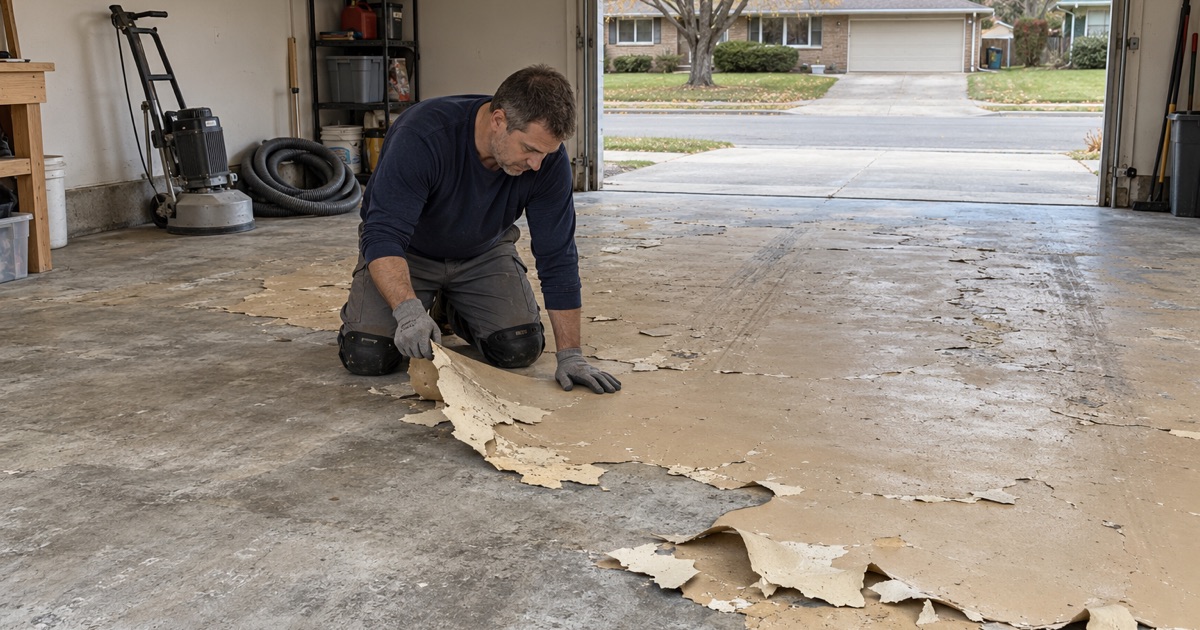
A failing garage coating usually peels in patches, with sound areas still bonded hard next to sections lifting at the edges. Chemical strippers can soften the loose film, but they struggle with the well-bonded areas and leave residue in the pores of the concrete. Every trace of that residue is a bond problem for whatever goes on next.
Why We Grind
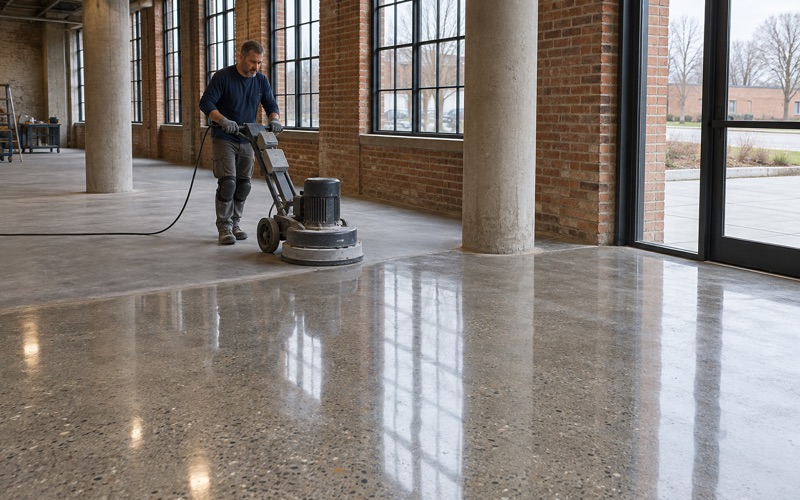
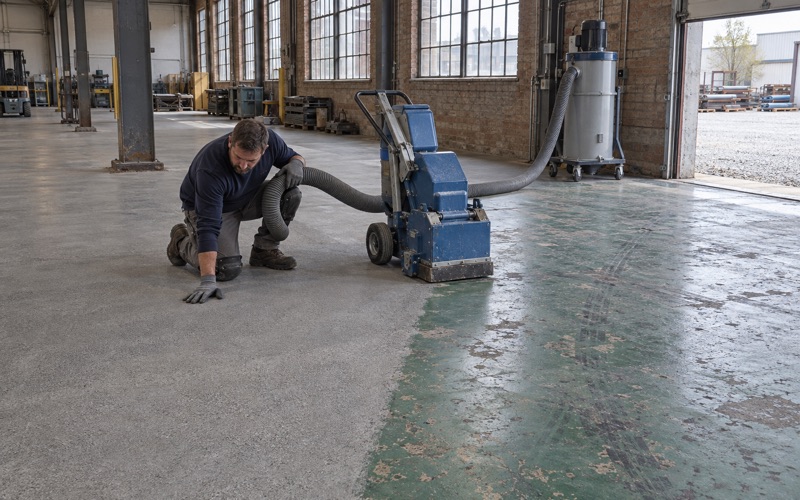
Diamond grinding removes the old film and the weak top layer of concrete together, and it leaves a surface profile we can check against the ICRI CSP scale. Shot blasting does the same job faster on open floors. In both cases the new 100% solids epoxy and polyaspartic topcoat bond to clean, open concrete instead of a chemically softened surface.
The removed coating becomes dust and chips, and our vacuum pulls them in as the grinder works. Dust and slurry are collected on site and never washed down the driveway toward a street drain. What leaves your property is a bagged solid, not a bucket of spent stripper and dissolved coating.
What Chemical Stripping Leaves Behind
A stripper job produces three kinds of leftovers: the unused product, the scraped-up sludge and the rinse water. Paint strippers sit on the county’s household hazardous waste list, which tells you how the county regards them. A homeowner who goes that route has to store whatever remains until the household collection comes around.
Stripper residue also complicates the new floor. Traces left in the slab can interfere with adhesion and show up later as lifting or blistering, and a coating applied over contamination is not a floor we will put our name on. We would rather spend the time grinding than spend it later explaining a failure.
Reading the Slab Under the Old Coat
Once the old film is off, we can see what it was hiding. Cracks, spalled joints and old patches show up clearly on a ground slab, and we say plainly when a floor needs repair or replacement before it can be coated. That conversation happens before the quote is final, not halfway through the install.
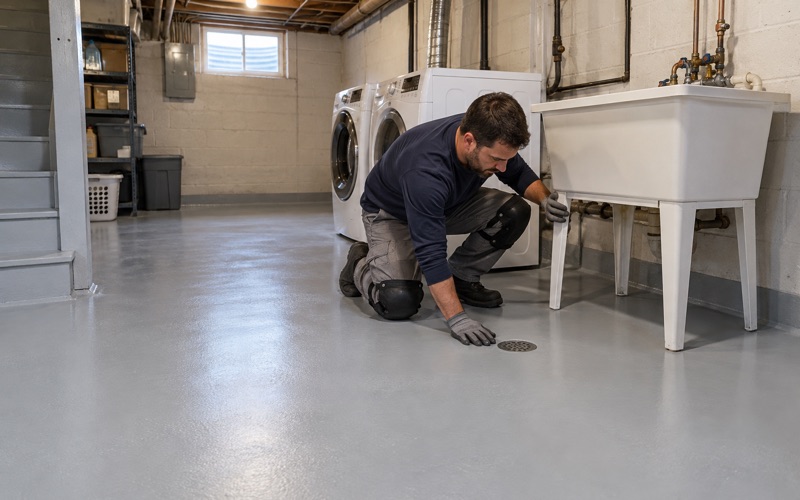
This is also when moisture testing earns its place in the scope. We run an ASTM F1869 calcium chloride test or ASTM F2170 relative humidity probes on garage slabs as well as basements. Wisconsin does not require a vapor retarder under an unconditioned attached garage slab, so a dry-looking floor proves nothing on its own.
Mix What the Floor Needs, Nothing More
The other source of leftovers on a coating job is the coating itself. Two-part systems start curing the moment they are mixed, and a batch mixed too large either goes down too thick or hardens in the bucket. Either way, someone ends up holding material the floor never needed.
Sizing Each Batch
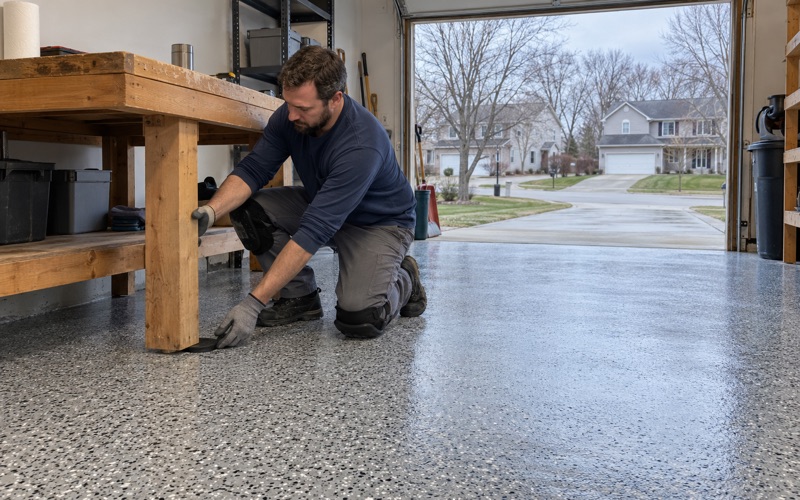
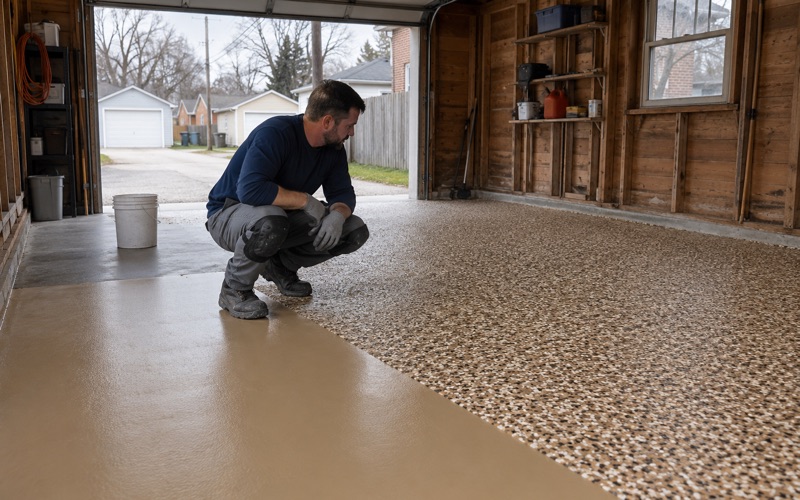
We measure the floor before we order and plan the mix in batches matched to the area a crew can roll and broadcast within the product’s working time. A two-car garage gets a primer, a body coat with a vinyl flake or quartz aggregate broadcast, and a topcoat, each mixed in amounts the floor will actually take. The finished thickness on the proposal is what those batch sizes are built to hit.
Mixing to the floor rather than to the kit keeps the build consistent. A body coat stretched thin to cover a short batch, or poured heavy to use up a long one, will not match the thickness that was quoted. Measured batches are how the floor and the paperwork stay in agreement.
What Happens to What Remains
Even careful batching leaves empty kits, used rollers, mixing buckets and the odd partial container. On our jobs, those leave with us at the end of the day. We do not leave a stack of half-used components in your garage for you to sort out later.
We also make no claims about how any of that material is classified once it is mixed or cured. Disposal follows the product’s own documentation and the rules that apply to a business, not a guess about what the household trash will take. The point of careful sizing is to keep that pile as small as it can be.
Homeowner Waste Versus Contractor Waste in Bristol
The county’s refusal of business or commercial waste draws a clear line, and it is worth knowing which side of it a job falls on before work starts. If you coat your own floor, the leftover oil-based paint and stripper are yours, and the household day is the route the county offers. If we coat it, the waste is ours and we haul it away.
Why Job Waste Stays With the Installer
An installer who promises to take job leftovers to the county collection is promising something the county turns away. Business waste is refused at the Kenosha County Center, and a job site’s leftovers are business waste whoever’s name is on the deed. Ask any installer, us included, where the waste from your floor is going before you sign.
That question belongs in the written contract. Every home job we take gets a written contract before a deposit is taken, as Wisconsin’s ATCP 110 home improvement rule requires, with the products and any warranty spelled out. Removal of old coating debris and leftover material is part of the scope we write down.
Bristol Garages, by the Numbers
Bristol was incorporated as a village in 2009 from portions of the Town of Bristol, and its population more than doubled between the 2010 and 2020 censuses, reaching 5,192. Housing is overwhelmingly owner-occupied single-family detached, with 1,596 such homes among 1,734 owner units. Most of the floors we see here are garages on those homes.
The village also holds 173 mobile homes, which have no slab for us to coat. Its housing stock spans every decade from before 1940 through the 2010s, so an older home may carry several generations of garage coatings. The thicker that layered history, the stronger the case for grinding it off rather than dissolving it.
Permits and Questions for the Village
The village’s building-permit list names remodels and driveways, and remodels need one set of plans with the online Inspect Wiz application. We ask the village office whether a job needs a permit before it is scheduled, because replacing a slab and coating one are different questions. Inspections run Tuesdays and Thursdays from 8 a.m. to about noon with 24 hours’ notice.
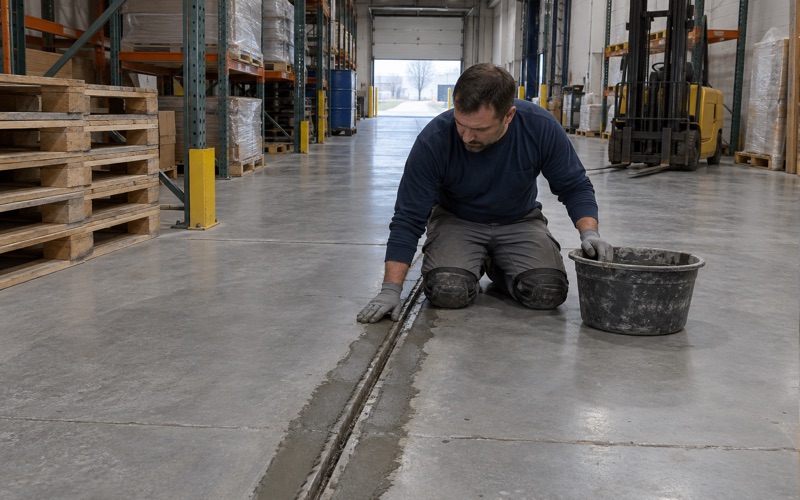
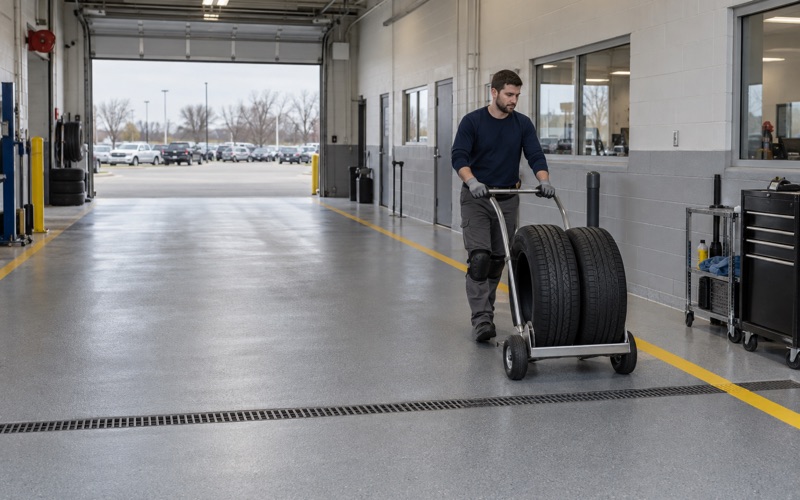
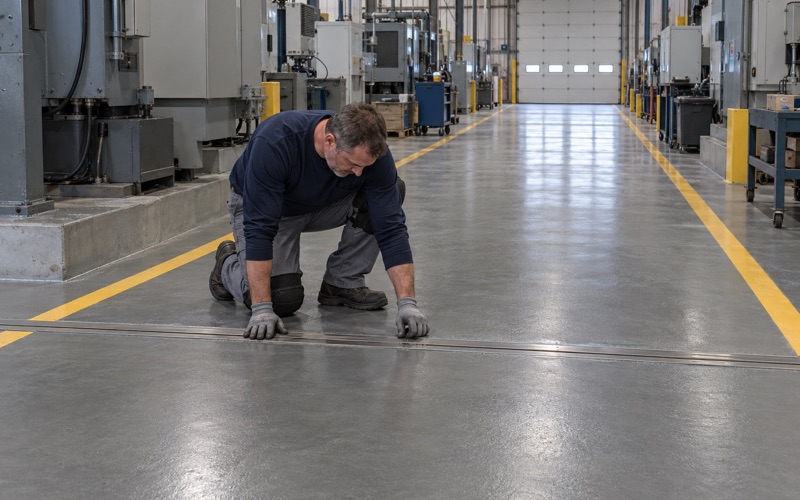
Commercial and three-or-more-unit multifamily projects also go through the Bristol Fire Department’s plan review and permitting. For shop floors, we fill joints with a semirigid filler and schedule work around the hours the building has to keep running. The waste rule there is the same as in a garage: commercial leftovers leave with us.
- 20+ Years on Concrete
- Moisture Tested First
- Written Contracts