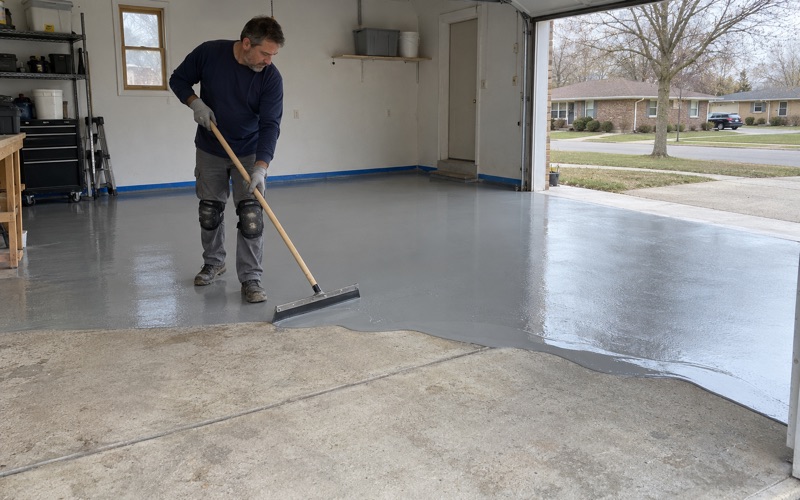
Racine Epoxy Flooring has spent more than 20 years putting epoxy flooring down in garages and shops, and in Beach Park the hardest test for a coating is a garage where small engines are fixed for a living. The floor under a mower bench takes gasoline, two-cycle oil and carburetor cleaner every working day. We build for that load first and treat color and finish as the second question.
A garage that doubles as a repair room asks more of a coating than a parking space does. Fuel softens some finishes, solvents lift others, and a dropped carburetor bowl lands on the same spot week after week. Our job is to pick a system that holds up to all of it and to say plainly which products will not.
Every proposal we write names the product, the system build and the finished thickness, so you can check what went down against what was quoted. Before any of that, we look at the slab itself: its cracks, its joints, any old paint and how much moisture is moving through it. If the concrete needs repair first, you hear that before anything else.
Small Engine Repair as a Beach Park Home Occupation
What the village allows
The Village of Beach Park zoning ordinance lists small engine repair among its major home occupations, excluding major automobiles, motorcycles and snowmobiles. A major home occupation needs a special use permit, granted after a public hearing. For a resident who services mowers and trimmers, that is the recognized path to running the work from home.
The same ordinance keeps car work out of the house entirely. Minor or major auto repair and the painting of vehicles, trailers or boats may not be run as home occupations at all. So the garage we coat for a Beach Park engine shop holds a workbench and small machines rather than a vehicle on stands, and we size the system to that use.
A quarter of the dwelling, storage included
The ordinance caps the area a home occupation uses at 25 percent of the dwelling’s floor area, and storage counts toward that total. In practice the work tends to settle into one bay of the garage or along one wall of it. That concentration matters to us, because the drips, the fuel cans and the parts all land on a small footprint instead of spreading across the slab.
When we walk a garage like this, we ask where the bench sits, where engines get drained and where the cans live. Those few square yards carry most of the chemical exposure. We often recommend a thicker build or an extra topcoat there, and we write that into the proposal so the heavier section is visible on paper.
Nothing stored outside
The ordinance also says there shall be no exterior storage of material used in the home occupation, nor of any highly explosive or combustible material. A permitted shop therefore keeps its parts, its fuel and its waiting machines indoors. For most residents indoors means the garage, and that slab becomes the storeroom as well as the workshop.
The zoning rules say nothing about floors, and we never present a coating as something the village asks for. What the rule does decide is where the gasoline sits. Once fuel cans and oily parts live inside on concrete, the concrete needs a surface that will not drink them in, and that is the floor question we answer.
Looking for epoxy-flooring closer to Lincoln Village? See Lincoln Village Epoxy-Flooring.
Fuel, Oil and Solvent on a Garage Slab
Bare concrete is porous, and a small engine shop feeds it a steady diet of liquids it soaks straight up. Gasoline evaporates but leaves a stain, two-cycle oil wicks in and stays, and carburetor cleaner strips whatever sealer was there. Within a season the floor around the bench darkens, and scrubbing rarely pulls the oil back out.
Reading a system for gasoline, not just oil
Plenty of garage coatings are sold on hot tire pickup and oil resistance, and both matter, but a repair floor needs fuel resistance shown on the data sheet. We read the chemical resistance chart for gasoline, two-cycle mix and common shop solvents before we choose a product. A coating that shrugs off motor oil can still soften under a puddle of fuel left overnight.
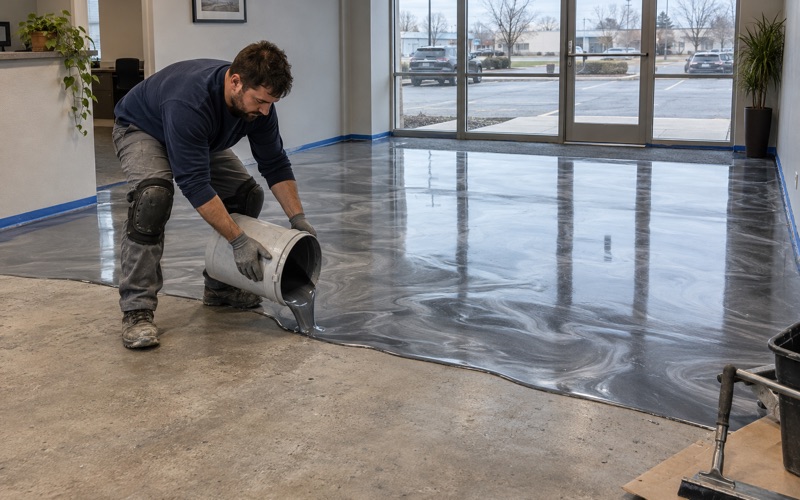
For these floors we usually start with a 100% solids epoxy base, which goes down thick and cures without the solvent carriers that cause shrinkage. The topcoat is where the chemical fight happens, so we often finish with a polyaspartic or polyurea layer. For the hardest-used shops a urethane cement system is worth discussing, and we lay out the tradeoffs in cost and appearance.
Footing that holds up under oil
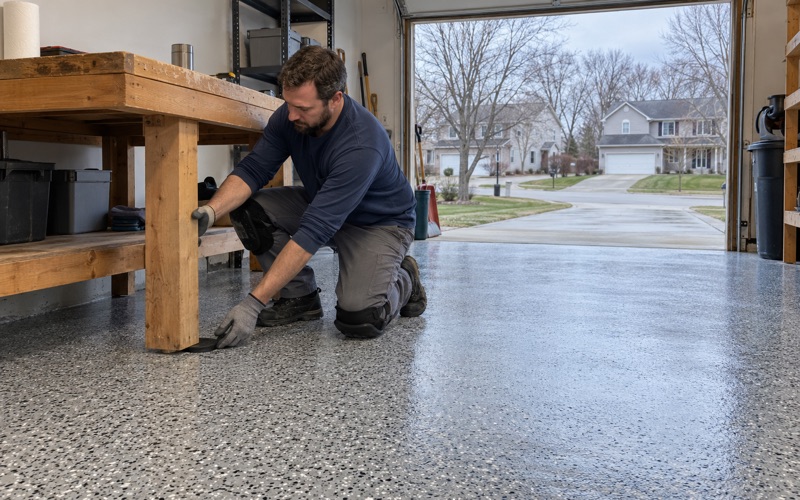
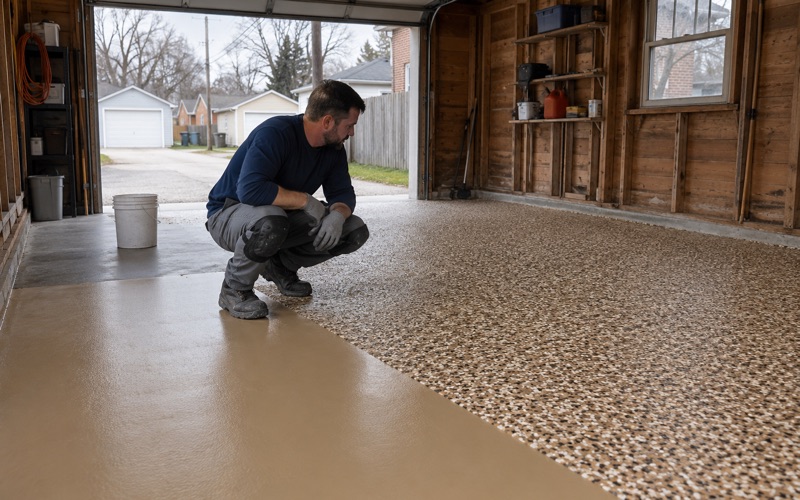
A smooth, glossy floor is easy to wipe, yet it gets treacherous once two-cycle oil spreads across it. We broadcast vinyl flake or quartz aggregate into the base coat to give the surface some grip, then lock it in with the topcoat. The amount of texture is a balance between footing and how easily a rag or squeegee moves across the floor.
Opening the slab before anything goes down
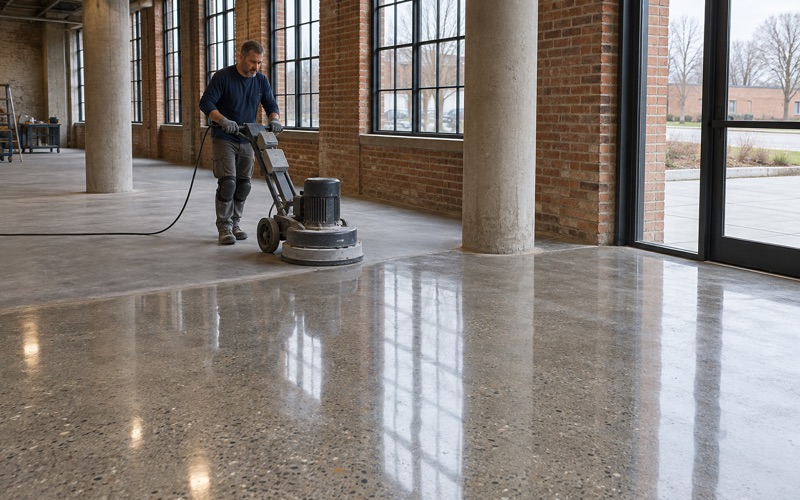
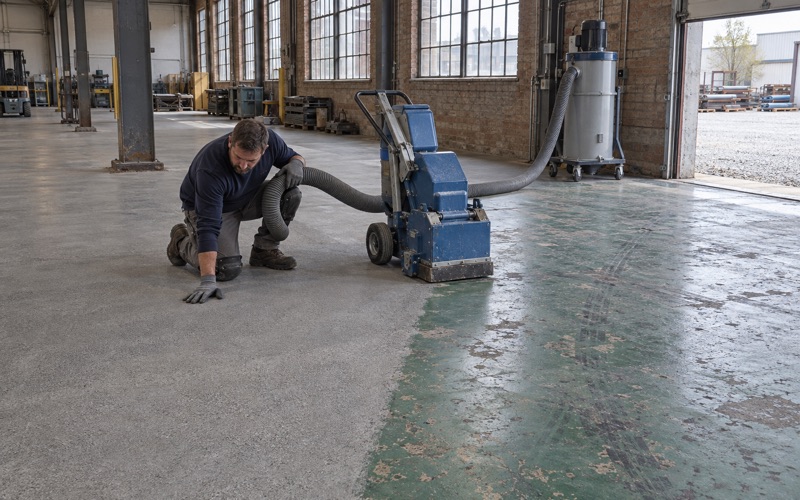
None of this holds if the coating sits on top of contamination. We open every slab mechanically with a diamond grinder or shot blaster to the ICRI CSP profile the product calls for, and we do not acid etch. On a garage that has already absorbed years of oil, we degrease and grind until clean concrete shows, and we tell you if the stain runs too deep.
The dust and slurry from that work are collected on site. Beach Park runs a stormwater program under its NPDES Phase II MS4 permit, and grinding residue has no business in a storm drain or the gutter at the end of a driveway. Our grinders run with vacuum collection, and what we gather leaves with us.
Spills Caught Indoors, Not Hosed Down the Driveway
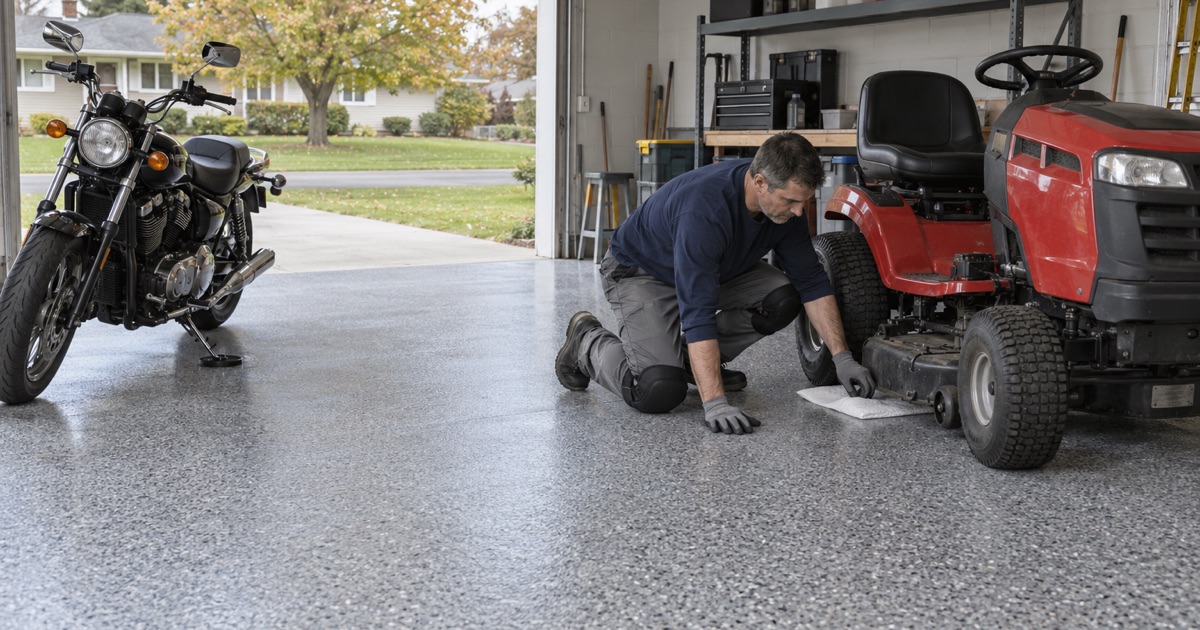
A common garage habit is the garden hose: spray the spill toward the door and let the driveway take it. On a floor that holds gasoline and solvents, that sends fuel across the yard and toward the street. A coated slab makes a better habit easy, because the spill stays on top of the surface where it can be picked up.
Absorbent first, then a wipe
We set these floors up to be cleaned with absorbent rather than water. Fuel and oil sit on a sound topcoat instead of soaking in, so a scoop of absorbent or a pad picks them up before they spread. A mild degreaser and a damp mop finish the job, and nothing runs out the door.
We suggest keeping a bag of absorbent and a lidded can for used material right beside the bench. Where that kit lives is part of the layout we talk through, along with where the fuel cans stand. A fast cleanup is mostly a matter of having the supplies within reach of the drip.
Where the cans and parts sit
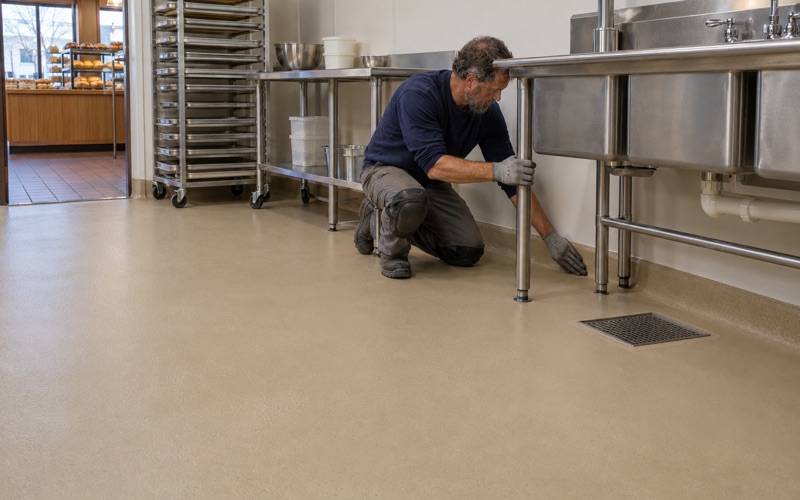
Fuel cans, oil jugs and spray cans of cleaner usually end up along one wall or under a bench. We pay close attention to that strip, carrying the coating a few inches up the wall with a cove so a tipped can does not run under the bottom plate. Shelving keeps containers off the floor, which also makes a slow leak easier to spot.
Parts bins and engines waiting for repair add weight and scraping. A dropped cylinder head or a mower deck dragged across the floor will scuff any topcoat, so we choose a build thick enough to take that abuse. A coating changes how spills clean up; it does not change how fuel should be stored, and we leave that advice to your fire protection district.
Keeping fuel out of the yard
Beach Park borders Lake Michigan and holds the South Beach section of Illinois Beach State Park. Fuel washed down a driveway does not stay where it lands. Catching spills inside on a coated floor keeps gasoline out of lawns and storm drains, which is the better outcome for the property and the street alike.
Planning a Garage-Shop Floor in Beach Park
Moisture testing as a line item
Before we coat a garage that will carry a business, we test the slab for moisture as a listed part of the scope. Depending on the floor, that means an ASTM D4263 plastic sheet test, ASTM F1869 calcium chloride readings or ASTM F2170 relative humidity probes. A dry-looking slab can still push enough vapor to lift a coating, and we would rather know before the epoxy goes down.
Warranty exclusions get read out before you sign, and moisture is the first one we name. If readings come back high, we discuss a moisture-mitigation primer or a different system rather than hoping the problem stays quiet. We do not sell a floor coating as a fix for water coming up through the concrete.
Cracks, joints and old coatings
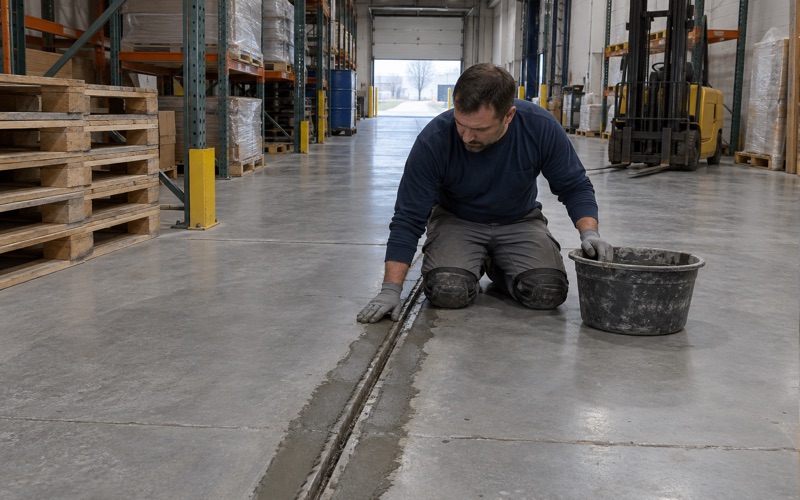
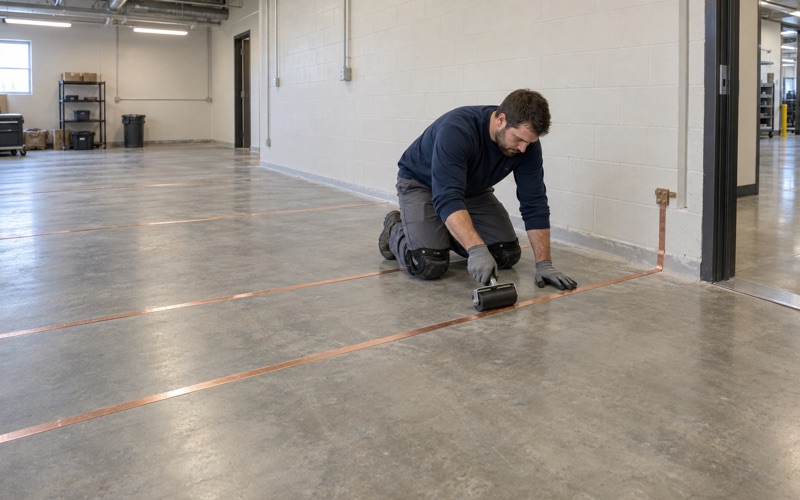
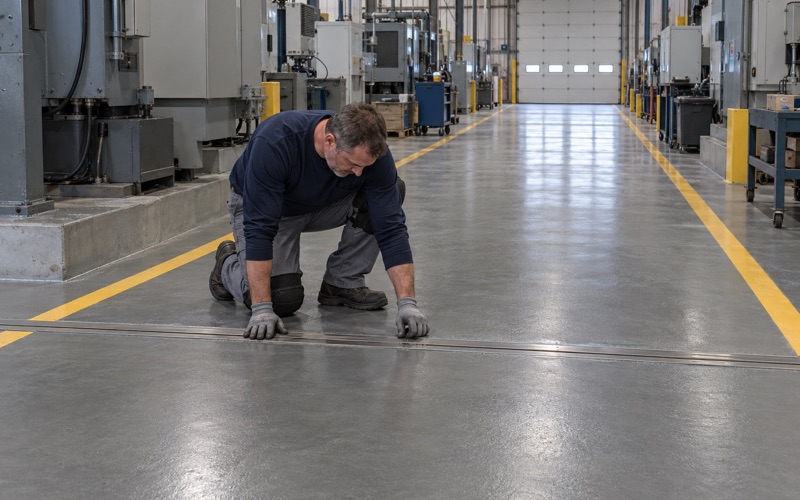
Garages often carry a control joint or two, shrinkage cracks and sometimes a peeling layer of hardware-store paint. We read all of it before quoting and say plainly when a slab needs repair or replacement before it can be coated. Joints that see rolling carts and creepers get a semirigid filler so the wheels do not chip the edges.
Curing, scheduling and permits
Curing is scheduled against slab temperature and the dew point spread at the surface rather than a date on the calendar. An unheated garage in a northern Illinois winter may simply have to wait for spring, and we say so instead of risking amine blush or a soft cure. For a working shop, we plan the install around the days the business can stand down.
We also ask the Village of Beach Park’s Community Development office, which handles building and zoning, whether a job needs a permit before we schedule it. Coating an existing slab and replacing one are different questions, and we would rather have the answer in hand. The special use permit for the home occupation itself is the resident’s own application, between you and the village.
- 20+ Years on Concrete
- Moisture Tested First
- Written Contracts