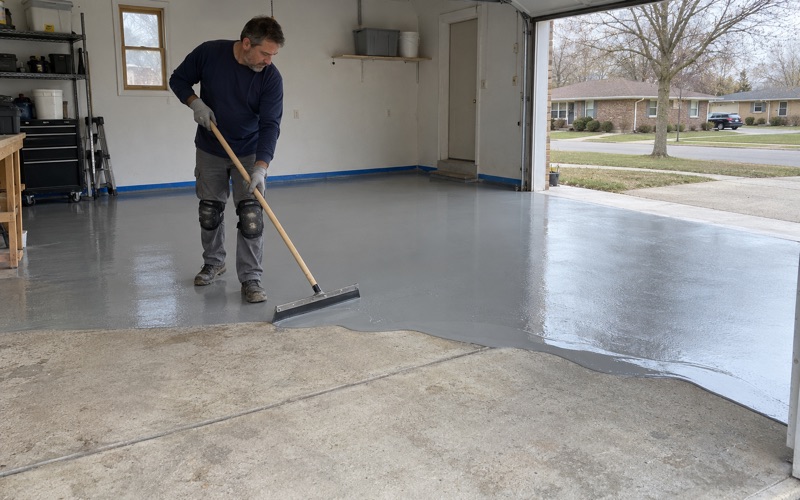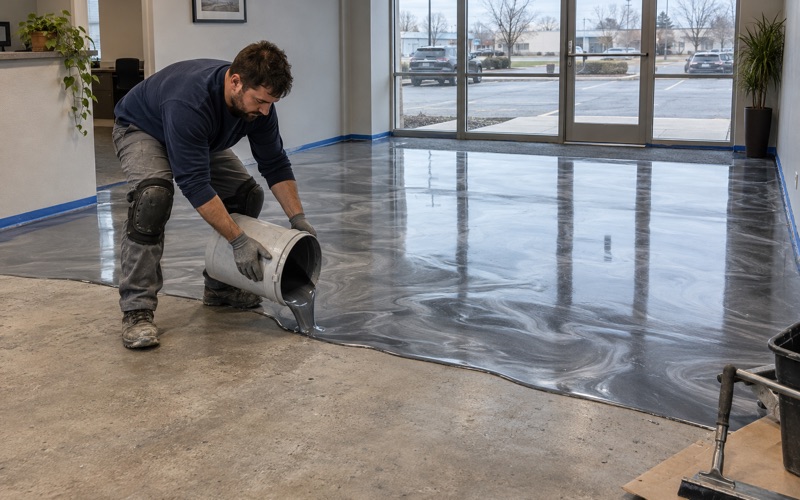
Racine Epoxy Flooring has spent more than 20 years on concrete coatings, and the epoxy-flooring in Bay View we get asked about most often is the kind that gets hosed down rather than admired. A wash room, a trailer bay or a shop floor that sees a hose every week needs a coating chosen for footing and for water, not for how it photographs.
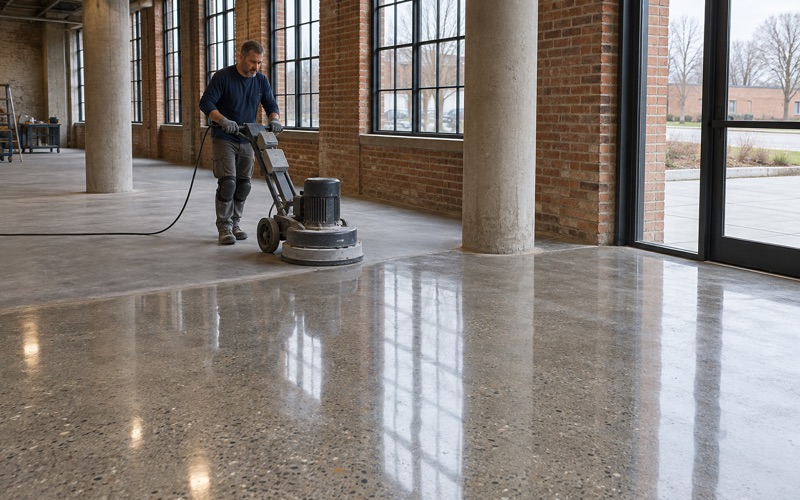
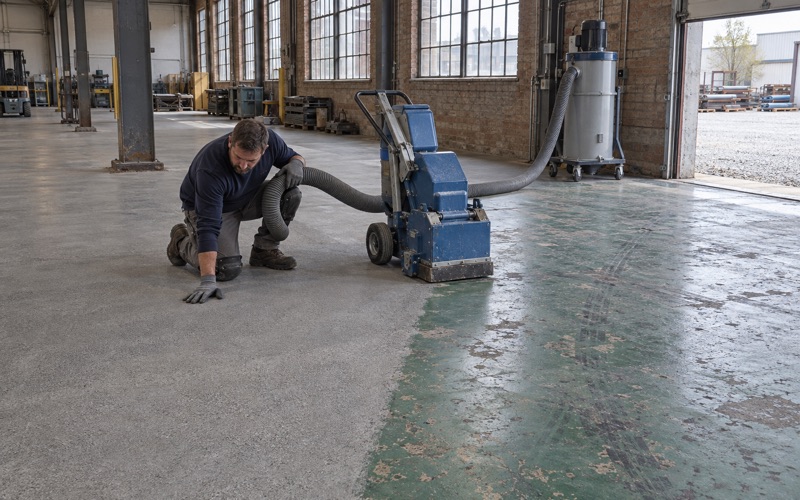
Every job starts the same way, whatever the room. We open the slab mechanically with a diamond grinder or a shot blaster, never with acid, and a moisture test goes into the written scope before anything else is priced. If the cracks, joints or an old coating tell us the concrete needs repair or replacement first, the proposal says so plainly instead of coating over the problem.
That proposal names the product, the system build and the finished thickness, so you can hold what went down against what was quoted. Warranty exclusions are read to you before you sign, and moisture is the first one we name. On a home job you get a written contract before any deposit changes hands, with the products and warranty terms spelled out in it.
Milwaukee’s Police Horses Live in Bay View
MKE Urban Stables on East Lincoln Avenue
Most people do not expect a working stable inside a city neighborhood, yet the Milwaukee Police Mounted Patrol Unit keeps its horses at MKE Urban Stables, 143 E. Lincoln Avenue, just east of the Kinnickinnic River. The facility has 24 stalls, two riding fields and a community space, and it was built largely with donated money.
The city sold the land to the Milwaukee Community Equestrian Center, and the nonprofit leases space to the police department for $100,000 a year over 30 years. An equine therapy program with its own horses shares the building. Indoors there are stalls beside a riding area, and outside there is a second riding area and a paddock.
What a Stable Aisle Asks of a Floor
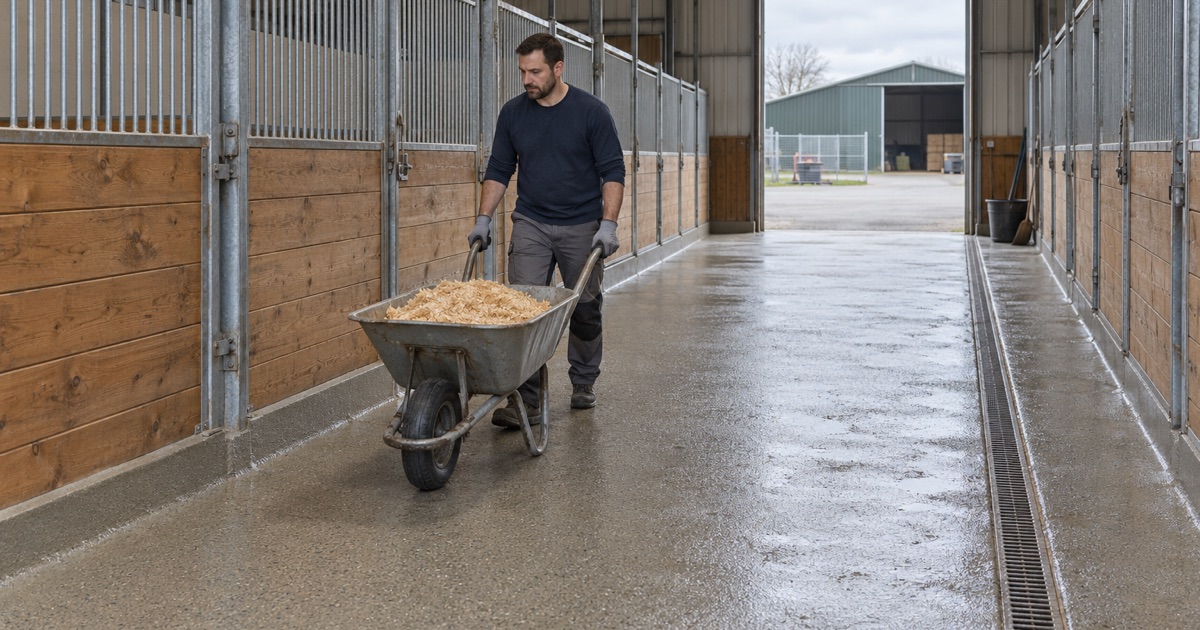
We have not seen the floors inside the stables, and we would not guess at what is down there. What we can describe is the set of demands any stable aisle or wash area places on concrete: steel shoes striking and pivoting, urine pooling and soaking in, and a hose running across the whole surface every day.
Those three loads are the floor’s real chemistry and mechanics. Urine breaks down toward ammonia and works into every crack, open joint and pinhole it can reach. Daily hosing keeps the surface wet for long stretches, which quickly finds any coating that was laid on a slab without a real mechanical profile underneath it.
Shine Is the Wrong Goal
A glassy, smooth epoxy is what most people picture, and it is exactly the wrong finish anywhere a horse, a dog or a wet boot will stand. In an aisle or a wash bay the coating is chosen first for grip and second for surviving wash-down, and the look comes a distant third.
That order of priorities is the thread running through this page. Bay View spent eight years as its own village, from 1879 to 1887, before joining Milwaukee, and it still has plenty of older garages, basements and shops where a floor gets rinsed more than it gets polished.
Looking for epoxy-flooring closer to Greenfield? See Epoxy-Flooring Services in Greenfield.
Grip for a Horse and a Handler
Texture Is Built Into the System
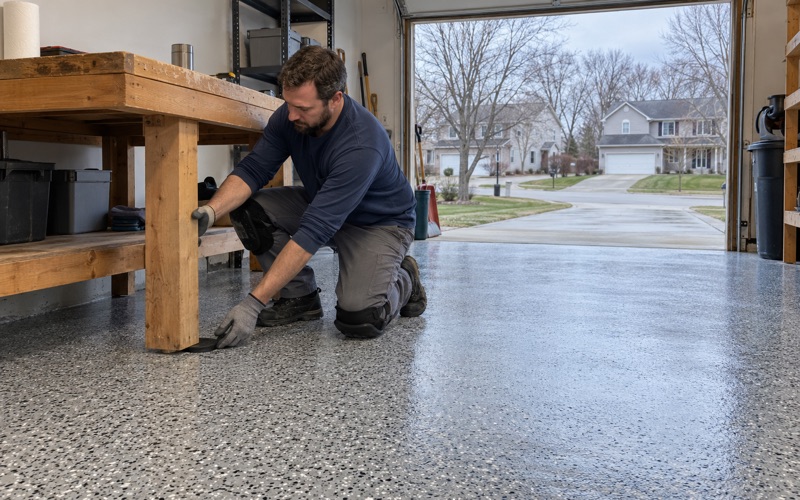
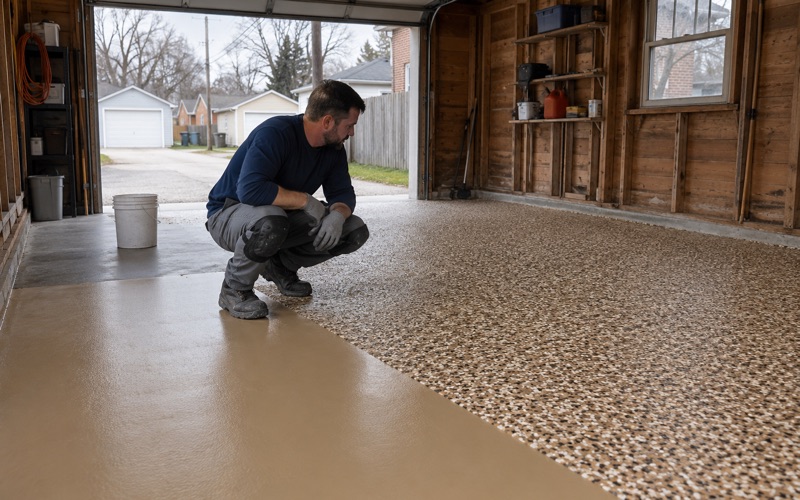
Traction on a coated floor comes from aggregate, not from the resin itself. We broadcast quartz aggregate into a wet 100% solids epoxy base, then lock it down with a topcoat, which leaves a profile that holds a boot sole far better than a smooth finish does. The size of the grain and how heavily it is broadcast set how coarse the surface feels underfoot.
There is no published slip value for horses on any coating, and we do not claim one. What we can do is build a floor where the texture is part of the system rather than a grit additive stirred into a final coat, and show you a sample board at the coarseness we plan to install.
Two Kinds of Feet on One Floor
A stable aisle has to work for the handler leading the animal as well as for the animal, and their needs pull in different directions. A coarse texture gives a shod hoof something to bite, while a person kneeling, pushing a wheelbarrow or scrubbing needs a surface that is easy on knees and brushes. We usually settle that by grading the texture to each area rather than running one profile wall to wall.
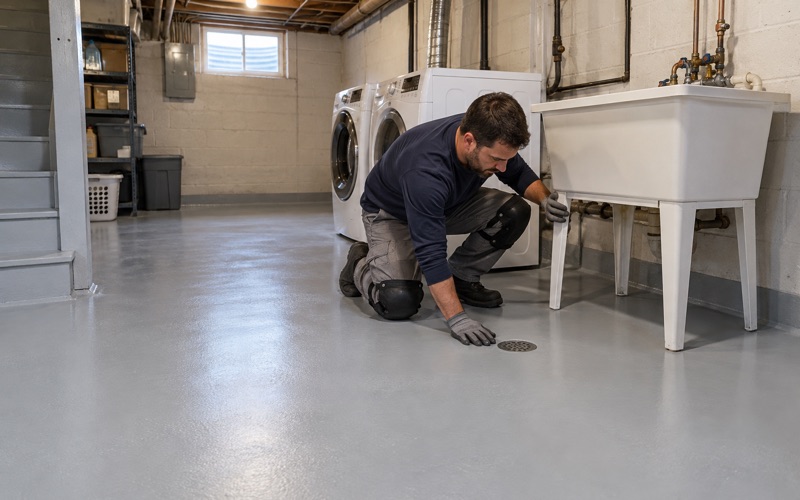
The same tradeoff shows up at home in a dog-wash room. A finer broadcast keeps paws and bare feet planted, yet still lets you squeegee hair and suds toward the drain without the brush snagging on every grain.
Why the Base Matters More Than the Topcoat
A textured topcoat is only as good as its bond to the concrete underneath. Every slab we coat is ground or shot blasted to a measured ICRI CSP surface profile so the primer has something to grip, and acid etching is never used as a shortcut.
Under hooves, carts and constant water, a coating that was simply rolled onto a smooth, sealed slab tends to let go at the edges and around the drain first. Once water gets behind it, the delamination spreads with every rinse, and the repair usually means grinding the whole area back to bare concrete.
Wash Bays, Drains and Wash-Down Cycles
Slope, Drains and Coved Edges
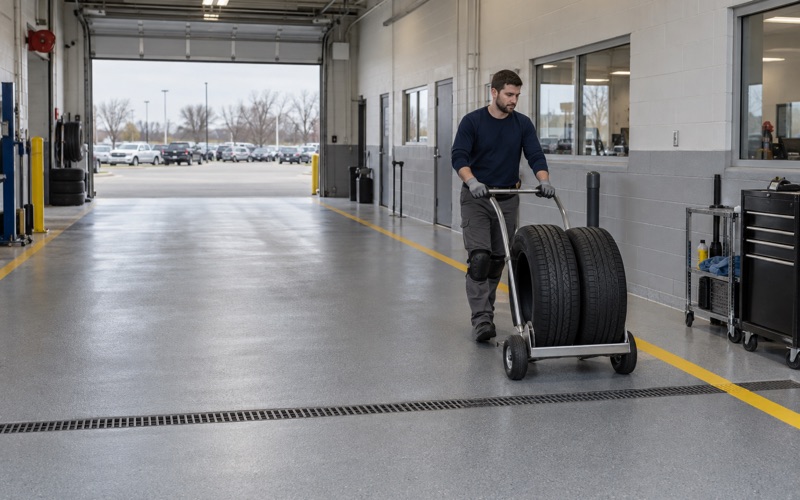
A wash area works only when water leaves it. Before coating we check how the slab falls toward the drain, because a coating follows the concrete it sits on and will not fix a low spot that holds a puddle. Where the slab needs grinding or patching to move water, that work is written into the scope.
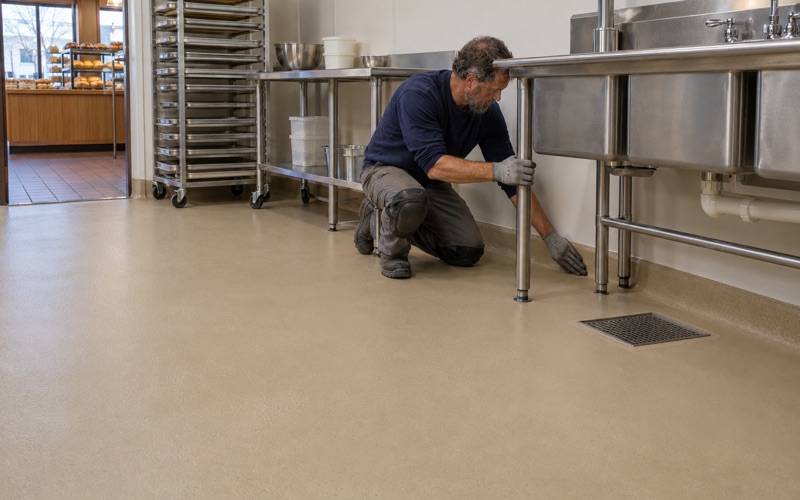
Where floor meets wall, a coved base carried up a few inches keeps hose water out of the joint and away from the wall framing. Drain bodies get their own detail, so the coating ends cleanly against the metal rather than feathering out where standing water will lift it.
Joints, Cracks and Topcoats That Take Water
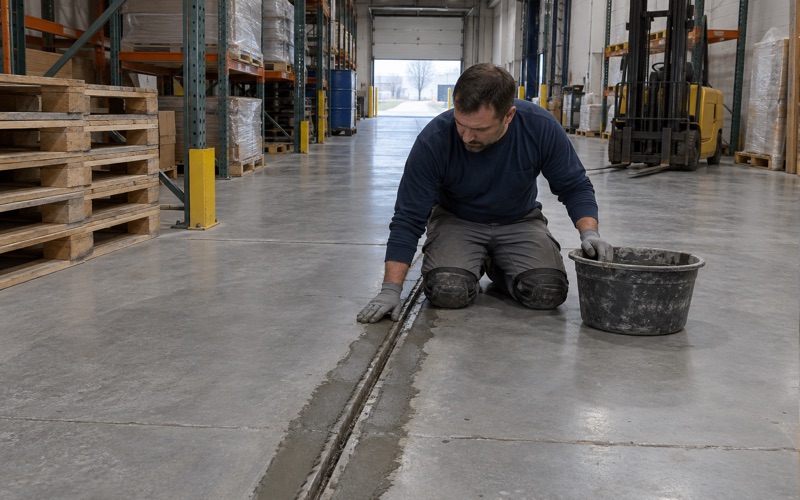
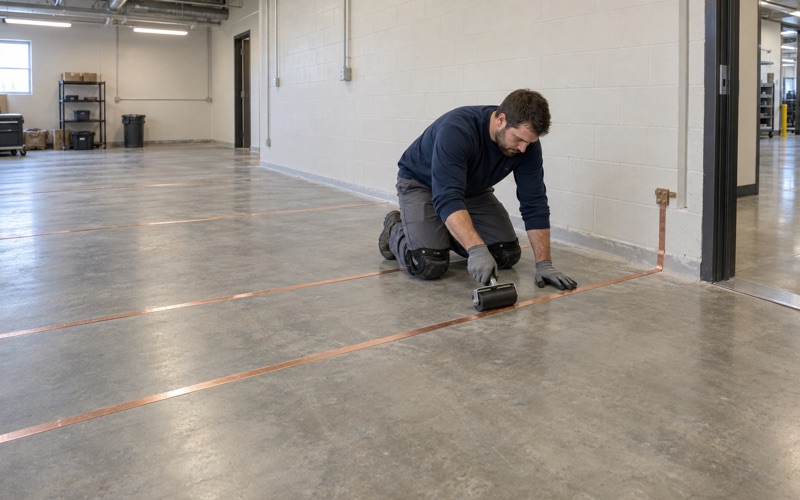
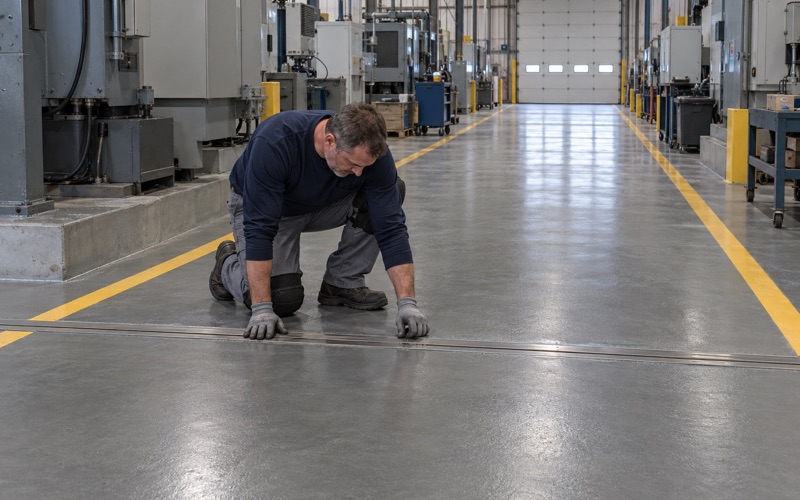
Control joints and cracks are where wash water gets under a coating. In wash bays and shops we fill joints with a semirigid filler before anything goes over them, so wheels and hooves do not chip the edges and water has no open channel. A polyaspartic or polyurea topcoat over the epoxy base then handles repeated wetting and cleaning products well.
Where a floor will see hot water or steam cleaning, urethane cement can be the better system, and we will tell you when it is. It tolerates temperature swings that a standard epoxy build does not, and it shrugs off the thermal shock of a hot rinse on a cold slab.
Moisture Testing and the Cure
A floor that is hosed every day still has to be dry underneath on the day it is coated. We test with ASTM F2170 in-situ relative humidity probes or ASTM F1869 calcium chloride tests, and where readings run high we either use a moisture-mitigation primer or advise against coating at all.
Curing is timed to the slab temperature and the dew point spread at the surface, not to a date on the calendar. A cold, damp slab can leave amine blush on the epoxy, which weakens the bond to the next coat, so we wait for the right conditions rather than rush a wash bay back into service.
Plan Review for Commercial Work in Milwaukee
Bay View is a neighborhood of the City of Milwaukee, not a separate municipality, so commercial work here is reviewed by the city. The Department of Neighborhood Services and the Milwaukee Development Center handle building, plumbing, electrical, HVAC, fire safety and ADA review, and DNS does not accept hand-drawn plans for any project that needs construction plan review.
Food businesses face a second, separate review. The Milwaukee Health Department’s plan review is the required first step toward a food license, and the plans must show kitchen and prep areas, equipment, plumbing fixtures and hoods. We ask which reviews apply before a commercial job goes on the schedule.
Hosed-Out Floors Closer to Home
Horse Trailers, Tack Rooms and Barn Floors
Few Bay View owners keep a horse in the city, but the ones who park a trailer or keep a tack room face the stable questions at a smaller scale. A trailer pad or tack room floor sees manure, wet bedding and a hose, and it needs the same textured broadcast and sealed joints as an aisle.
We size the system to the traffic rather than overbuilding a single bay. A tack room that is swept and only occasionally rinsed may need a lighter build than a pad where a trailer is mucked out and washed every weekend, and the proposal explains which one you are getting.
Dog-Wash Rooms and Mudrooms
A dog-wash room in a basement or attached garage is a small wash bay with a person kneeling beside it. Shampoo, standing water and claws are all hard on a smooth coating, so we favor a quartz or vinyl flake broadcast under a durable topcoat. Basement slabs get a moisture test as a line item before anything is quoted, because a floor that looks dry can still be pushing vapor.
We will not sell a coating as a fix for water seeping up through a slab, or as radon reduction. If a basement is wet from below, that problem gets solved first, and the floor comes after it.
Workshops and Small Shops
A woodshop, a bike repair bench or a small fabrication space that gets hosed out on Saturdays has its own pattern: dropped tools, rolling carts, oil and a lot of water at once. We fill the joints with semirigid filler, broadcast heavier near the drain, and keep the main work area a little smoother where carts roll.
For a commercial shop we schedule around the hours the business has to stay open, including evenings and weekends. Grinding dust and slurry are collected on site, and none of it is rinsed toward a street drain, the Kinnickinnic River or Lake Michigan.
Bay View Floor Questions
Owners usually ask first whether a home floor needs a permit. Coating a slab and replacing one are different questions under the Wisconsin Uniform Dwelling Code, which the City of Milwaukee administers for one- and two-family homes, so we ask the city before a job is scheduled rather than guessing.
The second question is how soon a new floor can be hosed down. The honest answer depends on the cure we measured on your slab, not a number from a brochure, and we give you that date in writing when the last coat goes down.
- 20+ Years on Concrete
- Moisture Tested First
- Written Contracts