Racine Epoxy Flooring brings more than 20 years of epoxy flooring work to Antioch, and the floors we are asked about here are often the ones people cross in rented shoes and wet boots. Recreation businesses tend to lose the most to a floor that holds water, grit or a spilled soda, because their guests walk it in footwear never meant for outdoor ground. We plan those floors around how they get dirty, not around a color chart.
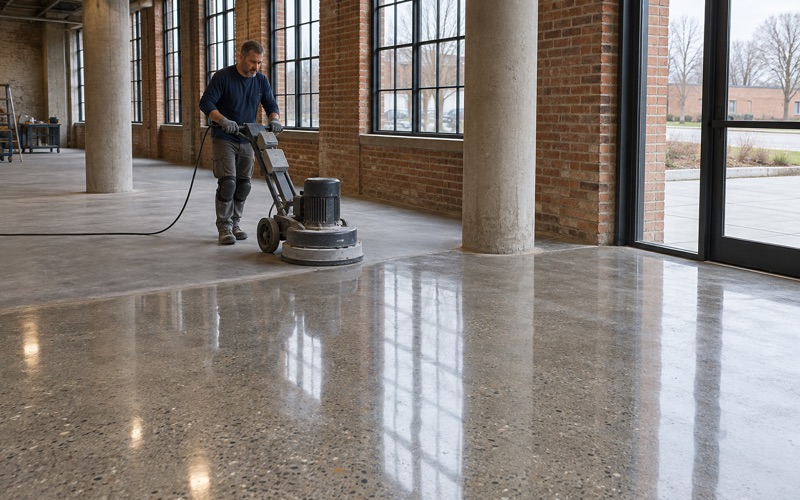
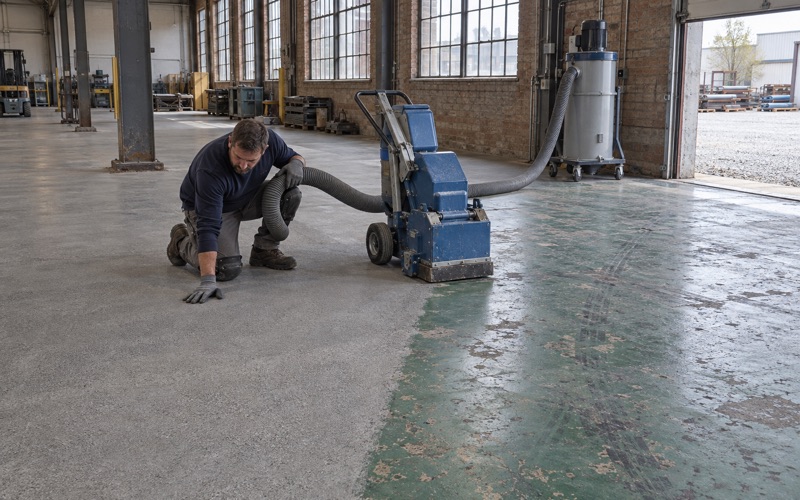
Our work starts with the slab itself. We open every concrete surface with a diamond grinder or a shot blaster to a measured profile, and we never acid etch, because an etched floor gives a coating very little to hold onto. A moisture test is written into the scope as its own line, and the proposal names the product, the system build and the finished thickness so an owner can check it against what was installed.
Before we price a job we walk the cracks, joints and any old coating, and we say plainly when a slab needs repair or replacement first. Warranty exclusions are read out before anything is signed, with moisture named at the top of the list. That conversation takes ten minutes and saves the argument a blistered floor would start a year later.
A Bowling Center on Route 173 and the Law Written About Its Floors
Antioch Lanes and the floors around the lanes
Antioch Lanes sits at 750 W IL Route 173, inside the Village of Antioch in Lake County, and it is a useful example of the kind of floor this page is about. Reviewers describe a recent renovation with new flat-panel screens, and the village has promoted a Bowling Night with Your Son there in the Mayor’s Message. We have not worked on or inspected its floors; we mention it because Illinois has written a law about places exactly like it.
A Route 173 bowling center is a business where guests change shoes at the door. That habit shapes the whole building: a guest walks in on street shoes, changes, and then crosses the same concourse in footwear with soles built to slide. Whatever reaches that concourse from outside ends up under a sole that was never designed for grip.
What the Bowling Center Act says
Illinois’ Bowling Center Act, 745 ILCS 41, took effect January 1, 2010. Section 10 has the operator post a notice near each entrance and exit saying bowling shoes are specialized footwear, not intended to be worn outside, because they may be affected by snow, ice, rain, moisture, food or debris. The notice adds that those substances can cause the wearer to slip, trip, stumble or fall on the floor or alley surfaces.
Section 15 says that, with the notice posted, the operator is not civilly liable for a fall caused solely by a substance picked up outside immediately before entering, except for willful and wanton misconduct. That is a notice rule and a liability limit, nothing more. The Act names no floor product, and no coating we or anyone else installs changes who answers for a fall.
Reading the posted notice as a floor brief
We read that notice the way a flooring contractor should: as a list of what will reach the floor. Snow, ice, rain and moisture come in on bowling shoes worn outside to a car or a smoking area, and food and debris come from the snack bar. A concourse surface that handles all of them is the practical half of the problem the posted sign describes.
The notice also tells an owner where to look. It names the floor as well as the alley surfaces, which puts the concourse, the restroom corridor and the snack-bar floor in the same sentence as the lanes. Those are the surfaces a floor contractor can actually improve, and they are where we spend the effort on a bowling center job.
Looking for epoxy-flooring closer to Menomonee Valley? See Epoxy-Flooring in Menomonee Valley.
The Concourse: Door, Restrooms, Snack Bar and Settees
Where outside water lands
The first ten or fifteen feet inside an entrance take the meltwater, sand and road grit that a Chain O’Lakes winter carries in on street shoes and boots. When a guest who stepped out in bowling shoes comes back, the soles bring a film of whatever was on the pavement. A floor that lets that water bead and wipe away, rather than soak into open concrete, is easier to keep dry through a busy evening.
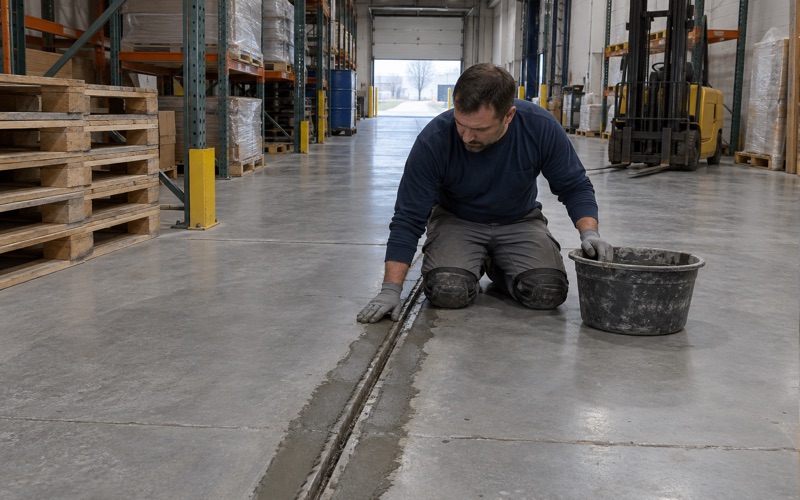
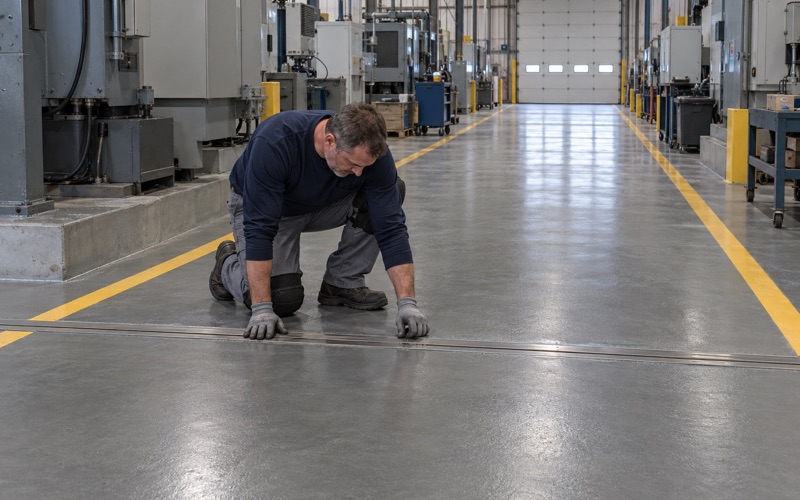
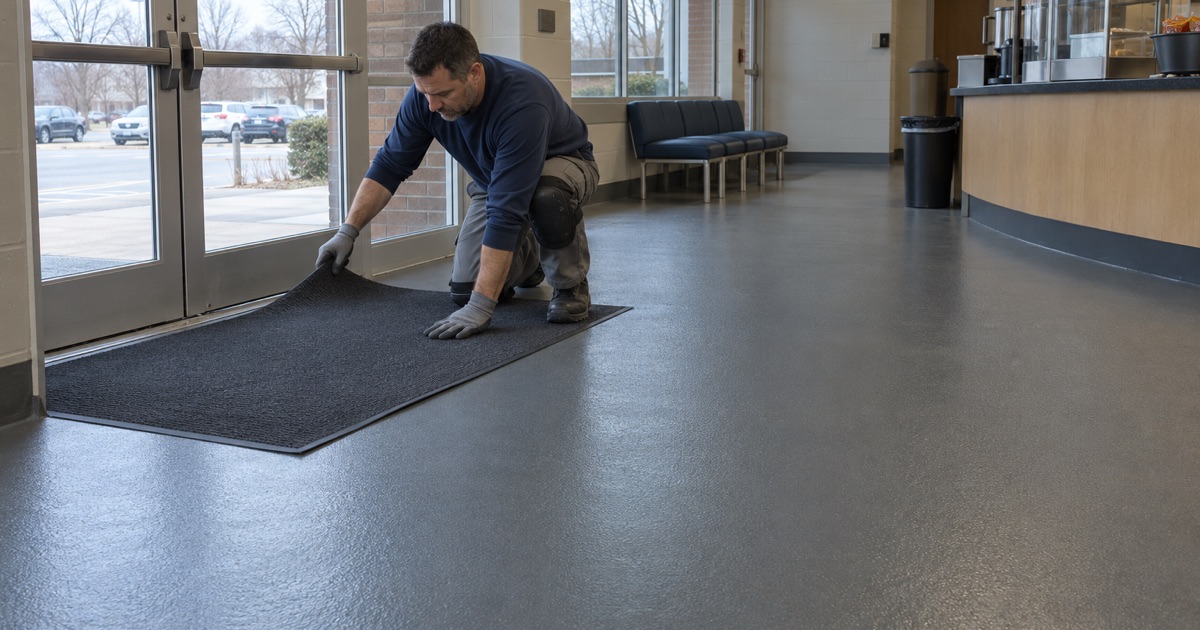
We pay attention to how the entry floor meets the mats and thresholds. A coating that stops short of the door leaves a strip of bare concrete that wicks water and holds sand, and that strip is where grit gets picked up first. Running the system to the threshold, with the edge terminated properly, keeps the dirtiest few feet as cleanable as the rest.
The snack bar and settee area
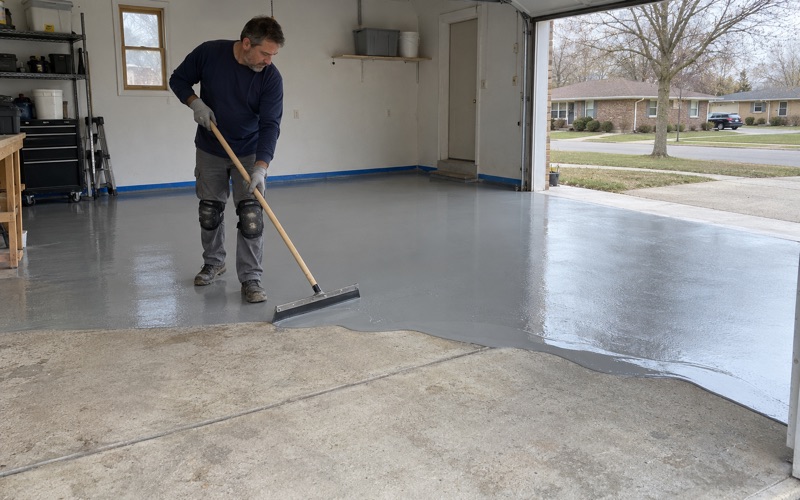
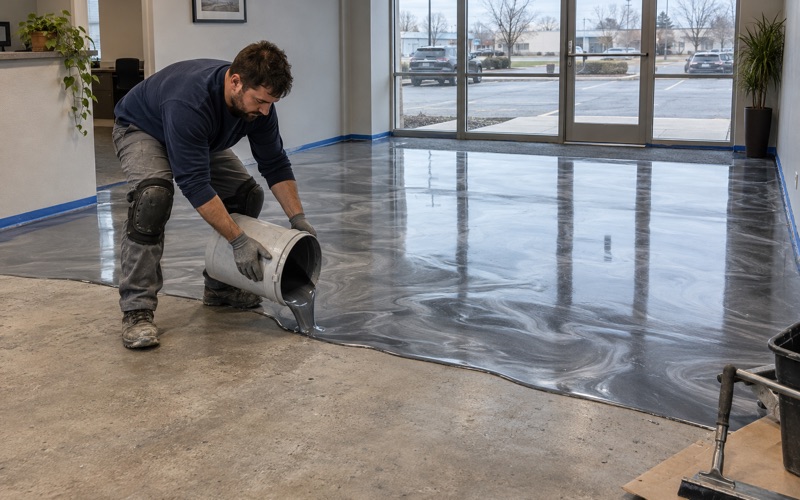
Spilled pop, beer, cheese sauce and fryer grease all end up on the floor between a snack counter and the settees, and a bowler walks straight through it on the way back to the lane. A seamless 100% solids epoxy with a polyaspartic or polyurea topcoat gives a closed surface that does not drink spills, so a mop takes them up instead of spreading them. Where the snack bar is a food service area, we ask the Lake County Health Department what it expects of the finish before choosing one.
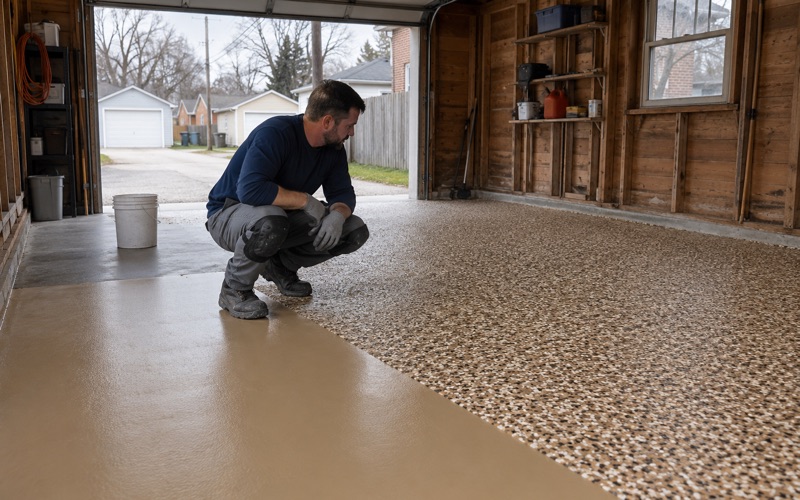
Color helps here too. A lighter finish shows a spill quickly enough that staff catch it, while a vinyl flake broadcast hides the everyday scuffing of a high-traffic concourse. We match the texture to the zone: a little more bite where people stand holding drinks, a smoother finish where the floor has to be wiped many times a night.
Restroom floors
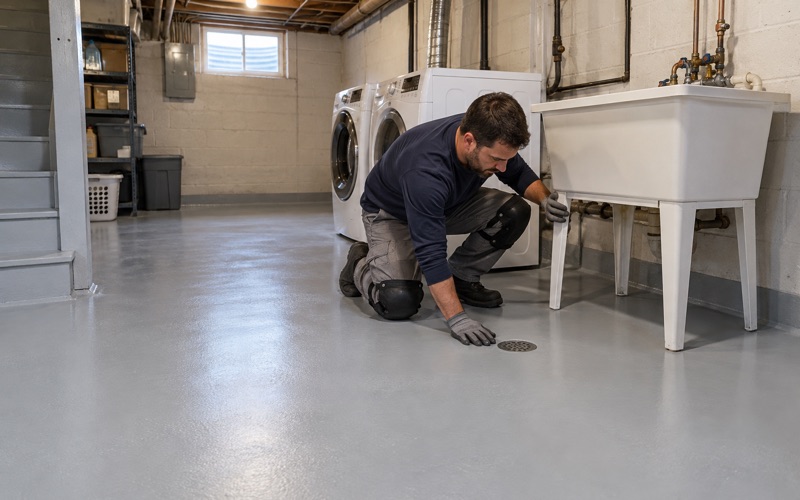
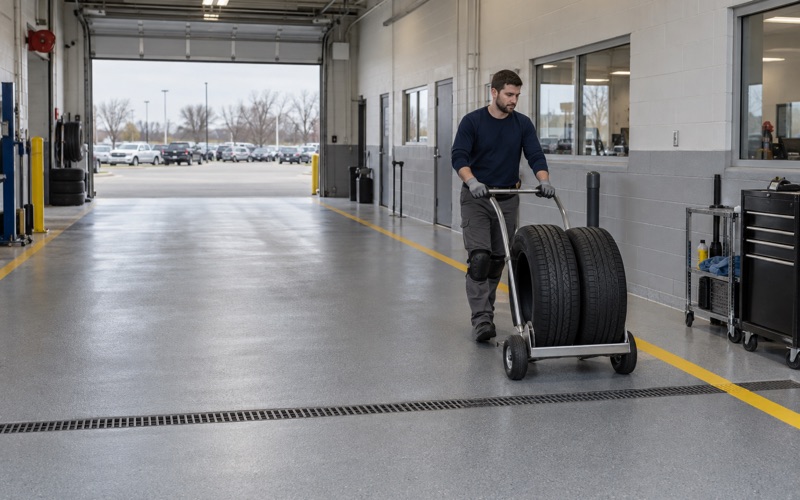
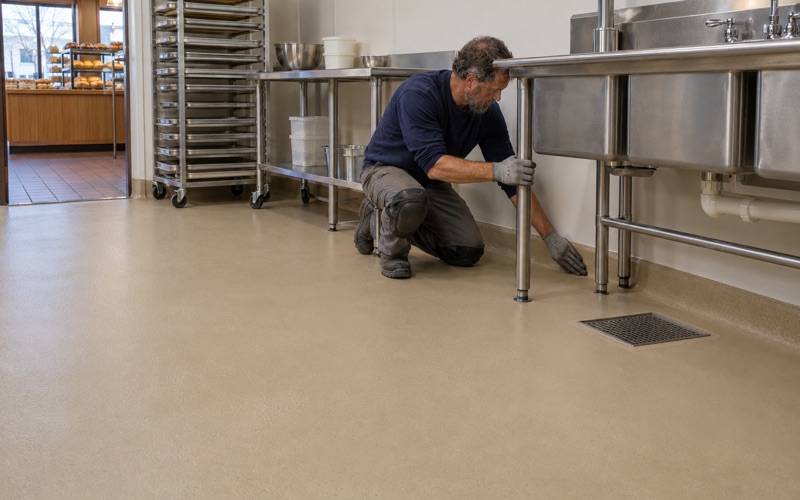
Restrooms add water from sinks and the occasional overflow, and they sit on the path between the lanes and everything else. We cove the coating up the wall base where the layout allows, so water and grime cannot settle into the joint between floor and wall. A guest leaving the restroom in bowling shoes should not carry a wet film back across the concourse.
Restroom slabs often carry old tile adhesive, a sealer or a worn coating, and we check what is there before quoting. If the old layer is sound and thin we may grind it down to a profile; if it is loose or the slab underneath is cracked, we say so and price the repair first. A new floor over a failing one lasts only as long as the failing one does.
A Floor That Stays Dry and Gives Up Grit
Texture without a grit trap
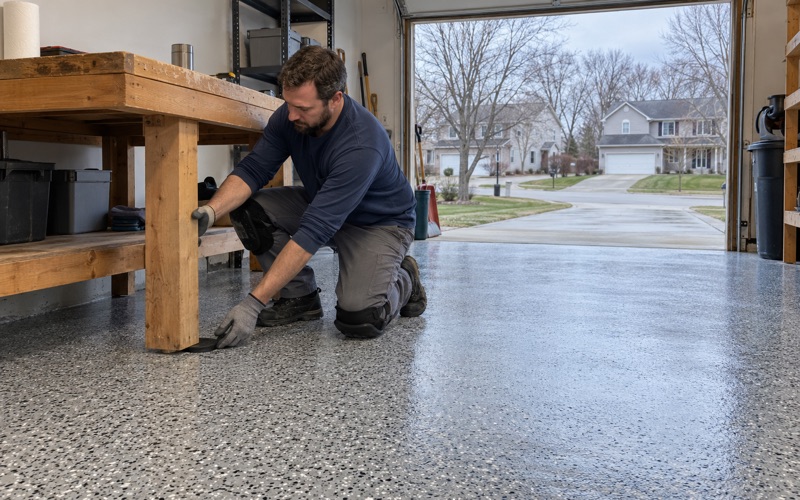
Slip resistance in a coating comes from aggregate in the broadcast or topcoat, and too much of it works against a bowling center. A heavy quartz aggregate broadcast grabs a street shoe nicely but also holds sand and crumbs that then transfer to bowling soles. We aim for a fine texture that sweeps clean, so the floor helps footing without becoming a reservoir for the debris the notice warns about.
We show owners samples before choosing. A sample board under a wet sponge and a handful of sand tells more than any spec sheet: how easily the sand sweeps off, how the surface feels under a smooth sole, how quickly water sheets away. That test happens before the proposal is final, so the texture written into it is the one that was agreed.
Moisture under the slab, not just on top
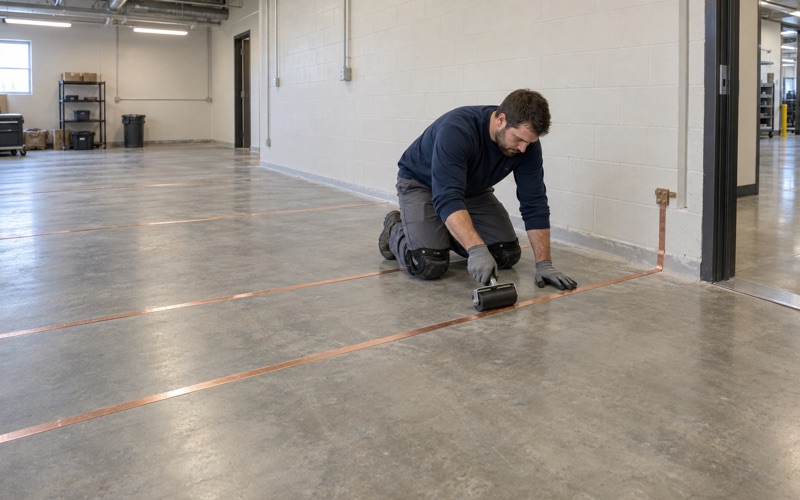
A concourse floor can stay wet from below as well as from boots. Before we coat, we test the slab with ASTM F2170 in-situ relative humidity probes or ASTM F1869 calcium chloride testing, because a coating over a damp slab can blister or let go. Where readings run high, a moisture-mitigation primer goes into the build, and the proposal says so.
Curing is scheduled against slab temperature and the dew point spread at the surface, not the calendar. A building whose heat runs low overnight can bring the slab close enough to the dew point that amine blush forms on a fresh epoxy coat. We watch both readings, and if conditions are wrong we wait rather than lay down a coat that will cloud or peel.
Working around open hours
A bowling center earns its money in the evenings and on weekends, and many keep their own closed days. We plan concourse work around those hours, splitting the floor into sections so the entrance and restrooms stay usable while one zone cures. Fast-curing polyaspartic topcoats shorten the time a section is roped off, which makes an overnight or a closed-day window realistic.
Sequencing also covers how a center reopens. We leave clear notes on when a section can take foot traffic, when it can be wet-mopped, and when settees, chairs and tables can go back. Heavy furniture legs are the real test of a young topcoat, so we say how long it needs before they return, and staff are not guessing on the first busy night.
Lanes and Approaches Stay the Lane Maker’s Surfaces
Where our work stops
The lanes and the approaches a bowler slides onto are not floors we work on. They are the lane maker’s surfaces, built and maintained to their own standards, and a floor coating has no place on them. Our job ends at the transition where the concourse meets the settee area, and we finish that edge so the two surfaces meet cleanly.
That boundary matters for grit. The approach is the one place a bowler most needs clean soles, so the floors leading to it should give up sand and spilled food before a guest steps across. A cleanable concourse is how a floor contractor helps the approach without touching it.
Permits and paperwork in Antioch
Coating an existing slab is usually a different question from replacing one, so we ask the Village of Antioch Building Department, part of Community Development at 847-395-1000, whether a job needs a permit before it is scheduled. Illinois does not license general, flooring or coatings contractors, so the written proposal is where an owner sees exactly what is being installed and how thick it will be.
Lake County is a nonattainment area for the 2015 ozone standard, and the VOC limits in 35 Ill. Adm. Code Part 223 bind whatever we apply here, including 250 g/L for floor coatings. We choose products that meet those limits, which in practice favors 100% solids epoxy and low-VOC topcoats inside an occupied commercial building.
Dust and cleanup in a finished building
Grinding a concourse means dust, and in a building full of upholstered settees and electronics it has to be controlled. Our grinders run with vacuum collection, slurry is gathered on site rather than rinsed toward a storm drain, and the old coating comes up before the new system goes down. The floor goes back into service clean, with the edges finished and nothing left for the first bowler to track toward the approach.
- 20+ Years on Concrete
- Moisture Tested First
- Written Contracts